Product Design Engineering Mastery
Bridging Aesthetics and Feasibility
Bridging Vision and Reality
Every great product starts as two different ideas. One is about how it feels—the sleek curve of a phone, the satisfying click of a button. This is the world of the Industrial Designer, who shapes the user's experience from the outside in. The other idea is about how it works—the circuit board that has to fit, the material that has to withstand a drop. This is the domain of the Mechanical Engineer, who builds the product's function from the inside out.
What happens when the beautiful, seamless shell the designer envisions has no room for the necessary battery? Or when the most efficient internal layout results in a bulky, awkward shape? This is where the Product Design Engineer (PDE) steps in. The PDE is a translator, a diplomat, and a problem-solver who lives in the space between these two worlds. Their job is to take a conceptual design and make it real, balancing aesthetic goals with the physical laws and manufacturing constraints that govern a product's creation.
Design engineers are the creative force behind the transformation of abstract ideas into concrete reality.
Two Philosophies, One Product
Industrial Designers (IDs) typically follow an Outside-In philosophy. They start with the human experience: the ergonomics, the look and feel, the emotional response a product should evoke. They design the product's shell and user touchpoints first, defining what the user sees and interacts with before specifying the internal mechanics. It's a process driven by empathy and aesthetics.
Mechanical Engineers (MEs), on the other hand, often work Inside-Out. Their starting point is the core function. What mechanisms are needed? What are the structural requirements? How will heat be dissipated? They build a functional skeleton of components and then determine the enclosure required to house it. This process is driven by physics, materials science, and mass-production feasibility—the need to make thousands or millions of units reliably and cost-effectively.
These two approaches are not inherently in conflict, but they do create a natural tension. The PDE’s role is to manage this tension productively.
The Art of the Trade-Off
So, what does this negotiation look like in practice? It's a series of strategic trade-offs. The designer's vision is the goal, and the engineering constraints are the rules of the game. A PDE doesn't just say "no" to a design feature; they say, "To get this seamless look, we'll need to use a more expensive machining process called unibody construction instead of a simple snap-fit plastic. Is that trade-off worth the cost increase?"
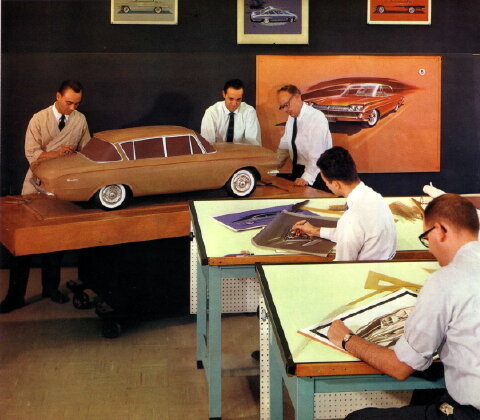
This involves identifying and managing technical risks early. The PDE might use simulations to test if a thin-walled design can survive a drop test or build quick, rough prototypes to check the feel of a new mechanism. They explore alternative materials, manufacturing processes, and component layouts to find a sweet spot that honors the artistic intent while remaining buildable and reliable.
Consider the evolution of laptops. Early models were bulky because the primary concern was fitting all the components (inside-out). Modern ultrabooks are incredibly thin and light because PDEs worked with MEs and IDs to miniaturize components, manage heat in new ways, and use strong, lightweight materials to achieve a sleek form factor (a blend of both philosophies).
Ultimately, the Product Design Engineer ensures the final product is a cohesive whole, not a clumsy compromise. They are the critical link that turns a beautiful idea into a functional, desirable, and successful product.