Processing Czech Language Mappings
Czech Phonetics
What You See Is What You Say
Getting started with Czech pronunciation is simpler than you might think. Unlike English, with its confusing spelling rules, Czech is largely phonetic. Once you learn the sound for each letter, you can confidently pronounce most words just by looking at them. The trick is mastering a few sounds and concepts that don't exist in English.
Vowels Short and Long
Czech has five basic vowel sounds, similar to Spanish or Italian: a, e, i, o, u. What's different is that each of these vowels can be either short or long. This isn't just a matter of accent; the length of the vowel can completely change a word's meaning. It's the difference between asking for a path and asking for a Friday.
A long vowel is held for about twice as long as a short one. In writing, you can spot them by the acute accent mark called a čárka (´) placed over the letter. The letter 'u' is special and can also have a small ring over it (ů), called a kroužek, to mark the long sound.
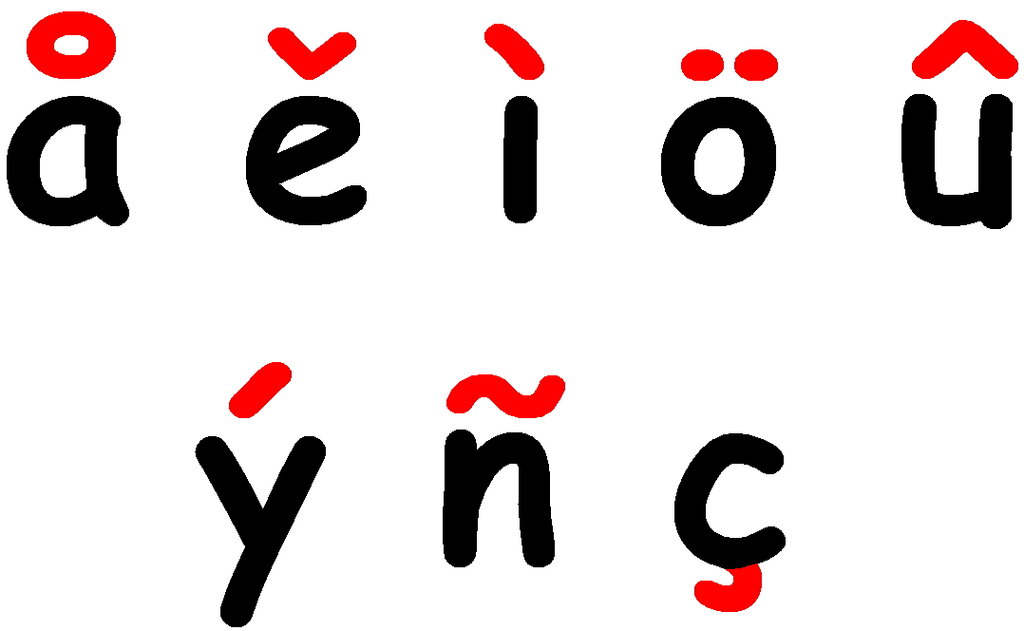
Let's look at how vowel length changes meaning.
| Short Vowel | Meaning | Long Vowel | Meaning |
|---|---|---|---|
pata (pa-ta) | heel | pátá (paa-taa) | fifth |
drát (draht) | wire | drahá (dra-haa) | expensive (feminine) |
byt (bit) | apartment | být (beet) | to be |
vila (vi-la) | villa | víla (vee-la) | fairy |
Consonant Groups
Czech consonants are organized into three categories: hard, soft, and neutral. While this is very important for grammar down the road, it's helpful to know now as it relates to pronunciation. Soft consonants often involve raising the middle of your tongue toward your hard palate, as if you're about to say the 'y' in 'you'.
| Category | Consonants |
|---|---|
| Hard | h, ch, k, r, g, d, t, n |
| Soft | ž, š, č, ř, c, j, ď, ť, ň |
| Neutral | b, f, l, m, p, s, v, z |
Many of these are familiar, but the soft consonants are where English speakers need to pay attention. The little hook, or háček (ˇ), over a letter completely changes its sound.
šis the 'sh' in 'shoe'.čis the 'ch' in 'chair'.žis the 's' sound in 'pleasure'.ňis the 'ny' in 'canyon'.ďandťare softer versions of 'd' and 't', made with the tip of the tongue just behind the teeth. Think of the 'd' sound in 'duty'.
The Famous Ř
Now for the sound that gives learners the most trouble: ř. It doesn't exist in English and is one of the last sounds Czech children learn to make. It's often described as a combination of a rolled 'r' and the 'zh' sound (ž).
To try it, start by making a rolled 'r' sound. While your tongue is trilling, try to raise the middle of your tongue and make a 'zh' sound at the same time. Your lips should be slightly rounded. It's a tricky coordination of muscles that takes practice.
One common tip: try saying the word 'T-shirt' very quickly. The transition between the 't' and 'sh' can get you close to the right tongue position for
ř.
Don't worry if you can't get it right away. Many Czechs will understand you even if you substitute a rolled 'r' or a 'zh' sound. The key is to keep listening and practicing.
River
Doctor
Time to check your understanding of these new sounds.
What is the primary function of the čárka (´) or kroužek (˚) marks on Czech vowels?
True or False: Czech is considered a largely phonetic language, meaning words are pronounced as they are written once you know the rules.
Getting comfortable with these phonetic building blocks will make your journey into Czech much smoother. Consistent practice is the best way to make these new sounds feel natural.