Probability for Everyday Decisions
Introduction to Probability
What Are the Chances?
Life is full of uncertainty. Will it rain tomorrow? Will my favorite team win the championship? Will I roll a six on this die? Probability gives us a way to measure this uncertainty. It's a mathematical tool for figuring out how likely something is to happen.
Probability
noun
The measure of the likelihood that an event will occur.
At its core, probability is a fraction. It tells us how many ways an event can happen out of all possible outcomes.
Think about rolling a standard six-sided die. There's only one way to roll a 4. Since there are six possible outcomes (1, 2, 3, 4, 5, or 6), the probability of rolling a 4 is $1/6$.
Probabilities are always expressed as a number between 0 and 1. A probability of 0 means the event is impossible. A probability of 1 means the event is certain to happen.
Events and Their Relationships
In probability, an "event" is just a specific outcome or set of outcomes, like rolling an even number or drawing a king from a deck of cards. Sometimes, one event can affect another. Other times, they have no connection at all. Understanding these relationships is key.
Independent Events: The outcome of one event does not affect the outcome of another. Imagine flipping a coin and then rolling a die. The coin landing on heads doesn't change the probability of rolling a 3. They are completely separate.
Dependent Events: The outcome of one event does influence the outcome of another. Think of a bag with 5 red and 5 blue marbles. If you pull out a red marble and don't put it back, the probability of pulling out a second red marble changes. There are now only 4 red marbles and a total of 9 marbles left.
Mutually Exclusive Events: These are events that cannot happen at the same time. If you roll a die, you can't get both a 2 and a 5 on a single roll. If one event occurs, the other cannot.
Combining Probabilities
Once we know how events relate, we can use simple rules to calculate their combined probabilities.
The Multiplication Rule is for finding the probability of two (or more) events happening. You can think of it as the "and" rule.
For independent events, you simply multiply their individual probabilities. What's the chance of flipping a coin and getting heads and rolling a die and getting a 4?
The probability of heads is $1/2$. The probability of rolling a 4 is $1/6$. Since these events are independent, we multiply them.
The Addition Rule is for finding the probability of either one event or another event happening. It's useful when events are mutually exclusive.
When events are mutually exclusive, you add their probabilities together to find the likelihood that one or the other occurs.
For example, what is the probability of rolling a 2 or a 5 on a die? You can't roll both at the same time, so they are mutually exclusive. We add their probabilities.
Probability in Real Life
These concepts aren't just for games of chance. Probability is a part of our daily lives.
Weather forecasters use complex models to predict the chance of rain. They analyze historical data and atmospheric conditions to tell you there's a 70% probability of a thunderstorm. This helps you decide whether to bring an umbrella.
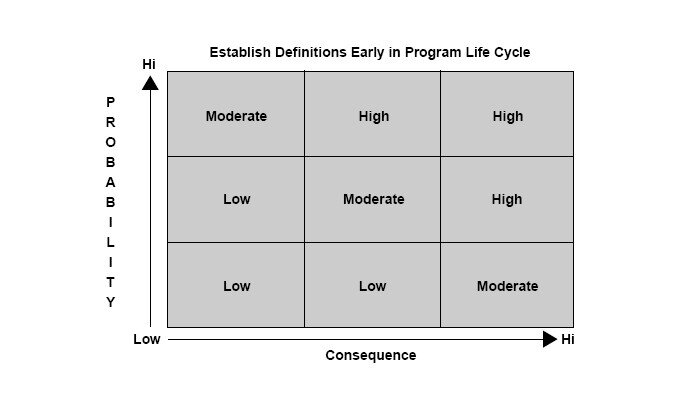
Insurance companies use probability to calculate premiums. By analyzing data on accidents, illnesses, and lifespans, they determine the likelihood of a claim being made. This is a form of risk assessment, a process used in everything from finance to engineering to decide if a potential reward is worth the risk.
By understanding the basics of probability, you can make more informed judgments and better navigate the uncertainties of the world.