Probability for Everyday Decisions
Probability Basics
The Language of Chance
Life is full of uncertainty. Will it rain tomorrow? Will my favorite team win the championship? Will I roll a six in this board game? Probability is the mathematics of uncertainty, giving us a way to measure how likely something is to happen.
To talk about probability, we need a few key terms. Let's start with a simple action, like flipping a coin.
Experiment
noun
Any procedure or situation that can be repeated and has a well-defined set of possible results.
When we perform an experiment, we get a result. Each possible result is called an outcome.
Outcome
noun
A single possible result of an experiment.
The set of all possible outcomes for an experiment is called the sample space. For a coin flip, the sample space is simply {Heads, Tails}. For rolling a standard six-sided die, the sample space is {1, 2, 3, 4, 5, 6}.
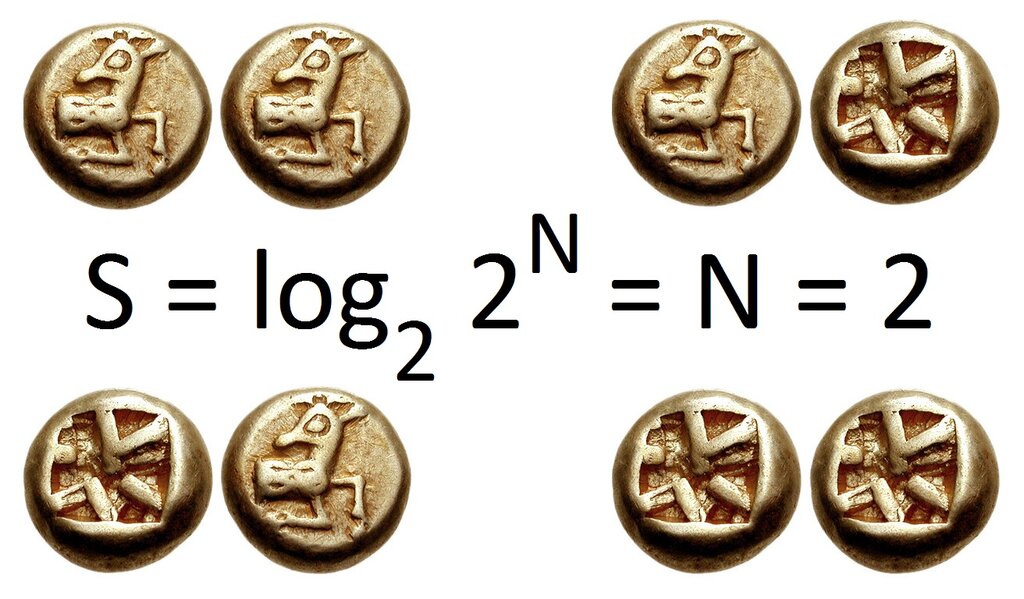
Finally, an event is the specific outcome or group of outcomes we are interested in.
Event
noun
A specific outcome or a set of outcomes of an experiment.
How Likely Is It?
Once we have our experiment and sample space, we can calculate the probability of an event. The basic formula is straightforward, especially when all outcomes are equally likely.
Let's use our six-sided die example. The sample space is {1, 2, 3, 4, 5, 6}, so there are 6 total possible outcomes. What is the probability of rolling a 4?
There is only one outcome that matches our event (rolling a 4). So, the number of favorable outcomes is 1.
What about the probability of rolling an odd number? The favorable outcomes are {1, 3, 5}. That's 3 favorable outcomes out of 6 total outcomes.
So, there's a 1 in 2 chance, or 50% probability, of rolling an odd number.
The Rules of the Game
Probabilities have a few fundamental properties. The most important one is that a probability will always be a number between 0 and 1, inclusive.
A probability of 0 means the event is impossible. For instance, the probability of rolling a 7 on a standard six-sided die is 0. There are no favorable outcomes.
A probability of 1 means the event is certain to happen. The probability of rolling a number less than 7 on our die is 1. All six possible outcomes are favorable.
Most events fall somewhere in between. A probability close to 1 means the event is very likely. A probability close to 0 means it's very unlikely.
The Other Side of the Coin
For any event, there is an opposite event, called its complement. The complement of an event A is the event that A does not happen. We often write this as A' or Aᶜ.
If our event is "rolling a 4," the complementary event is "not rolling a 4."
An event either happens or it doesn't. There's no middle ground. This leads to a simple, powerful rule: the probability of an event and the probability of its complement always add up to 1.
This rule can make calculations easier. Instead of counting all the ways an event can happen, we can sometimes count the ways it can't happen and subtract from 1.
We know the probability of rolling a 4 is 1/6. What is the probability of not rolling a 4?
We can check this by counting. The outcomes that are not a 4 are {1, 2, 3, 5, 6}. That's 5 favorable outcomes out of 6 total, which gives us a probability of 5/6. The math checks out.
In probability, what does the term "sample space" refer to?
You have a standard deck of 52 playing cards. What is the probability of drawing a king?
These core ideas form the foundation for understanding chance and making sense of an uncertain world.