Probability for Better Decisions
Introduction to Probability
Quantifying Uncertainty
Every day, we face situations where we don't know the exact outcome. Will it rain this afternoon? Will your favorite team win their next game? Will a stock price go up? Life is full of uncertainty. Probability is the tool we use to measure it.
Probability gives us a way to talk about how likely something is to happen, using numbers instead of just words like "maybe" or "probably."
At its core, probability is a number between 0 and 1. A probability of 0 means an event is impossible. A probability of 1 means it's absolutely certain. Everything else falls somewhere in between.
Think about flipping a standard coin. There are two possible outcomes: heads or tails. If the coin is fair, each outcome is equally likely. So, the probability of getting heads is 0.5, or 50%. The probability of getting tails is also 0.5. If you see a weather forecast that says there's a 90% chance of rain (a probability of 0.9), it's much more likely to rain than not.
The Role of Randomness
Probability is deeply connected to the idea of randomness. A random process is one where the outcome is uncertain, but it follows a predictable long-term pattern. When you flip a coin once, the result is random. You can't know for sure if it will be heads or tails.
But if you flip that same coin a thousand times, something predictable happens. You'll get very close to 500 heads and 500 tails. The individual flips are random, but the overall distribution of outcomes is not. Probability helps us describe these long-term patterns that emerge from short-term uncertainty.
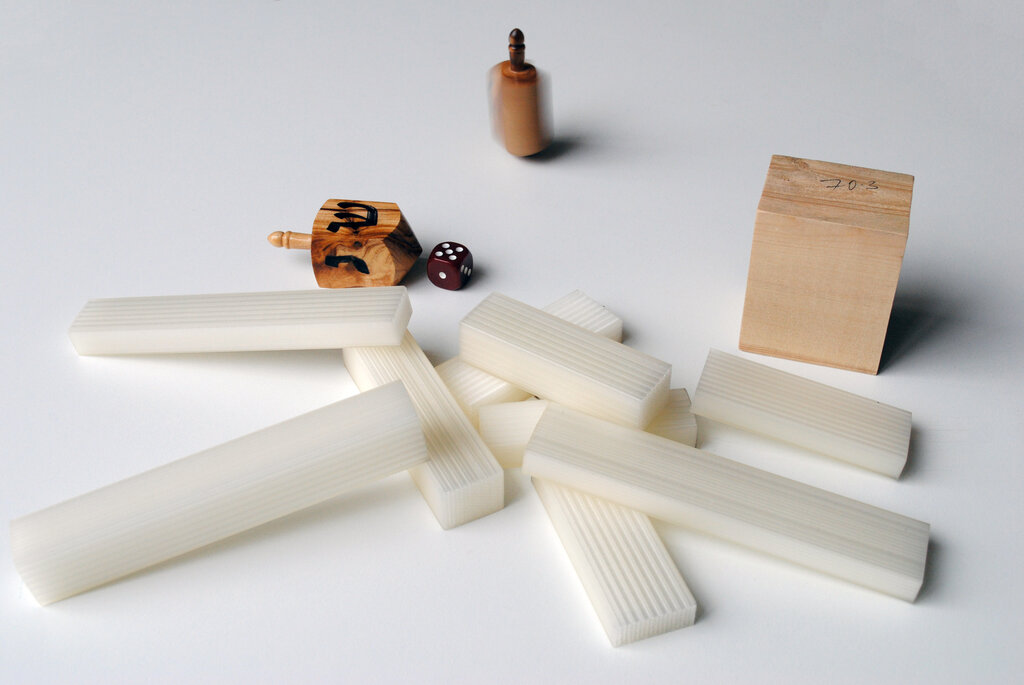
This principle is everywhere. A casino doesn't know if a player will win the next hand of blackjack, but it knows that over thousands of hands, the house will come out ahead. The randomness of individual events allows for the predictability of the whole.
Why Probability Matters
Understanding probability is more than just a mathematical exercise. It's a practical skill for making better decisions in a world where nothing is guaranteed.
By understanding how probability theory is used across different fields, individuals can appreciate its importance in daily decision-making and strategic planning.
Here are just a few areas where probability is essential:
| Field | Application |
|---|---|
| Finance | Assessing the risk of investments and setting insurance premiums. |
| Medicine | Determining the effectiveness of a new drug or the likelihood a patient has a certain disease. |
| Weather | Forecasting the chance of rain, snow, or major storms. |
| Sports | Calculating a team's odds of winning a championship or a player's batting average. |
| Gaming | Designing fair and balanced games, from board games to video games. |
| Science | Analyzing experimental data and modeling complex systems in physics and biology. |
In each case, probability provides a framework for reasoning about uncertainty, managing risk, and making informed choices based on the available evidence.
Ready to test your understanding? Let's see what you've learned.
The value of a probability must fall within which range?
If a weather forecast says there is a 90% chance of rain, what is the probability of rain expressed as a decimal?
By putting a number on uncertainty, probability helps us navigate a complex world. It's the starting point for understanding statistics, data science, and many other fields that shape our lives.