Proactive Product Management Systems
Foundations of Product Management
The Product Manager’s Role
Think of a product manager (PM) as the captain of a ship. They don't build the engine or hoist the sails themselves, but they are responsible for setting the course, ensuring the crew works together, and guiding the ship safely to its destination. The product is the ship, and the destination is market success.
Product managers are the central hub for a product. They connect the dots between business goals, user needs, and technological feasibility. Their job is to figure out what to build and why, while the engineering team figures out how to build it.
Product Managers (PMs) oversee the development and success of a product from concept to launch, making pivotal decisions that shape the future of both the product and the company.
A PM's responsibilities are broad and vary by company, but they generally fall into a few key areas:
- Defining the Vision: They set the long-term vision for the product. Where is it going? What problems does it solve for users? This vision acts as a North Star for the entire team.
- Understanding Users: A great PM is obsessed with their users. They conduct research, analyze data, and talk to customers to deeply understand their problems and needs. This ensures the team builds something people actually want.
- Prioritizing What's Next: There are always more ideas than time and resources. A PM's critical task is to prioritize what features and improvements to build next. This is often managed in a list called the product backlog.
- Collaborating Across Teams: Product managers work with designers, engineers, marketers, and sales to bring the product to life. They ensure everyone is aligned on the goals and has what they need to succeed.
It's a balancing act. PMs constantly weigh business needs against user desires and technical constraints. It’s a team sport, and the PM is the coach who makes sure everyone is playing the same game.
A Product's Journey
Products have a natural life, just like anything else. They are introduced, they grow, they mature, and eventually, they decline. Understanding this journey, known as the product lifecycle, helps PMs make strategic decisions about where to invest resources and how to plan for the future.
Here's a breakdown of the four stages:
- Introduction: The product is launched. Sales are low as awareness is being built. The focus is on marketing and getting early feedback from the first users.
- Growth: The product finds its footing, and sales begin to climb rapidly. New users are flocking in, and the team is busy adding features and scaling up.
- Maturity: Sales growth slows down and eventually peaks. The market is saturated, and competition is fierce. The focus shifts to retaining customers and optimizing existing features.
- Decline: Sales begin to fall. This can be due to new technology, changing customer tastes, or market saturation. At this point, a company must decide whether to reinvent the product, phase it out, or pivot to something new.
How Products Get Built
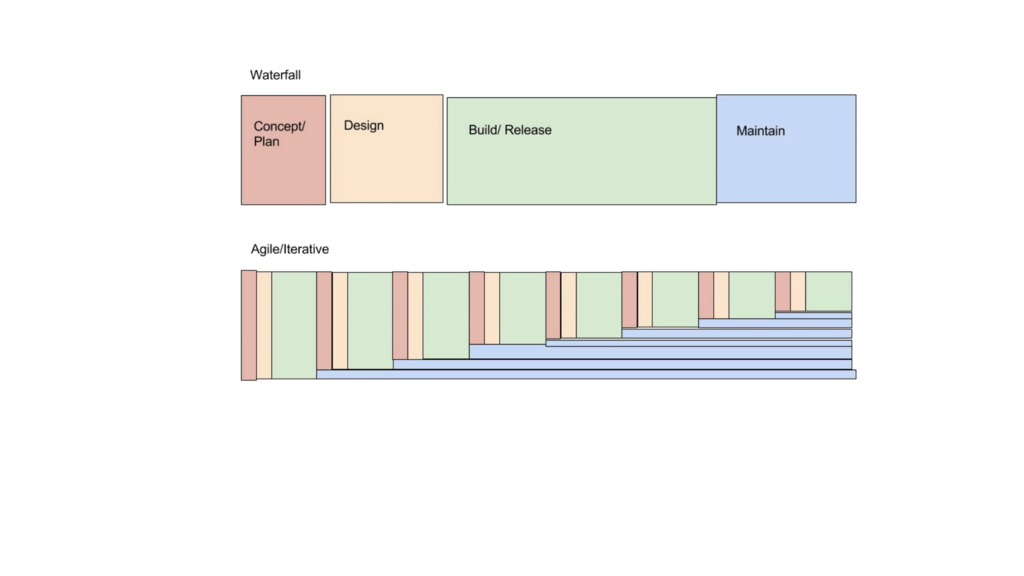
There are many ways to manage the process of building a product. In the past, many teams used a rigid, sequential approach where each step had to be completed before the next could begin. But modern product development moves fast and requires flexibility. This has led to the rise of several key methodologies.
Agile product management is an iterative development philosophy that prioritizes flexibility, collaboration, and rapid delivery.
Agile isn't a single set of rules but a mindset. The core idea is to build and release software in small, incremental pieces. This allows teams to get feedback from real users early and often, and to adjust their plans based on what they learn. Instead of spending a year building a product in isolation, an Agile team might release a basic version in a few weeks and then continuously improve it.
Two of the most popular frameworks for putting Agile into practice are Scrum and Lean.
Scrum
noun
A framework for managing work in which a small team works in short cycles called 'sprints' to deliver pieces of a product incrementally.
In Scrum, the work is organized into sprints, which are typically one to four weeks long. At the start of each sprint, the team commits to a small chunk of work from the product backlog. They meet daily for a quick check-in (the Daily Scrum) to keep everything on track. At the end of the sprint, they show what they've built and reflect on how they can improve their process.
Lean principles, on the other hand, originated in manufacturing but have been adapted for product development. The core idea is to maximize customer value while minimizing waste. For a product team, 'waste' isn't just leftover material—it's any effort that doesn't create value for the customer. This includes building features nobody uses, overly complex processes, or spending time on tasks that aren't a priority.
Lean focuses on continuous improvement and rapid experimentation. The goal is to build, measure, and learn as quickly as possible to avoid wasting time building the wrong thing.
| Methodology | Core Idea | Key Practices |
|---|---|---|
| Agile | Build and adapt in small, iterative cycles. | Collaboration, flexibility, customer feedback. |
| Scrum | Organize work into fixed-length sprints. | Sprints, Daily Scrums, Product Backlog. |
| Lean | Maximize value, eliminate waste. | Build-Measure-Learn, Minimum Viable Product. |
These frameworks provide the structure for turning an idea into a valuable product. They help product managers and their teams navigate the complexities of development, stay focused on the user, and adapt to a constantly changing market.