Private Equity M&A
Introduction to Private Equity M&A
What Are Mergers and Acquisitions?
Mergers and acquisitions, or M&A, is a general term for when two companies join together. Though often used as a single phrase, mergers and acquisitions are slightly different. An acquisition is when one company buys another outright. A merger is when two companies, often of similar size, combine to form a new, single entity.
In practice, most M&A deals are acquisitions, even if they're called mergers for the sake of public relations. It's rare for two companies to be true equals. Usually, one company's management and shareholders end up with more control over the new, combined business.
Acquisition
noun
A corporate action in which one company purchases most or all of another company's shares to gain control of that company.
M&A transactions can be categorized based on the relationship between the two companies involved:
- Horizontal: The two companies are in the same industry and are direct competitors. Think of one airline buying another.
- Vertical: The deal involves two companies at different stages of the same supply chain. For example, a car manufacturer might buy a tire company.
- Conglomerate: The companies are in completely unrelated industries. Imagine a software company buying a chain of coffee shops.
The Strategy Behind M&A
Why do companies go through the complex and expensive process of M&A? The core reason is to create value that couldn't be achieved alone. This value creation comes in several forms.
One major driver is achieving synergies. This is the idea that the combined company will be worth more than the sum of its parts. Synergies can come from cutting redundant costs, like having only one accounting department instead of two. They can also come from boosting revenue, such as by selling one company's products to the other's customer base.
Other strategic goals include faster growth, gaining a larger market share, acquiring new technology or talent, and diversifying into new markets or products.
Private Equity's Role
Private equity (PE) firms are investment funds that buy and manage companies on behalf of institutional and high-net-worth investors. Unlike a regular corporation that might buy another company to expand its own operations, a PE firm's business model is M&A.
Private equity refers to investments in privately held companies — those not listed on public stock exchanges.
PE firms raise capital from investors (Limited Partners or LPs) and use it to acquire companies. The firm (as the General Partner or GP) then works to increase the value of these portfolio companies over a period of several years. Finally, they sell, or "exit," the investment, hopefully for a significant profit. The goal is to generate strong returns for their investors.
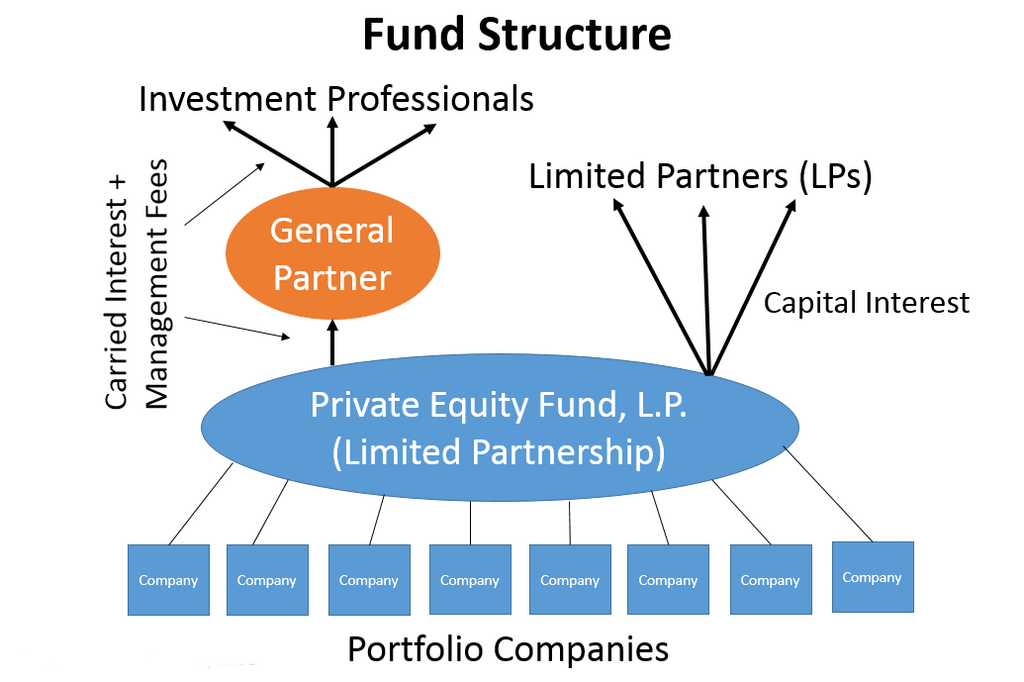
For these firms, M&A isn't just an occasional strategic move; it is the central activity through which they deploy capital and generate returns. They are specialists in buying, transforming, and selling businesses.
PE vs. Corporate M&A
While both PE firms and corporations engage in M&A, their motivations and methods differ significantly. Understanding these differences is key.
| Feature | Private Equity M&A | Corporate M&A |
|---|---|---|
| Primary Goal | Generate financial returns for investors within a specific timeframe (usually 3-7 years). | Achieve long-term strategic goals, such as market expansion or synergy creation. |
| Funding Source | A mix of investor capital (equity) and significant amounts of borrowed money (debt). | Primarily uses its own cash, stock, or a smaller amount of debt. |
| Investment Horizon | Finite and well-defined. The firm must sell the company to realize a return. | Potentially indefinite. The acquired company is integrated and held as part of the parent corporation. |
| Operational Role | Highly active. PE firms often bring in new management and take a hands-on approach to operations and strategy. | The acquired company is integrated into the buyer's existing operational structure. |
Essentially, a corporation buys a company to keep it and make its own business stronger. A private equity firm buys a company to sell it later at a higher price. This fundamental difference in objective shapes every aspect of the deal, from financing to management.
What is the key difference between a merger and an acquisition?
If a car manufacturer buys a company that produces car tires, what type of M&A transaction is this?
This foundation gives you a clear picture of what M&A is and the unique role private equity plays in this field. Next, we will explore the M&A process in more detail.