Private Equity Fundamentals Explained
PE Fund Structures
The Architecture of a PE Fund
Private equity funds are the primary vehicles for investing in private companies. The vast majority of these funds are set up as limited partnerships. This structure isn't an accident; it's designed to align the interests of two very different groups: the people managing the money and the people providing it.
Think of it as a partnership between a skilled ship captain and wealthy patrons who finance the voyage. The patrons provide the capital for the ship and crew, but they don't steer the vessel. The captain makes all the operational decisions, from charting the course to managing the crew, with the goal of returning with valuable cargo. In the world of private equity, these roles are filled by General Partners and Limited Partnerss.
The Key Players
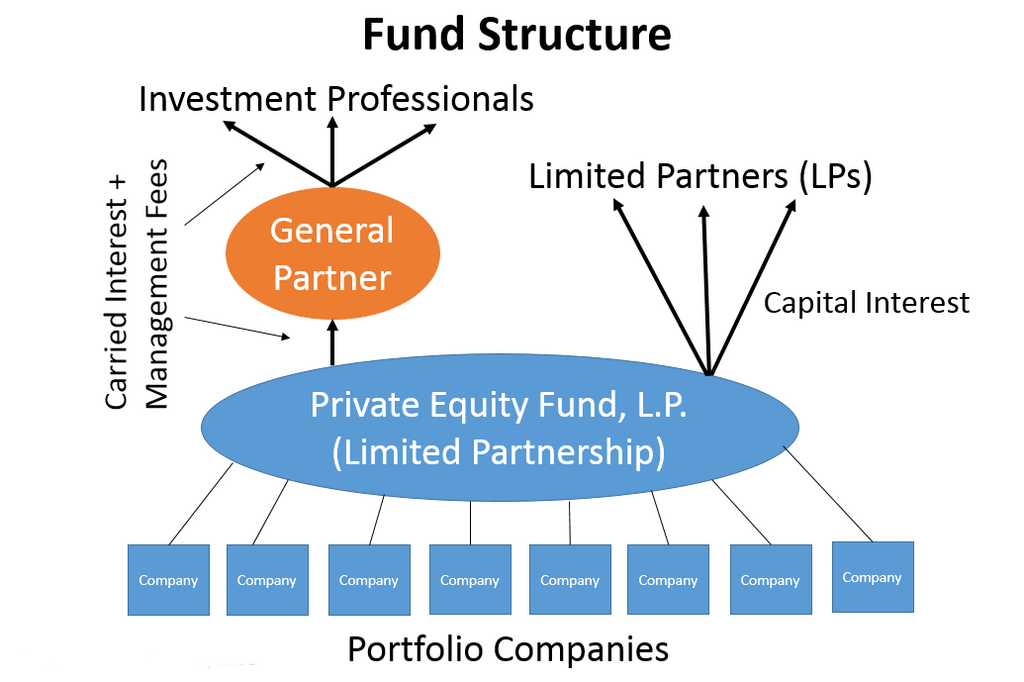
The (GPs) are the private equity firm itself. They are the active managers, the ship captains. GPs are responsible for the entire investment process: sourcing deals, conducting due diligence, negotiating purchases, managing the portfolio companies post-acquisition, and eventually finding a profitable exit. Their expertise is what the investors are betting on. The GP has unlimited liability, though this is typically managed by structuring the GP itself as a limited liability entity.
The (LPs) are the investors who provide the capital. They are the wealthy patrons. LPs are typically large institutional investors like pension funds, university endowments, sovereign wealth funds, and insurance companies. Their role is passive; they commit capital to the fund but have no say in the day-to-day investment decisions. Their primary advantage is limited liability, meaning their potential loss is capped at the amount of their investment. They can't lose more than they put in.
The Fund's Journey
A typical private equity fund has a finite lifespan, usually around 10 years, sometimes with options for short extensions. This lifecycle follows a predictable pattern.
1. Fundraising and Commitment: The GP raises money by securing capital commitments from LPs. This isn't cash in the bank yet; it's a pledge. The fund has its first "closing" once a target amount is reached.
2. Investment Period: For the first several years (typically 3-6), the GP actively seeks out investments. When they find a target company, they issue a capital call (or drawdown), requiring LPs to provide a portion of their committed capital. This money is then used to buy the company.
3. Value Creation: After acquiring a portfolio of companies, the GP works to increase their value. This might involve improving operations, expanding into new markets, or making strategic acquisitions.
4. Harvesting and Distribution: In the latter half of the fund's life, the GP focuses on selling the portfolio companies—a process called divesting or exiting. As companies are sold, the proceeds are distributed back to the LPs (and the GP).
Aligning Interests with Fees
The compensation structure is the glue that holds the partnership together. It's designed to cover the GP's costs and, more importantly, to incentivize them to generate high returns. The industry standard is often called "2 and 20."
Management Fee: A steady income stream for the GP. Carried Interest: A powerful incentive for the GP to perform well.
Management Fee
noun
An annual fee paid by the LPs to the GP to cover the costs of running the fund. This includes salaries, office space, travel for due diligence, and legal fees. It's typically calculated as a percentage (often 1.5% to 2%) of the total committed capital.
While the management fee keeps the lights on, the real prize for the GP is (or "carry"). This is the GP's share of the fund's profits. A common arrangement is an 80/20 split, where 80% of the profits go to the LPs and 20% goes to the GP.
However, the GP doesn't get carry on the first dollar of profit. First, the LPs must receive all their contributed capital back. Then, they typically must receive a preferred return, or hurdle rate, on their investment. This is often around 8% per year. Only after the LPs have been made whole and cleared the hurdle does the GP get to participate in the remaining profits.
The Distribution Waterfall is the sequence in which money is paid out:
- Return of Capital: 100% of proceeds go to LPs until they've received all their invested capital back.
- Preferred Return: 100% of proceeds go to LPs until they've met the hurdle rate (e.g., 8% annual return).
- Catch-Up: The GP receives a high percentage of profits (often 100%) until they have "caught up" to their 20% share of total profits.
- Final Split: All remaining proceeds are split, typically 80% to LPs and 20% to the GP.
But what happens if a fund's early investments do very well, the GP takes carry, and then later investments perform poorly? The LPs could end up with less than their preferred return. To protect against this, fund agreements include a clawback provision. This gives LPs the right to "claw back" previously distributed carry from the GP at the end of the fund's life to ensure the profit split aligns with the agreed-upon terms over the entire fund.
Understanding this structure—the players, the lifecycle, and the incentives—is the first step to understanding the private equity world. It’s a framework designed to finance risk, manage complex investments, and share in the rewards.
In a private equity limited partnership, which party is responsible for sourcing deals, managing portfolio companies, and making all investment decisions?
What is the primary financial protection for a Limited Partner (LP) in a private equity fund?