Principles of Rotational Dynamics and Torque
Torque as Cross Product
The Twist of Force
When we push or pull an object in a straight line, Newton's laws give us a clear picture of what happens. But what about when we make something spin? Pushing a door open, tightening a bolt with a wrench, or pedaling a bicycle all involve rotation. In these cases, it’s not just about how hard you push, but where you push and in what direction.
Imagine trying to open a heavy bank vault door. If you push right next to the hinges, you'll have to exert a massive amount of force. But if you push on the side farthest from the hinges, the door swings open with much less effort. The force is the same, but its ability to cause rotation is different. This rotational equivalent of force is called torque.
Defining Torque as a Cross Product
To capture the relationship between force, distance, and direction, we define torque not as a simple multiplication, but as a vector cross product between the position vector and the force vector. The position vector, , points from the axis of rotation (the pivot point) to the location where the force is applied. The force vector, , is the push or pull itself.
The cross product accounts for both the magnitude and the direction of the resulting rotation. The magnitude of the torque is given by:
The term is key. It tells us that the maximum torque occurs when the force is applied perpendicular to the position vector (, so ). If you push parallel to the position vector (in line with the door from hinge to handle, for example), you get no rotation at all (, so ).
Lever Arm
noun
The perpendicular distance from the axis of rotation to the line of action of the force. Mathematically, it is equal to .
Finding the Direction
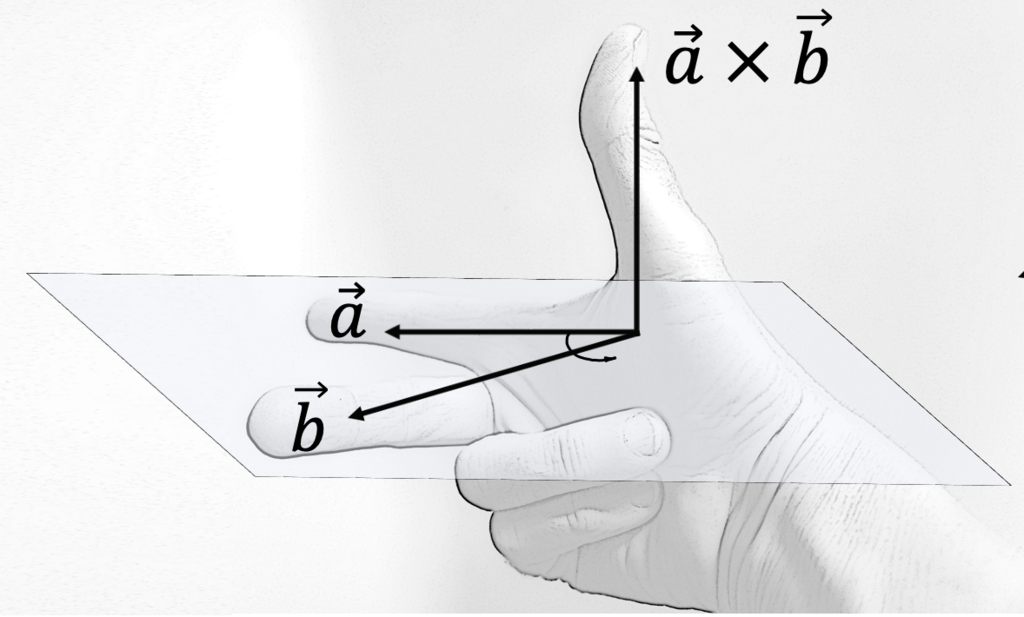
Torque is a vector, so it has a direction as well as a magnitude. This direction tells us the axis about which the object will rotate. We determine this using the right-hand rule for cross products.
Point the fingers of your right hand in the direction of the position vector, . Then, curl your fingers toward the direction of the force vector, . Your thumb will point in the direction of the torque vector, .
A torque vector pointing out of the page or screen typically signifies a counter-clockwise rotation. A vector pointing into the page signifies a clockwise rotation. This convention allows us to describe complex 3D rotations with a single vector.
Balancing the Moments
The concept of torque is central to static equilibrium—the state where an object is not rotating. For an object to be in static equilibrium, not only must the net force be zero (no linear acceleration), but the net torque must also be zero. All the clockwise torques must perfectly balance all the counter-clockwise torques.
Consider a seesaw. For it to balance, the torque created by the person on the left must be equal in magnitude and opposite in direction to the torque created by the person on the right. A lighter person must sit farther from the pivot to create the same amount of torque as a heavier person sitting closer.
This principle is fundamental in engineering and architecture, used to ensure that bridges, buildings, and other structures remain stable under various forces. By calculating the torques created by weight, wind, and other loads, engineers can design supports that generate equal and opposite torques, keeping everything perfectly still.
What is the rotational equivalent of force?
To open a heavy door with the least amount of effort, you should apply the force...
Understanding torque as a cross product is the first step to mastering rotational dynamics.