Presenting Lean Six Sigma Projects
Executive Storyboarding
Beyond Data: Storyboarding for Executives
Your Lean Six Sigma project is a success. You've meticulously followed the DMAIC framework, wrestled with data, and achieved a significant reduction in process variation. The numbers are clear. But when you present your findings to the executive team, you're met with polite nods and a distinct lack of enthusiasm. Why?
Because executives don't speak the language of standard deviations and control charts. They speak the language of strategy, growth, and profitability. A raw data dump, no matter how impressive, fails to connect your hard work to what they care about most. To get buy-in and demonstrate real value, you need to stop reporting and start storytelling.
By weaving data into a compelling story, stakeholders are more likely to grasp critical insights and take informed actions based on presented findings.
This means shifting your focus from the 'how'—the intricate statistical analysis and process mapping you performed—to the 'why' and the 'so what'. Why was this project important for the business? So what is the tangible impact on the bottom line? Answering these questions is the foundation of an effective executive storyboard—a narrative that transforms your project's data into a clear, concise, and compelling business case.
From Project Metrics to Strategic KPIs
The first step in building your narrative is to translate your project's technical achievements into the language of the C-suite. Your success in reducing defect rates is a project-level metric. For an executive, the real story is how that reduction impacts a Key Performance Indicator (KPI) that drives the business forward.
Think of it as a chain of impact. A lower defect rate means less rework and waste. Less rework means lower operational costs. Lower costs contribute directly to a healthier profit margin—a strategic KPI every leader understands and values. Your job is to connect these dots explicitly.
Before you even begin building your storyboard, map every key outcome of your LSS project to a high-level business KPI. Did you improve cycle time? That's not just an operational win; it's a direct improvement to 'Time to Market' or 'Customer Satisfaction'. Did you reduce resource consumption? That translates to 'Cost Savings' and improved 'Operational Efficiency'.
This translation is the core of your story. It shifts the conversation from technical details to business value.
Crafting the Narrative
With your KPI alignment complete, you can structure your storyboard. Forget the rigid DMAIC phase-gate review. Instead, think like a movie director. A simple and powerful narrative structure for executives is:
-
The Challenge (The 'Why'): Start by framing the business problem in terms they understand. Not "process capability was low," but "We were losing customers due to late deliveries, costing us an estimated ₹2 crores annually."
-
The Action (The 'What'): Briefly describe what you did. This is not the place for a detailed methodology review. Simply state, "We launched a Lean Six Sigma project to identify and eliminate the root causes of these delays."
-
The Resolution & Impact (The 'So What'): This is your climax. Present the results, leading with the strategic KPI. "As a result, we've increased our on-time delivery rate to 98%, which has boosted customer satisfaction scores by 15% and is projected to increase annual profits by ₹1.5 crores." This is the '' in action. It directly answers the unstated question in every executive's mind: "Why should I care about this?"
-
The Future (The 'What Next'): Conclude by outlining the plan to sustain the gains and potentially replicate the success elsewhere. "We have implemented new control measures to maintain this performance and are now exploring a similar approach for our Western region supply chain."
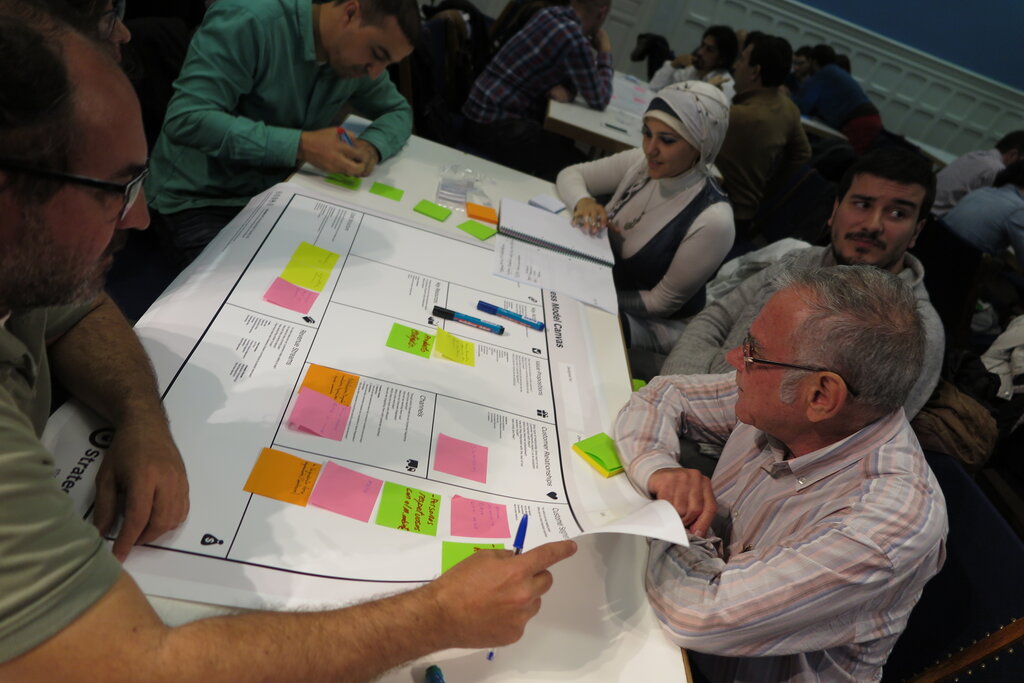
Your storyboard shouldn't be a 50-slide deck. Aim for a concise, visual presentation. Use graphs that clearly show the 'before' and 'after' states, always with the financial or strategic impact highlighted. The goal is a high-level summary that respects their time and focuses their attention on the successful business outcome you delivered.
By mastering the art of the executive storyboard, you elevate your role from a technical expert to a strategic partner. You demonstrate that you not only understand how to fix a process but also how your work directly contributes to the overall health and success of the organisation.