Prehistoric Beasts Unearthed
Introduction to Paleontology
The Story of Ancient Life
Imagine trying to read a history book with most of its pages missing. That's the challenge for paleontologists. They study the history of life on Earth using fossils, the preserved remains or traces of ancient organisms. It's a field that pieces together the story of our planet, from the first single-celled organisms to giant dinosaurs and early human ancestors.
paleontology
noun
The scientific study of life that existed prior to, and sometimes including, the start of the Holocene Epoch (roughly 11,700 years before present). It includes the study of fossils to classify organisms and study their interactions with each other and their environments.
Fossils are the key evidence. They are the direct link to past life, offering clues about what an organism looked like, how it lived, and the environment it inhabited. Without fossils, our understanding of evolution and Earth's history would be incredibly limited. They are the tangible proof of life's long and complex journey.
How Fossils Form
Becoming a fossil is a rare event. Most organisms decompose or are eaten after they die. For a fossil to form, a specific set of conditions must be met. The process usually begins when an animal or plant dies and is quickly buried by sediment, like sand, silt, or mud. This rapid burial protects the remains from scavengers and decay.
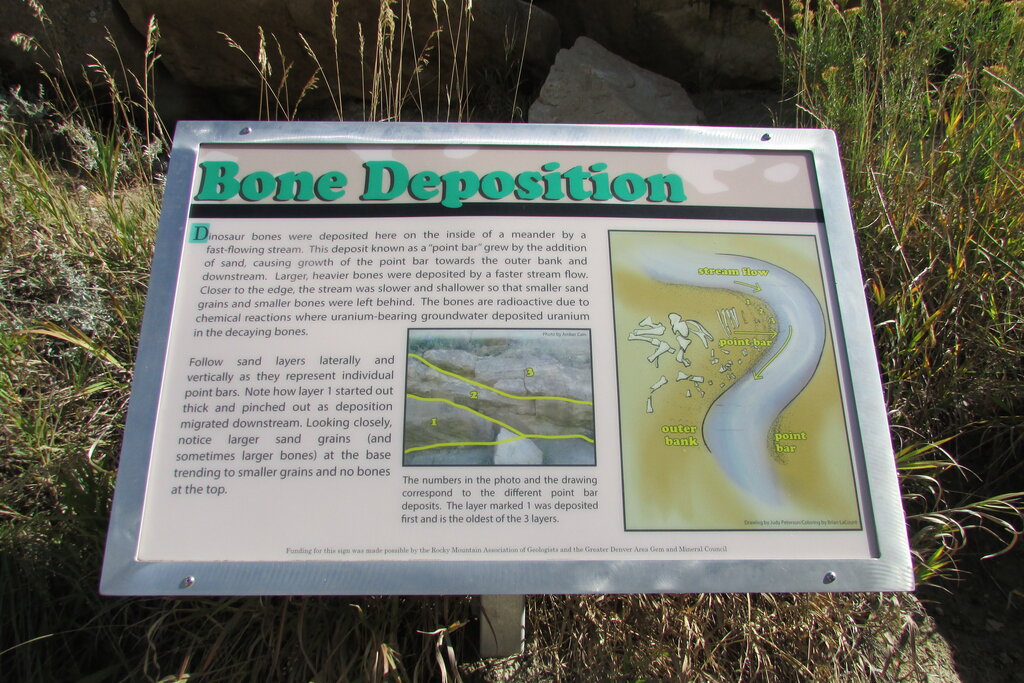
Over millions of years, more layers of sediment pile on top, increasing the pressure and temperature. Water seeps through these layers, carrying dissolved minerals. These minerals gradually replace the organic material of the skeleton, a process called permineralization. The result is a rock-like copy of the original organism's hard parts, like bones, teeth, or shells.
But not all fossils are bones. There are several different types, each providing a unique window into the past.
| Fossil Type | Description | Example |
|---|---|---|
| Body Fossils | Preserved remains of an organism's body. | Bones, teeth, shells, leaves, wood |
| Trace Fossils | Evidence of an organism's activity, not its body. | Footprints, burrows, nests, coprolites (fossilized feces) |
| Molds & Casts | A mold is an impression of an organism in sediment. If the mold is filled with other minerals, it becomes a cast. | A shell impression in a rock |
| Chemical Fossils | Organic molecules left behind by an organism. | Biomarkers found in ancient rocks |
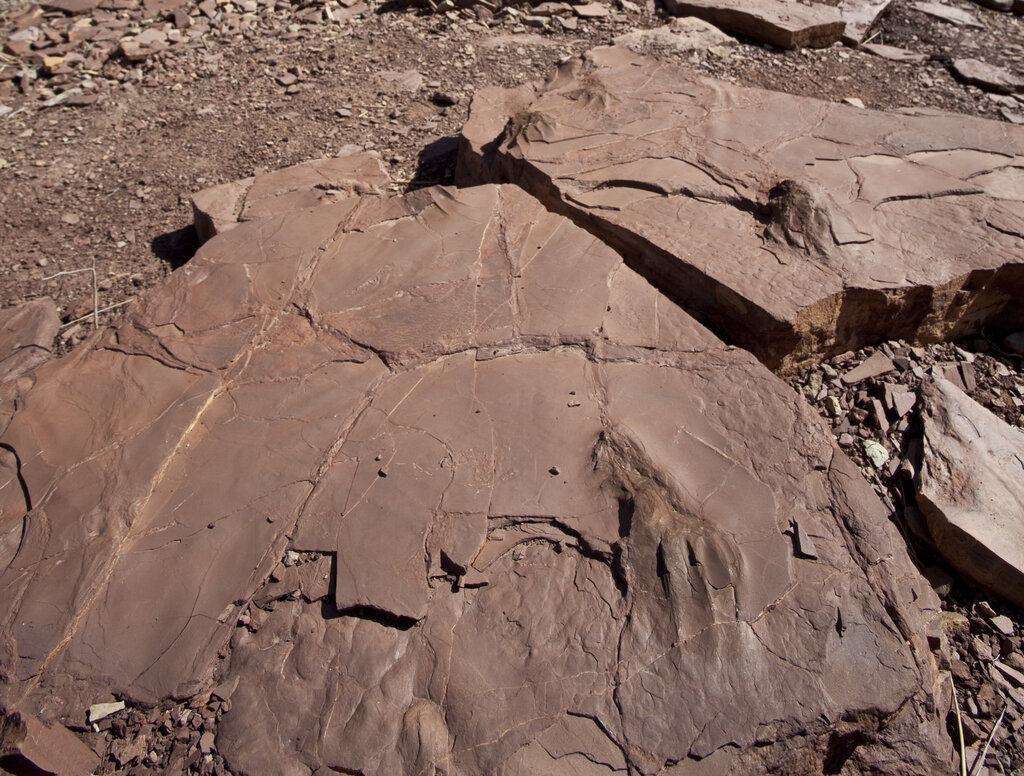
Trace fossils are particularly fascinating because they capture moments in time. A set of fossilized footprints tells us how an animal walked, whether it was alone or in a group, and how fast it was moving.
Earth's Calendar
To make sense of the vast timeline of life on Earth, scientists use the geological time scale. It’s a calendar for events in Earth's history, dividing our planet's 4.6-billion-year story into manageable chunks. This system is hierarchical, organized from the largest units of time to the smallest: eons, eras, periods, epochs, and ages.
The divisions aren't arbitrary. They mark major changes in Earth's geology, climate, and life forms, often defined by mass extinction events or the appearance of new, dominant types of organisms.
By determining the age of the rock layers where a fossil is found, paleontologists can place it within this timeline. This is called relative dating. They can also use radiometric dating, which measures the decay of radioactive isotopes in rocks, to determine a more precise, absolute age in millions of years.
Tools of the Trade
Paleontological research starts in the field but continues in the lab. The first step is prospecting, or searching for fossils. Once a promising site is found, excavation begins. This is painstaking work, as fossils are often delicate. Paleontologists use tools ranging from rock hammers and chisels to tiny dental picks and brushes to carefully free the fossils from the surrounding rock, or matrix.
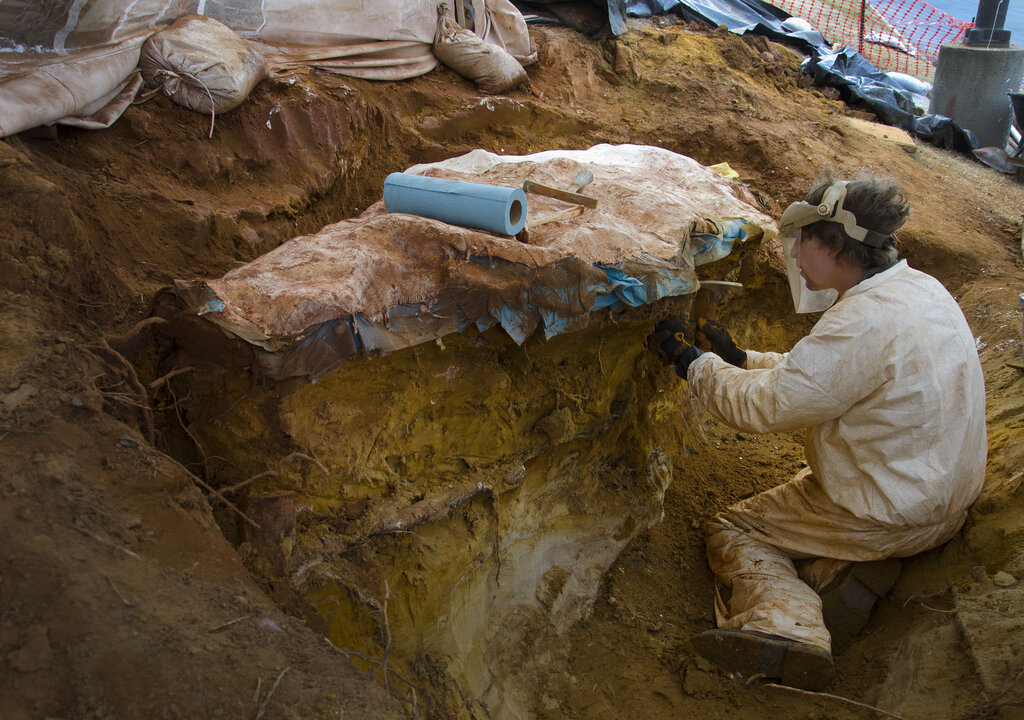
Back in the lab, the fossils are meticulously cleaned and prepared. Then the analysis begins. Scientists study the anatomy of the fossils to identify the species and understand its biology. How did it move? What did it eat? How did it grow? They compare the fossils to living organisms to make inferences about their behavior and physiology.
Modern technology has opened new doors. CT scanners can reveal the internal structure of skulls, allowing researchers to study the brains of long-extinct animals. Chemical analysis of fossil teeth can provide clues about diet and environment. By combining these methods, paleontologists build an ever-clearer picture of the ancient world.
Ready to test your knowledge about the foundations of paleontology?
What is the primary condition necessary for an organism to become a fossil?
The process where minerals carried by water replace the original organic material of a skeleton is called:
Paleontology connects us to a world that existed long before humans. Each fossil is a piece of a giant puzzle, and by studying them, we learn not just about the past, but about our own place in the long, incredible story of life.