Predictive Hiring with AI
Introduction to Data-Driven Hiring
Beyond the Resume
For decades, hiring has followed a familiar script: a recruiter sifts through a mountain of resumes, looking for the right keywords, schools, and previous employers. This process is based on the assumption that what someone has done in the past is the best predictor of what they'll do in the future. But this is often a flawed assumption.
Data-driven hiring changes the script. Instead of relying solely on resumes and gut feelings, it uses objective data and analytics to make smarter, more predictive hiring decisions. The goal is to move from guessing who will be a good fit to knowing, based on evidence.
Data-Driven Hiring
noun
The practice of using data and analytics to make recruitment decisions, aiming to identify candidates who are most likely to succeed in a role.
Traditional resume screening is notoriously unreliable. Resumes are self-reported marketing documents, and they often fail to capture the skills that truly matter for a job, like problem-solving ability, collaboration, or adaptability. Two candidates with nearly identical resumes can have wildly different levels of performance.
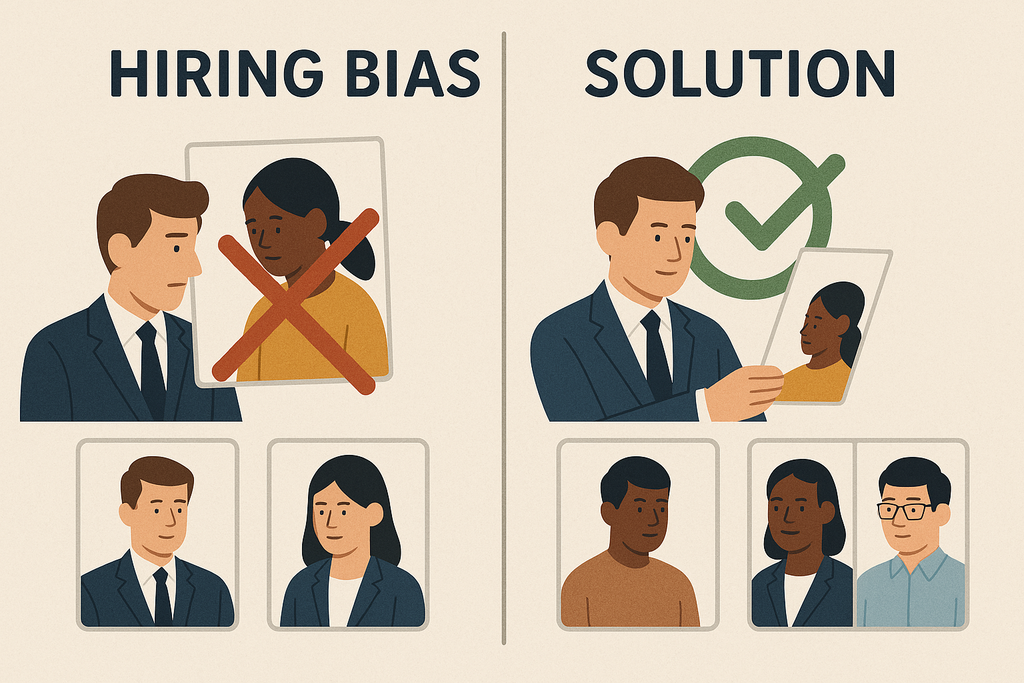
More importantly, this old method is riddled with unconscious bias. A name, a graduation year, or an address can subtly influence a recruiter's judgment, leading them to overlook qualified candidates for reasons that have nothing to do with their ability to do the job.
Behavioral Data and AI
So, if resumes aren't the answer, what is? The key is behavioral data. This is information gathered from watching a candidate perform job-related tasks. Instead of asking candidates to tell you they're a good problem solver, you give them a problem to solve and analyze how they solve it.
This could involve:
- Job simulations: Candidates complete tasks that mimic the actual work they would be doing.
- Gamified assessments: Interactive challenges that measure cognitive abilities and personality traits.
- Video interviews: Analyzing communication style and responses to situational questions.
This is where Artificial Intelligence (AI) comes in. It would be impossible for a human to analyze thousands of data points from these assessments. AI algorithms can process this information at scale, identifying patterns that correlate with on-the-job success.
The shift is from evaluating past experience to predicting future performance.
AI tools can help in several ways throughout the hiring process. They can screen candidates based on their performance in assessments, removing the bias of a resume screen. They can analyze language in video interviews for key competencies, or even help schedule interviews with the most promising candidates.
By focusing on objective, behavioral data, companies can build a clearer picture of a candidate's true potential. This not only leads to better hires but also creates a more fair and equitable process where everyone has a chance to prove their skills, regardless of their background.
AI-driven psychometric and skills assessments, combined with natural language processing (NLP) for resume analysis, allow AI to rank and filter top candidates without human bias.
This data-centric approach helps organizations look beyond the surface and identify individuals with the core competencies needed to thrive.