Predicting Next Communication Actions with Deep Learning
Introduction to Deep Learning
The Brain as a Blueprint
Deep learning is a powerful type of machine learning that uses structures inspired by the human brain. These structures are called artificial neural networks. The “deep” in deep learning refers to the many layers of these networks, which allow them to learn complex patterns from data.
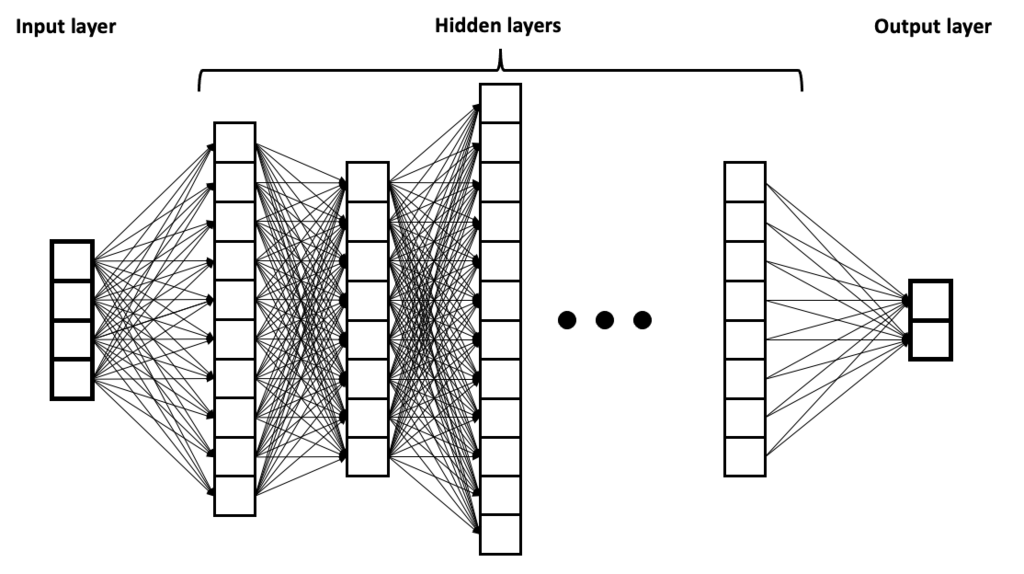
Think of it like learning to recognize a cat. A first layer in the network might learn to spot simple shapes like edges or corners. The next layer might combine those edges to recognize eyes or ears. A deeper layer could then combine eyes and ears to identify a face. Finally, the network puts all these features together to conclude, “That’s a cat.” Each layer builds on the knowledge of the one before it, creating a deep, hierarchical understanding of the data.
How a Network Learns
Neural networks learn through a process of trial and error, much like we do. This process involves three key steps: making a guess, measuring the error, and then adjusting to make a better guess next time. This cycle repeats thousands or even millions of times, gradually improving the network's performance.
The learning cycle: Predict → Measure Error → Adjust.
This process starts with something called forward propagation. This is just a fancy term for the network making a prediction. Data enters the input layer and flows forward through the hidden layers, one by one. Each neuron in the network performs a small calculation, and the results are passed along until they reach the output layer, which produces the final guess.
Once the network makes a prediction, we need a way to tell it how good or bad that prediction was. This is done using a loss function. A loss function calculates a single number, called the loss or error, that represents the difference between the network's prediction and the actual correct answer. The goal of training is to make this loss as small as possible.
A high loss means the prediction was far from the truth. A low loss means it was close.
Now for the magic. How does the network use this loss to improve? Through a process called backward propagation, or backpropagation. The loss is sent backward through the network, from the output layer to the input layer. As it travels, it calculates how much each connection in the network contributed to the overall error.
This information is then used by an optimization technique, like Gradient Descent, to slightly adjust the network's internal parameters (its weights and biases). Think of it as turning thousands of tiny knobs. Each adjustment is a small step toward making a better prediction next time. By repeating this forward and backward cycle over and over with lots of data, the network gradually "descends" to a state of minimum loss and maximum accuracy.
Let's test your understanding of these core ideas.
What does the “deep” in “deep learning” refer to?
Which process is responsible for calculating how much each connection in a neural network contributed to the overall error?
These foundational concepts of networks, propagation, loss, and optimization are the building blocks for all of deep learning. Mastering them is the first step toward building powerful AI models.