Precision Location Engineering on iPhone
Dual-Frequency GNSS Architecture
A Tale of Two Frequencies
For years, your phone's GPS relied on a single signal, known as L1. It was a workhorse, guiding you on road trips and helping you find nearby cafes. But in dense urban areas, the L1 signal struggles. Radio waves bounce off tall buildings, creating a mess of reflected signals that arrive at your phone at slightly different times. This phenomenon, called multipath interference, can confuse your phone's receiver, causing your location pin to jump around erratically. It's the reason you sometimes appear to be in the middle of a building or on the wrong side of the street.
To solve this, modern smartphones, beginning with the iPhone 14 Pro, adopted a dual-frequency approach. They listen not only to the legacy L1 signal but also to a newer, more advanced signal called L5. This isn't just an upgrade; it's a fundamental change in how your phone finds its place in the world.
The L5 Advantage
The L5 signal is broadcast at a different frequency, 1176.45 MHz, and is designed specifically for high-precision civilian use. Its key advantages lie in its structure. L5 has a wider bandwidth and a much higher "chip rate" than L1. In simple terms, the L5 signal is like a very complex, rapidly changing pattern. When your phone's receiver looks for this pattern, it can lock onto it with incredible precision.
This precision results in a much sharper and narrower "correlation peak," which is the spike the receiver detects when it perfectly aligns the incoming signal with its internal template. A sharper peak makes it far easier to distinguish the true, direct signal from the weaker, delayed reflections caused by multipath interference.
The diagram shows why this matters. The L1 signal's correlation peak is wide, making it difficult to separate from a reflected signal arriving a moment later. The L5 signal's peak is incredibly sharp, allowing the receiver to easily identify the first signal that arrives and discard the echoes. This is the key to conquering the 'urban canyon' problem.
Putting It All Together
The real magic happens when the iPhone's GNSS receiver processes both L1 and L5 signals at the same time. By comparing the data from two different frequencies, the receiver can more effectively calculate and correct for atmospheric distortions that slow down satellite signals. This dual-band processing, combined with L5's resistance to multipath, is what enables a dramatic leap in accuracy—from errors of several meters down to just centimeters in ideal conditions.
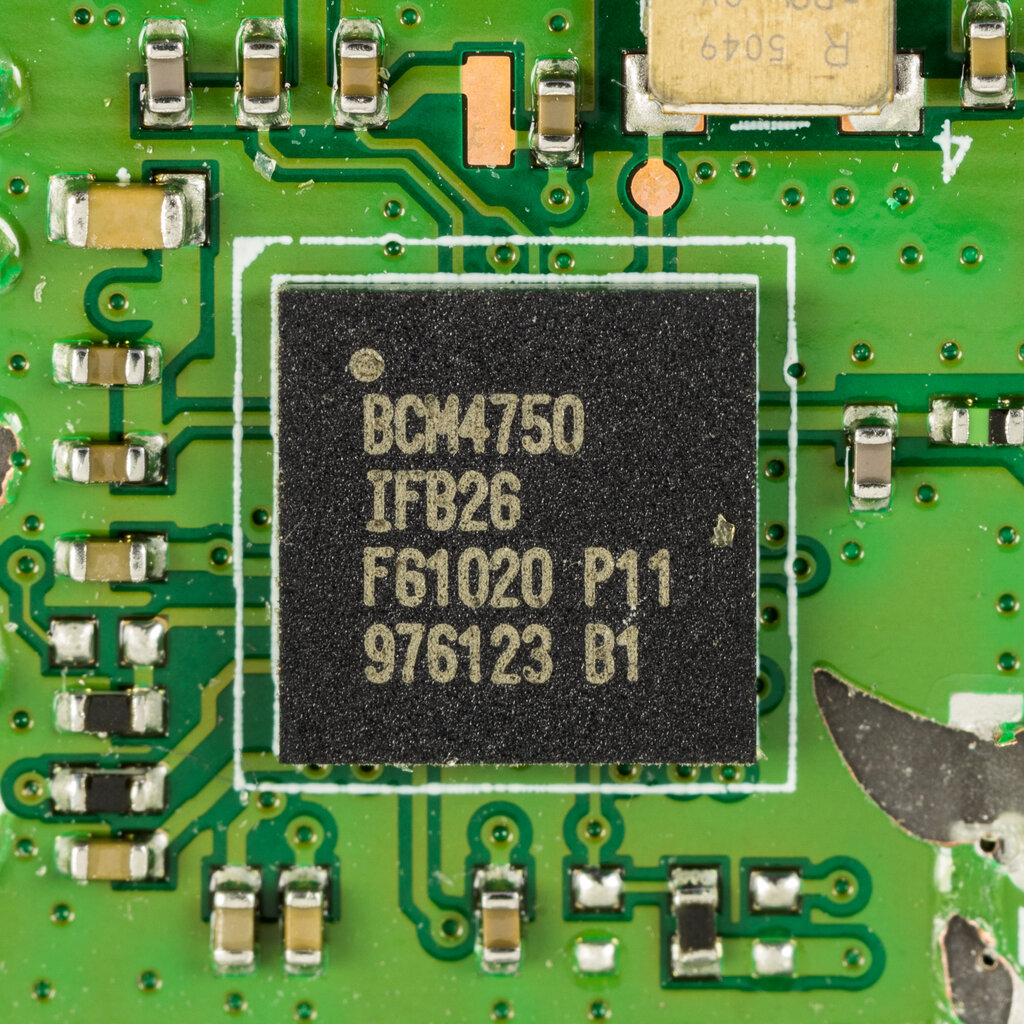
To achieve this precision, your iPhone doesn't just rely on the American GPS system. Its GNSS chip listens to a whole family of satellite constellations from around the world:
- GPS (United States)
- GLONASS (Russia)
- Galileo (European Union)
- QZSS (Japan)
- BeiDou (China)
More constellations mean more satellites are visible in the sky at any given time, providing more data for a faster, more reliable location fix. The L5 signal, often called the 'gold standard' for civilian use, is being broadcast by an increasing number of satellites across these systems, particularly from GPS and Galileo.
Let's check your understanding of these advanced navigation concepts.
What is the primary problem in dense urban environments that the dual-frequency L1/L5 GPS system is designed to solve?
Which characteristic of the L5 signal allows it to be more precise and resistant to echoes than the L1 signal?
This move to dual-frequency GNSS is a quiet but powerful evolution. It makes the location services you rely on every day more robust and precise, especially in the challenging environments where you need them most.