Precision Hair Density and Growth Science
Hair Growth Cycle Mechanics
The Four-Act Play of Hair Growth
Each hair on your head isn't just growing continuously. It's following a script, a dynamic four-part cycle that repeats over and over again throughout your life. Think of each follicle as an independent factory, working on its own schedule. This is why you don't lose all your hair at once—while some follicles are busy building, others are resting or preparing to shed.
The hair growth cycle is a continuous and dynamic process consisting of four main phases: anagen (growth), catagen (regression), telogen (rest), and exogen (shedding).
Understanding this cycle is key to understanding hair density. The four phases are anagen, catagen, telogen, and exogen.
| Phase | Common Name | Action | Duration |
|---|---|---|---|
| Anagen | Growth | Actively producing the hair fiber | 2–7 years |
| Catagen | Transition | Follicle shrinks and detaches | 2–3 weeks |
| Telogen | Resting | Hair is dormant in the follicle | ~3 months |
| Exogen | Shedding | Old hair falls out | Ongoing |
Anagen: The Growth Engine
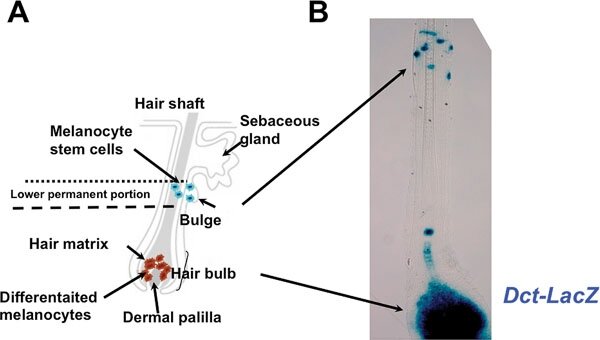
The anagen phase is where the magic happens. During this period, cells in the dermal papilla divide rapidly to form the new hair shaft. The follicle is deeply rooted in the scalp, connected to blood vessels that supply it with the oxygen and nutrients needed for robust growth. Your hair grows about half an inch per month during this phase.
Crucially, the length of your anagen phase determines the maximum potential length of your hair. If you have a short anagen phase (around two years), your hair might struggle to grow past your shoulders. Someone with a long anagen phase (seven years or more) can grow hair down to their waist. This duration is largely determined by genetics.
At any given time, about 85-90% of the hairs on your head are in the anagen phase. This is why consistency with hair growth treatments is so important. A serum needs to be applied for at least 3-6 months to influence a significant number of follicles as they enter this active growth stage.
Transition, Rest, and Renewal
Eventually, the anagen phase ends and the catagen phase begins. This is a short, transitional stage lasting only a few weeks. The follicle shrinks dramatically, cutting the hair fiber off from its blood supply and pushing it upward toward the skin's surface. This signals the end of active growth for that specific hair.
After the transition of catagen, the follicle enters the telogen, or resting, phase. The hair—now called a club hair—is fully formed but sits dormant in the follicle for about three months. It's no longer growing, but it's not ready to fall out just yet.
The final stage is exogen, the shedding phase. As a new anagen hair begins to form underneath, the old club hair is loosened and eventually shed. It's normal to lose between 50 and 100 of these hairs every day. This process ensures that your scalp maintains a relatively consistent density of hair.
When the Cycle Is Disrupted
Hair thinning and loss often occur when this finely tuned cycle is disrupted. One of the most common culprits is a process called This is a gradual shrinking of the hair follicle, often driven by genetics and hormones like DHT (dihydrotestosterone).
As follicles miniaturize, the anagen phase becomes progressively shorter. A follicle that once had a five-year growth phase might be reduced to just a few months. The resulting hairs are thinner, shorter, and less pigmented—often referred to as vellus hairs. Over time, this leads to a visible reduction in hair density.
The primary targets for reversing this are the follicle's command centers: the dermal papilla and the Stimulating these structures can help extend the anagen phase and encourage the follicle to produce a thicker, healthier hair fiber.
Understanding this cycle makes it clear that there are no overnight fixes for hair density. True improvement requires patience, targeting the biological mechanisms within the follicle and giving them time to complete their natural cycle.
Let's check your understanding of the hair growth cycle.
What is the active growth phase of the hair cycle, where cells divide rapidly to form a new hair shaft?
A person's ability to grow their hair to their waist is primarily determined by...
By grasping the mechanics of the hair growth cycle, you're better equipped to understand how treatments work and why consistency is the key to achieving your hair density goals.