Precision Gemstone Faceting
Introduction to Gemstone Faceting
Unlocking Inner Light
A rough gemstone pulled from the earth can be beautiful, but its true potential is often hidden. Gemstone faceting is the art and science of cutting a stone with many flat surfaces, or facets, to transform it into a sparkling jewel. Each tiny, polished plane is precisely angled to capture light and reflect it back to the eye, creating a dazzling display.
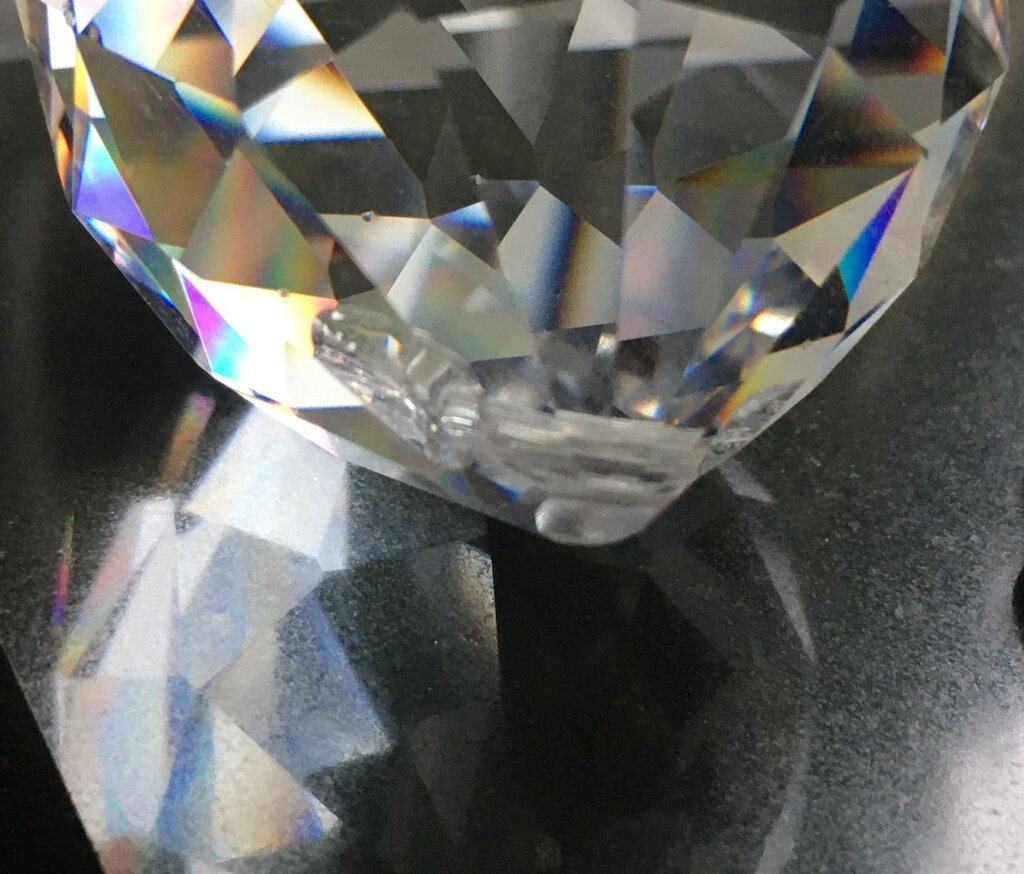
This play of light is what gives a gem its character. Brilliance is the bright, white light that reflects from the stone's surface and interior. Fire, or dispersion, is the rainbow of colors you see as the gem splits white light into its spectral colors, much like a prism. A masterfully cut gem maximizes both.
A Cut Through History
For thousands of years, people simply polished gemstones to smooth their surfaces, creating the rounded shapes we call cabochons. True faceting, the cutting of flat, geometric faces, is a more recent innovation. It began to emerge in Europe during the late Middle Ages as craftspeople developed better tools and a greater understanding of how to shape hard materials.
Early cuts were simple. The point cut just followed the natural octahedral shape of a diamond crystal, polishing its eight faces. The table cut was a step further: the top point was sliced off to create a large, flat
This diagram illustrates the progression from the natural octahedral shape of a rough diamond to early faceting styles like the point cut and the table cut.
Over centuries, gem cutters, or lapidaries, experimented with more complex arrangements of facets. This evolution accelerated with the invention of the faceting machine, which allowed for unparalleled precision. Today, modern faceting is guided by mathematical models that calculate the exact angles needed to make a gemstone shine its brightest.
The Physics of Sparkle
Why do facets make a gem sparkle? It's all about controlling the path of light. When a ray of light enters a gemstone from the air, it slows down and bends. This bending is called refraction.
Refraction
noun
The bending of a wave when it enters a medium where its speed is different.
The goal of a faceter is to cut the bottom facets, known as the pavilion, at such a steep angle that light doesn't leak out the bottom. Instead, the light hits the pavilion facets and reflects off them as if they were mirrors. This phenomenon is called total internal reflection. The light ray is trapped, bounces around inside the stone, and is then directed back out through the top, or crown, directly to your eye.
The critical angle is the secret. If light hits an internal facet at an angle shallower than the critical angle, it escapes. If it hits at a steeper angle, it reflects. Every facet's angle must be perfect to achieve total internal reflection and send light back out the top.
Designs for Dazzle
Not all gems are cut the same way. The arrangement of facets, known as the faceting style or design, is chosen to complement the gem's unique properties, like its color and refractive index. Different designs produce different visual effects.
| Cut Style | Description | Primary Effect |
|---|---|---|
| Brilliant Cut | Cone-shaped with many triangular and kite-shaped facets. | Maximizes brilliance and fire. The classic for diamonds. |
| Step Cut | Has long, parallel facets that look like stairs. | Emphasizes a gem's clarity and color, producing flashes of light. |
| Mixed Cut | A combination of brilliant and step-cut facets. | Offers a balance of brilliance and color enhancement. |
The precision of these cuts is paramount. Symmetry is just as important as the angles. If the facets are not perfectly shaped and aligned, the light will not travel as intended, and the gem's brilliance will be diminished. Every facet must be placed with intention, working together to create a stone that is full of life and light.
Now that you understand the basic principles, let's test your knowledge.
What is the primary goal of cutting the pavilion (bottom) facets of a gemstone at precise, steep angles?
In gemology, what is the term for the rainbow of colors seen when white light is split by the gemstone?
Understanding these core concepts of light, precision, and history is the first step in appreciating the intricate craft of gemstone faceting.