Practical Software Development and Logic
Complex Logic Patterns
Cleaning Up Conditionals
As programs grow, conditional logic can get messy. You've likely seen or written code that looks like an arrowhead pointing right, with if statements nested inside other if statements. This is often called the "arrow anti-pattern." While it works, it's hard to read and even harder to maintain. Each level of nesting adds to the cognitive load of anyone trying to understand the code's intent.
A powerful technique to flatten this logic is using with early returns. A guard clause is a check at the beginning of a function that validates a condition. If the condition fails, the function exits immediately. This approach keeps the main logic of the function at the top level of indentation, making it much easier to follow.
Instead of asking "Is everything okay to proceed?", a guard clause asks "Is there any reason I can't proceed?"
Let's look at an example. Here's a function to process a user's order, but it's nested deeply.
```javascript
// BEFORE: Arrow anti-pattern
function processOrder(user, order) {
  if (user) {
    if (user.isVerified) {
      if (order && order.items.length > 0) {
        // Core logic here
        console.log(`Processing order for ${user.name}...`);
        return { success: true };
      } else {
        return { success: false, error: "Order is empty" };
      }
    } else {
      return { success: false, error: "User not verified" };
    }
  } else {
    return { success: false, error: "No user provided" };
  }
}
Now, let's refactor it using guard clauses. Notice how the main logic is no longer indented, and the error conditions are handled cleanly at the top.
```javascript
// AFTER: Using guard clauses
function processOrder(user, order) {
  if (!user) {
    return { success: false, error: "No user provided" };
  }

  if (!user.isVerified) {
    return { success: false, error: "User not verified" };
  }

  if (!order || order.items.length === 0) {
    return { success: false, error: "Order is empty" };
  }

  // Core logic is now clean and un-nested
  console.log(`Processing order for ${user.name}...`);
  return { success: true };
}
Smarter Boolean Logic
Beyond structuring if statements, we can also optimize the boolean expressions themselves. Many languages use a strategy called for logical AND (&&) and OR (||) operators. This can be used to write more concise and efficient code.
With &&, if the first operand is false, the second operand is never evaluated because the entire expression is guaranteed to be false.
With ||, if the first operand is true, the second operand is never evaluated because the entire expression is guaranteed to be true.
This is commonly used to prevent errors, like trying to access a property on an object that might be null.
// Without short-circuiting, this would crash if user is null
if (user && user.isAdmin) {
  console.log('Welcome, Admin!');
}

// The check for user.isAdmin only runs if user is not null.
Another powerful tool for simplifying boolean logic comes from formal mathematics: De Morgan's Laws These laws provide a simple way to convert and simplify negated expressions, making them easier to read.
Imagine you have a confusing condition like this:
```javascript
// Hard to read condition
if (!(isGuest || !hasPermission)) {
  // ... do something
}
Applying De Morgan's Law (!(A || B) becomes !A && !B), we can simplify it. The negation distributes, and the || flips to &&.
```javascript
// Easier to read condition
// !(isGuest || !hasPermission) becomes !isGuest && !!hasPermission
if (!isGuest && hasPermission) {
  // ... do something
}
Replacing Complex Switches
Long switch statements or if-else if-else chains are a common sight, especially when mapping a value to a specific action or result. While they work, they can become unwieldy. Every new case requires adding more code to the block, increasing its size and complexity.
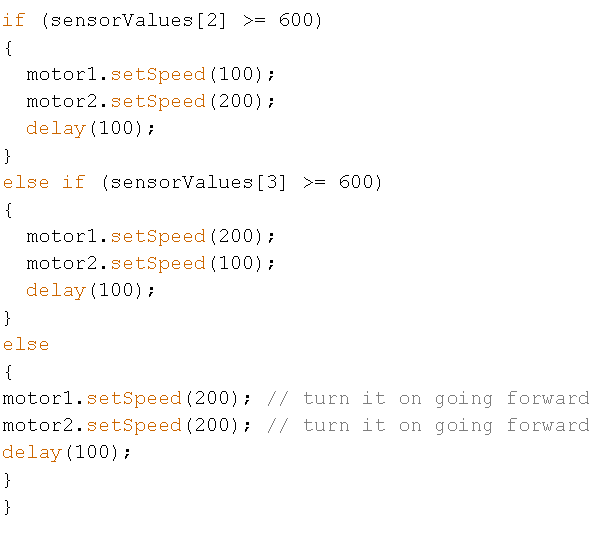
A more scalable and often more readable alternative is a lookup table using an object, map, or dictionary. This pattern separates the data (the mapping of keys to values) from the logic that uses it. It's a declarative approach: you define the relationships, then use them.
```javascript
// BEFORE: Using a switch statement
function getPermissionLevel(role) {
  switch (role) {
    case 'admin':
      return 4;
    case 'editor':
      return 3;
    case 'viewer':
      return 2;
    default:
      return 1; // Guest
  }
}
Here is the same logic using a lookup table. Adding new roles is as simple as adding a new key-value pair to the permissionLevels object, without touching the function's logic.
```javascript
// AFTER: Using a lookup table
const permissionLevels = {
  admin: 4,
  editor: 3,
  viewer: 2,
};

function getPermissionLevel(role) {
  // Use the lookup table, provide a default value with the || operator
  return permissionLevels[role] || 1; // 1 is the default for guests
}
These patterns move beyond just making code work. They focus on making code readable, maintainable, and less prone to bugs. By cleaning up complex conditionals, you make your logic clearer for your future self and for your teammates.
What is the primary benefit of using guard clauses at the beginning of a function?
Consider the following code snippet:
function canAccess(user) {
  return user && user.isLoggedIn();
}

let user = null;
canAccess(user);
What happens when this code is executed?