Practical Software Development and Logic
Structuring Procedural Logic
From Scripts to Programs
Writing code is one thing; structuring it is another. You've mastered loops and variables, which are the building blocks for telling a computer what to do. But as tasks get more complex, a single, long script becomes a tangled mess. It's hard to read, difficult to fix, and nearly impossible to update.
The solution is to think in terms of procedures, or functions. A function is a named block of code that performs a specific task. Instead of writing the same logic over and over, you write it once inside a function and then "call" that function whenever you need it. This is the core idea of modular programming.
This practice is often called DRY, or "Don't Repeat Yourself." By packaging logic into functions, you make your code more maintainable and less prone to errors.
Let's see what this looks like. Here’s a simple function that greets a user. Notice the def keyword, which tells Python we are defining a function.
def greet_user():
    """This function prints a simple greeting."""
    print("Hello, welcome to the program!")

# To run the code inside the function, you must call it:
greet_user()
Moving Data with Functions
Functions aren't just isolated blocks of code; they are tools for processing data. To make them truly useful, we need a way to send information into them and get results out of them.
We pass data into a function using arguments. These are variables listed inside the parentheses in the function definition. When you call the function, you provide values for these arguments. To get data out, a function uses the return statement. When Python sees return, it exits the function and sends the specified value back to where the function was called.
def calculate_area(width, height):
    """Calculates the area of a rectangle."""
    area = width * height
    return area

# Call the function and store the result in a variable
rectangle_area = calculate_area(10, 5)

print(f"The area is: {rectangle_area}")
In this example, width and height are parameters. When we call calculate_area(10, 5), we pass 10 and 5 as arguments. The function computes the area and returns the result, which we then store in the rectangle_area variable. This creates a clean flow of data: it goes in, gets processed, and a result comes out.
Understanding Scope
An important concept when working with functions is scope a variable’s region of visibility. Think of it like this: a variable defined inside a function is like a tool kept in a specific workshop. It's only available for use within that workshop. This is called local scope.
Variables defined outside of any function exist in the global scope. They are like tools available in a shared, central area, accessible from any workshop. While it might seem convenient to make everything global, it's a dangerous practice. Global variables can be modified by any function, making it incredibly difficult to track changes and debug problems. It's best to keep variables local whenever possible and pass them as arguments.
# 'global_message' is in the global scope
global_message = "I'm available everywhere."

def show_messages():
    # 'local_message' is in the local scope of this function
    local_message = "I only exist inside this function."
    print(local_message)
    print(global_message) # Can access global variables

show_messages()

# This next line would cause an error because 'local_message' is not in the global scope
# print(local_message)
Decomposing a Problem
The real power of comes from using functions to break a large, complex problem into smaller, manageable steps. This process is called decomposition. Instead of trying to solve everything at once, you identify the individual tasks that make up the whole and write a function for each one.
Imagine you need to write a program to process customer orders. A monolithic script would be a nightmare. A procedural approach would break it down logically.
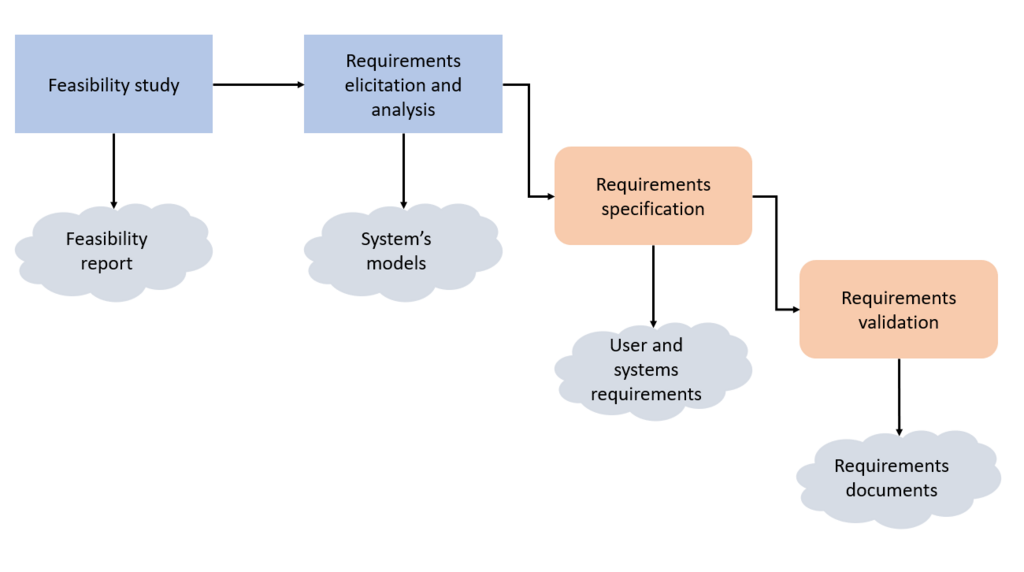
Let's apply this to a smaller problem: calculating the final cost of an item in a shop. The process involves getting the base price, applying a discount, and then adding sales tax.
We can decompose this into three distinct functions:
- A function to calculate the discounted price.
- A function to calculate the tax on a given price.
- A main function to control the flow, calling the other two in sequence.
This approach organizes the logic cleanly. Each function has one job, making the whole system easier to test, debug, and understand.
def apply_discount(price, discount_percent):
    """Returns the price after a percentage discount."""
    discount_amount = price * (discount_percent / 100)
    return price - discount_amount

def calculate_tax(price, tax_rate):
    """Returns the tax amount for a given price."""
    return price * (tax_rate / 100)

def calculate_final_price(base_price, discount, tax):
    """Orchestrates the calculation of the final price."""
    # Step 1: Apply discount
    discounted_price = apply_discount(base_price, discount)

    # Step 2: Calculate tax on the discounted price
    tax_amount = calculate_tax(discounted_price, tax)

    # Step 3: Add tax to get the final price
    final_price = discounted_price + tax_amount
    return final_price

# --- Main Program Execution ---
item_price = 100
discount_percentage = 10
sales_tax_rate = 5

final_cost = calculate_final_price(item_price, discount_percentage, sales_tax_rate)

print(f"The final cost of the item is: 💲{final_cost:.2f}")
Notice how the calculate_final_price function acts as a controller. It manages the data flow, passing the result of one function as an argument to the next. This is the essence of structuring procedural logic.
Ready to test your understanding of procedural logic?
What is the primary advantage of using functions in programming?
Consider the following Python code. What will be printed to the console?
def modify_value(x):
    y = x + 5
    return y

y = 10
result = modify_value(y)
print(result)
By breaking problems down and using functions to manage scope and data flow, you can build applications that are robust, readable, and easy to maintain.