Practical Software Construction and Logic
Data Structure Performance
Beyond Just Storing Data
You already know how to store data in arrays and lists. But as applications grow, the way you structure data becomes critical. Choosing the right data structure isn't just about organising information; it's about building software that is fast, responsive, and doesn't consume unnecessary resources. It's the difference between an app that flies and one that crawls.
To compare data structures, we need a common language. That language is Big O notation, which describes how the runtime (time complexity) or memory usage (space complexity) of an operation grows as the input size increases. It helps us answer questions like, "What happens to my search function when my user base grows from one thousand to one million?"
| Notation | Name | Performance |
|---|---|---|
| Constant | Excellent. The time it takes doesn't change with input size. | |
| Logarithmic | Very Good. The time increases very slowly as input size grows. | |
| Linear | Fair. The time grows directly in proportion to the input size. | |
| Log-Linear | Good. Often seen in efficient sorting algorithms. | |
| Quadratic | Poor. Becomes very slow with large inputs. Avoid if possible. |
The Need for Speed
Imagine you're building the search function for a massive e-commerce site. Users expect instant results. If you stored all your products in a simple list, you'd have to check each item one by one. For millions of products, this linear search would be painfully slow.
This is where hash maps (also known as dictionaries or hash tables) shine. A hash map uses a hash function to convert a key (like a product ID) into an index in an array. This allows for incredibly fast lookups, insertions, and deletions, typically in constant time, , on average. It's like having a perfect index in a book that takes you directly to the right page every time.
But what happens if the hash function generates the same index for two different keys? This is called a hash collision and is a fundamental challenge in hash map design. Common strategies to resolve this include chaining, where a linked list of entries is stored at the conflicting index, or open addressing, which finds the next empty slot in the array.
When Order Is Key
Hash maps are fast, but they offer no guarantees about the order of their elements. If you need to retrieve data in a sorted way, like displaying a leaderboard or finding all users within an age range, a hash map is the wrong tool.
For these scenarios, trees are an excellent choice. Specifically, Balanced Binary Search Trees (BSTs) maintain elements in a sorted order. This structure allows you to efficiently search, insert, and delete elements in time, which is much better than a list's but not quite as fast as a hash map's average lookup. The trade-off is speed for order.
Managing Priorities
Consider a hospital's emergency room system or a CPU's task scheduler. In these cases, requests must be handled based on urgency, not just when they arrived. This is a job for a Priority Queue.
A Priority Queue is an abstract data type where each element has an associated priority. While you could implement one with a sorted list, a much more efficient data structure is a heap. A heap is a tree-based structure that satisfies the heap property: in a max-heap, every parent node is greater than or equal to its children. This ensures the highest-priority item is always at the root of the tree, accessible in time.
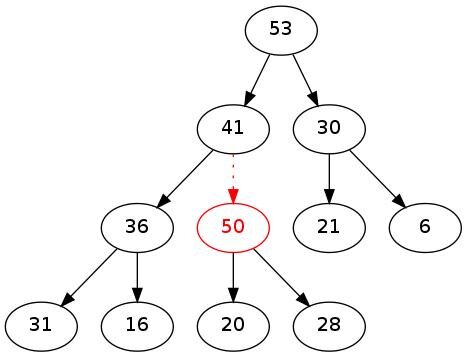
Adding a new item or removing the highest-priority item involves a quick re-ordering process that takes only time. This makes heaps ideal for scenarios where you need to constantly and quickly access the most important element in a dynamic collection.
Space, the Final Frontier
So far, we've focused on time. But memory usage, or space complexity, is equally important, especially in memory-constrained environments like mobile devices or large-scale backend systems. Some structures, like hash maps, may require extra space for their internal array and to handle collisions, leading to a higher memory footprint than a simple list.
Cache locality is another subtle but powerful performance factor. Processors have small, extremely fast memory caches. Accessing data that is physically close together in memory (like in an array) is much faster than jumping around, which can happen when traversing a linked list or a tree. This is why iterating over an array can sometimes outperform more complex structures, even if they have a better Big O complexity for certain operations. Choosing the right data structure is a balancing act between time complexity, space complexity, and the underlying hardware.
What is the primary purpose of Big O notation in computer science?
You are building a feature that needs to quickly check if a username already exists in a database of millions of users. The order of usernames does not matter. Which data structure is most suitable for this task?