Practical Mechanics of Martial Arts
Kinetic Power Mechanics
The Body as a Whip
A powerful strike doesn't start in the fist or the foot. It begins with the floor. Every punch, kick, or elbow is the final link in a chain of motion that travels up through the body, gaining speed and force at every stage. This sequence is known as the kinetic chain—the process of transferring force from the ground, through the legs and hips, into the core, and finally out through the striking limb.
Think of it like cracking a whip. The power originates in the handle (your feet on the ground), and the wave of energy travels all the way to the tip.
When you push off the ground, the ground pushes back with an equal and opposite force. This is the ground reaction force, the raw energy that fuels the strike. A stable stance allows you to grip the floor and channel this energy upwards. Your legs and hips then act as a powerful engine, rotating to convert this linear push into rotational torque. This twisting motion of the torso is what multiplies the initial force, sending it up the chain to the shoulder and arm.
While the principle is universal, different martial arts have perfected distinct ways of using this chain. They generally fall into two categories: strikes that 'snap' at the target and strikes that 'shove' through it.
Snap vs. Shove
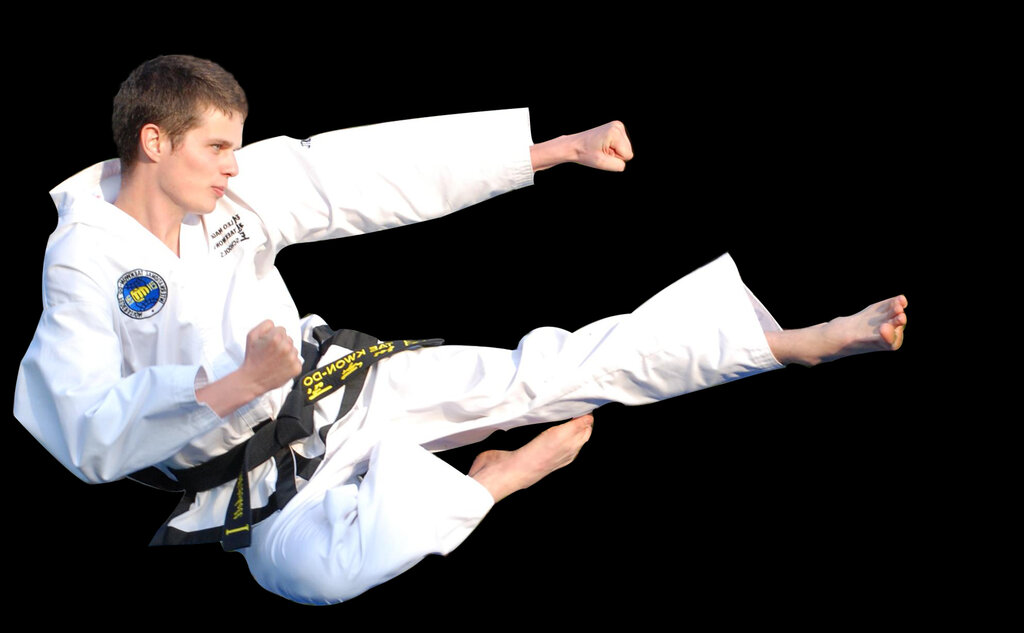
Think of the sharp, cracking sound of a Taekwondo kick hitting a pad. This is a 'snapping' strike. Styles like Karate and Taekwondo prioritise speed. The goal is to accelerate the limb to maximum velocity right at the moment of impact and then immediately retract it. This method relies heavily on —the ability of muscles and tendons to store and release energy like a rubber band.
A roundhouse kick in these styles, for example, is powered by a very rapid extension of the knee. The power isn't about pushing with body mass, but about achieving blistering speed at the end of the limb. This creates a focused, high-velocity impact designed to shock the target.
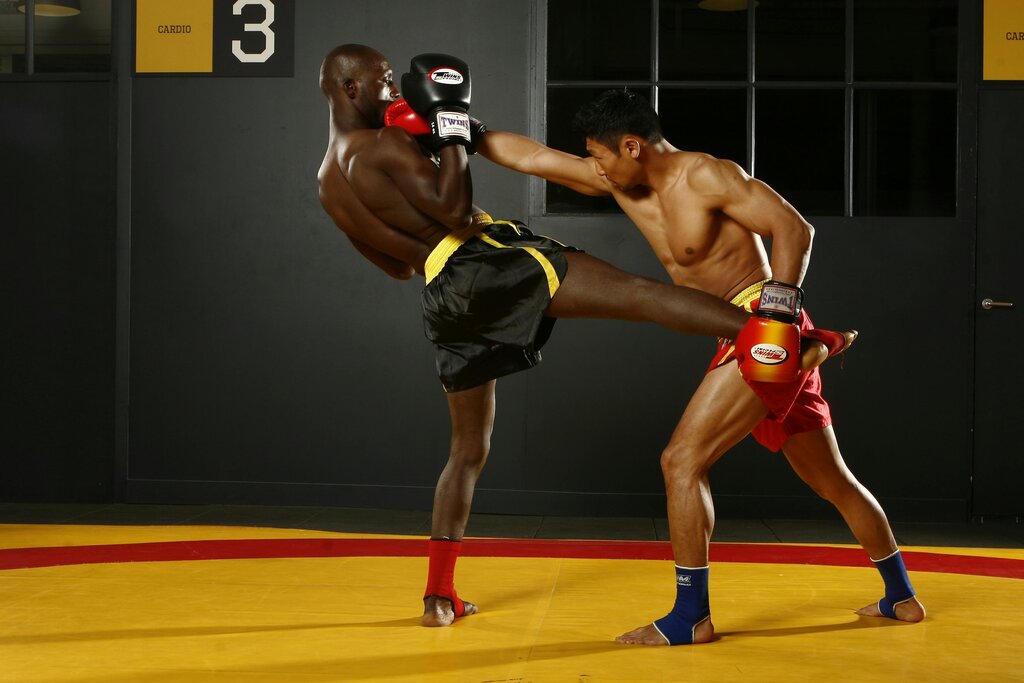
In contrast, consider the heavy, thudding impact of a Muay Thai kick or a boxer's cross. These are 'heavy' or 'follow-through' strikes. Here, the primary goal is to transfer as much body mass as possible into the opponent. This is achieved through powerful and committing your weight into the strike.
Instead of snapping back, the limb drives through the target. A boxer doesn't just punch with his arm; he rotates his hips and shoulders, pivoting on his back foot to drive his entire body's mass behind the fist. This creates a deep, penetrating force designed to move and unbalance the opponent, not just shock them.
Linear Speed vs. Circular Mass
These two approaches represent a fundamental trade-off in biomechanics. Snapping strikes are linear—they travel in a straight line to the target, making them incredibly fast and difficult to see coming. Heavy, follow-through strikes are more circular—they use wider arcs to build up momentum and engage more muscle mass.
| Feature | Snapping Strikes (Linear) | Heavy Strikes (Circular) |
|---|---|---|
| Primary Source | Elastic Recoil & Speed | Mass & Rotational Torque |
| Body Mechanics | Rapid limb extension/retraction | Full body rotation, weight transfer |
| Example Arts | Karate, Taekwondo | Muay Thai, Western Boxing |
| Advantage | Faster, less telegraphed | More powerful, deeper impact |
| Disadvantage | Less mass behind the hit | Slower, requires more commitment |
Neither method is inherently superior. The choice depends on strategy. A quick, snapping jab can set up a more powerful circular hook. A linear front kick can keep an opponent at bay, while a circular roundhouse kick aims to end the fight. Masterful fighters understand both principles and apply them based on timing, distance, and the opening their opponent presents. The kinetic chain is the engine, but the driver chooses how to use the power.
According to the principle of the kinetic chain, where does the power for a strong strike originate?
A martial artist throws a kick that makes a sharp, cracking sound on impact and is retracted almost instantly. This is a classic example of what?