Practical Machine Learning Mastery
Introduction to Machine Learning
What Is Machine Learning?
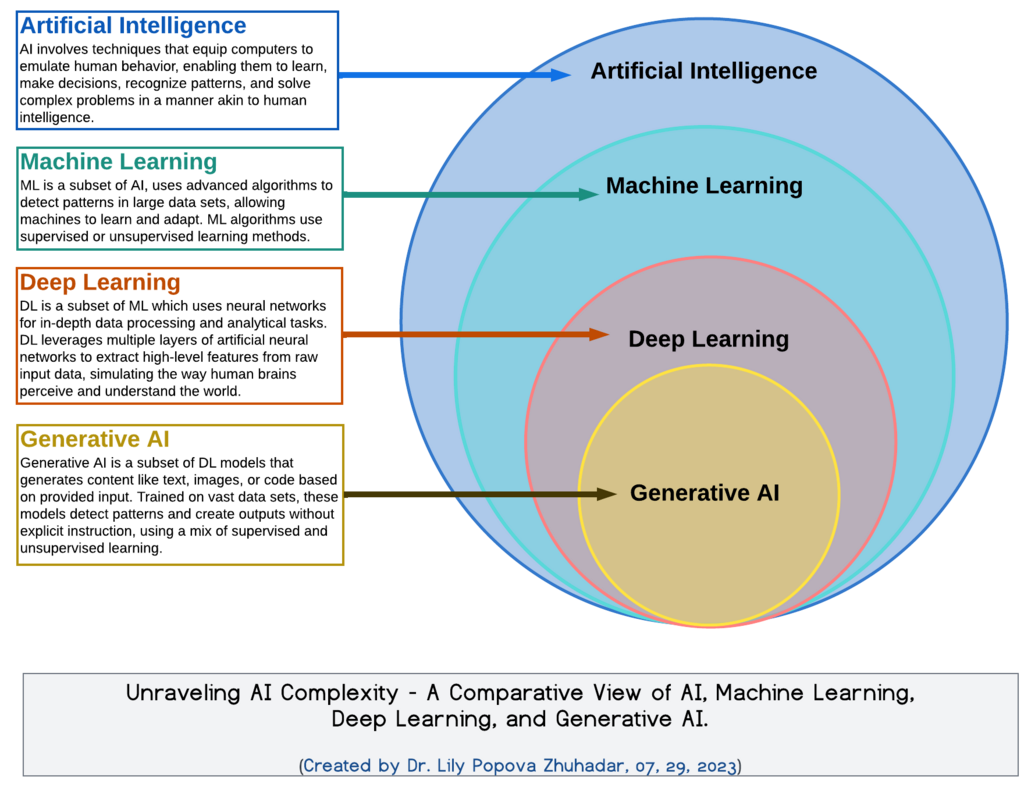
Machine learning is a way of teaching computers to find patterns in data. Instead of writing explicit, step-by-step instructions for a task, we let the computer learn how to do it by showing it lots of examples. It's a bit like how a child learns to recognize a dog. You don't give them a list of rules like "if it has fur, four legs, and a tail, it's a dog." Instead, you point out different dogs, and eventually, the child learns to identify them on their own.
Essentially, machine learning (ML) allows a system to learn from data rather than through explicit programming.
This ability is what powers many of the smart technologies we use daily. When a streaming service recommends a movie you might like, that's machine learning. When your email provider automatically filters out spam, that's also machine learning. It's a powerful tool for solving problems that would be incredibly difficult or impossible to code by hand, from predicting stock prices to detecting diseases from medical scans.
Types of Machine Learning
Machine learning isn't a single technique; it's a field with several different approaches. The best approach depends on the problem you're trying to solve and the kind of data you have. The three main types are supervised, unsupervised, and reinforcement learning.
Supervised Learning
noun
The most common type of ML, where the model learns from data that is already labeled with the correct answers. It's like studying with an answer key.
In supervised learning, you give the algorithm a dataset where the desired output is already known. For example, to train a model to predict house prices, you would feed it historical data of houses that includes features (like square footage and number of bedrooms) and the actual sale price (the label).
The algorithm's job is to learn the relationship between the features and the label. After training, it can then predict the price of a new house it has never seen before.
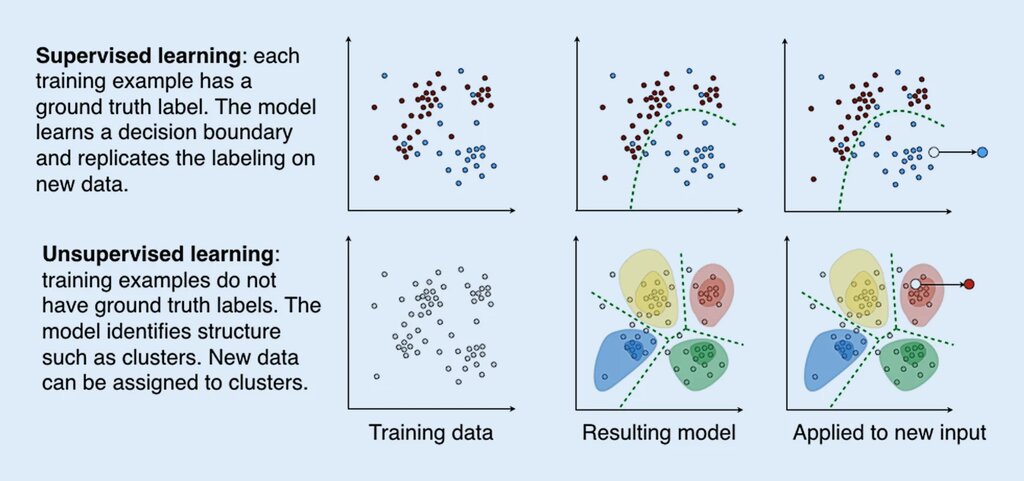
Unsupervised learning is about finding hidden structures in unlabeled data. There is no answer key to learn from.
Imagine you have a box of assorted Lego bricks and you want to sort them. You don't have instructions, but you can group them by color, shape, or size. That's what unsupervised learning does. It explores the data and finds natural groupings or patterns on its own.
This is useful for tasks like customer segmentation, where a business might want to group customers based on their purchasing habits to create targeted marketing campaigns. It's also used for anomaly detection, like identifying unusual patterns in network traffic that could signal a security threat.
Reinforcement learning involves an 'agent' that learns by interacting with an environment. It's a trial-and-error process.
Think of training a dog to do a trick. When the dog performs the correct action, you give it a treat (a reward). When it does something else, it gets nothing (or a penalty). Over time, the dog learns which actions lead to a reward.
Reinforcement learning works the same way. An algorithm, or "agent," learns to make decisions by performing actions and getting feedback in the form of rewards or punishments. This method is behind the AIs that have mastered complex games like Chess and Go, and it's a key technology for developing self-driving cars and robotics.
The Machine Learning Workflow
Regardless of the type of machine learning, most projects follow a similar series of steps, from gathering data to deploying a final model. Understanding this workflow provides a roadmap for how a machine learning idea becomes a functional application.
1. Data Collection: Every ML project starts with data. This could be anything from spreadsheets and customer databases to images and text documents. The quality and quantity of the data are crucial for the model's success.
2. Data Preparation: Raw data is often messy. This step, sometimes called data cleaning or preprocessing, involves handling missing values, removing duplicates, and formatting the data so the model can understand it. This is often the most time-consuming part of the process.
3. Model Training: This is where the learning happens. You choose an appropriate algorithm (e.g., a linear regression for price prediction or a decision tree for classification) and feed it your prepared data. The algorithm adjusts its internal parameters to find patterns in the data.
4. Model Evaluation: Once the model is trained, you need to check how well it performs. This is done by testing it on a separate set of data it hasn't seen before. This helps ensure the model can make accurate predictions in the real world and hasn't just "memorized" the training data.
5. Deployment: If the model performs well, it's put into production. This could mean integrating it into a website, an app, or a business's internal software. The work doesn't stop here, though; models often need to be monitored and retrained over time as new data becomes available.
This framework gives you a solid foundation for understanding how machine learning works in practice.
Which statement best describes the core concept of machine learning?
A developer is creating an AI to play a video game. The AI learns by receiving a high score (a reward) for good moves and a low score (a penalty) for bad moves. What type of machine learning is this?