Practical Machine Learning and Model Implementation
Data Refinement Techniques
Beyond Basic Cleaning
Your model's performance is directly tied to the quality of your data. While you're familiar with basic cleaning like mean imputation and standard scaling, these methods can fall short. Real-world data is messy, with complex relationships, outliers, and imbalanced classes. To build high-performing models, we need more sophisticated tools to refine our data.
This isn't just about filling in blanks or normalizing numbers. It's about strategically transforming features to reveal the underlying patterns your model needs to learn. Let's move beyond the basics and explore techniques that prepare your data for the nuances of advanced machine learning.
Smarter Imputation Methods
Replacing missing values with the mean or median is simple, but it ignores relationships between features. If a house's square footage is missing, knowing its number of bedrooms and location should help us make a much better guess than just using the average of all houses. This is where model-based imputation shines.
KNN Imputation
noun
A method that fills missing values by using the average value from the 'k' most similar data points (neighbors). Similarity is measured based on the other features in the dataset.
KNN imputation works by finding the k-nearest neighbors to the observation with the missing value. The neighbors are the data points that are most similar across the other, non-missing features. The missing value is then replaced by the average (for numerical data) or mode (for categorical data) of those neighbors. This approach preserves the local structure of the data.
A second powerful method is Iterative Imputation. This technique, also known as MICE (Multivariate Imputation by Chained Equations), treats each feature with missing values as a target variable and uses all other features to build a regression model to predict it. It cycles through this process for each feature, updating the predictions in each iteration until the imputed values stabilize. It's computationally more expensive but often very accurate.
Encoding Categorical Data
You already know that One-Hot Encoding can create a massive number of new features if your categorical variable has many unique values, a problem called the "curse of dimensionality." Target Encoding offers a clever alternative.
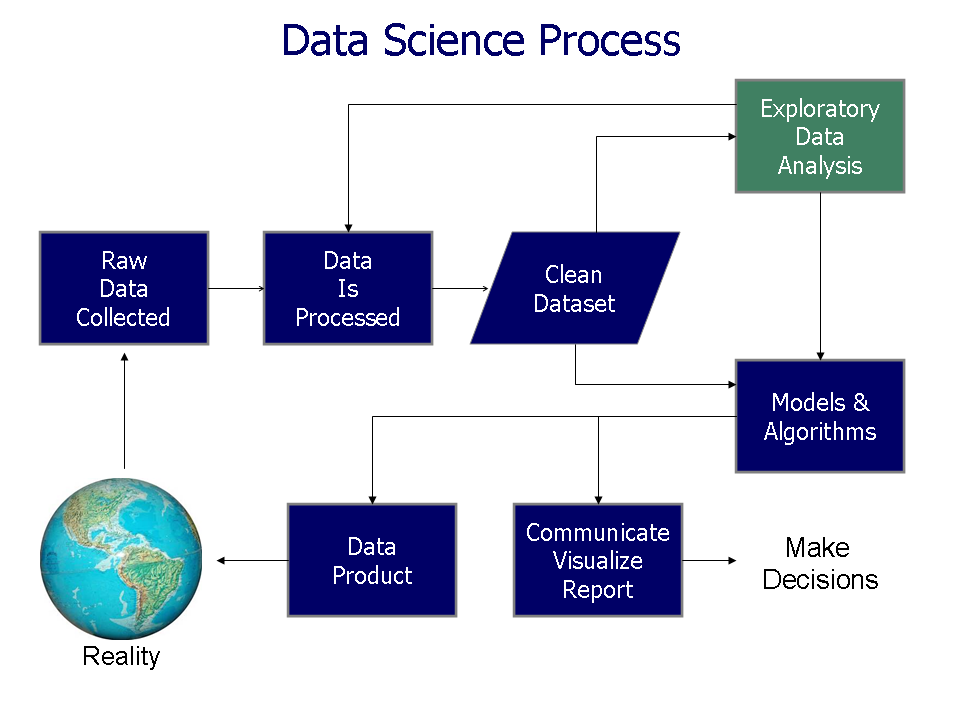
Data preprocessing transforms raw data into a usable format for machine learning, and is an essential step that can impact the performance of downstream models.
Target Encoding replaces each category with the average value of the target variable for that category. For a binary classification problem, this would be the probability of the target being 1 for that category. This captures information about the target variable directly within the feature itself, often leading to better model performance without adding dimensions.
Let's see an example where we want to predict customer churn. We have a 'City' feature and a 'Churned' target (1 for yes, 0 for no).
| City | Churned | Calculation | Target Encoded Value |
|---|---|---|---|
| New York | 1 | (1+0+1) / 3 | 0.67 |
| London | 0 | (0+0) / 2 | 0.00 |
| New York | 0 | (1+0+1) / 3 | 0.67 |
| Tokyo | 1 | (1) / 1 | 1.00 |
| London | 0 | (0+0) / 2 | 0.00 |
| New York | 1 | (1+0+1) / 3 | 0.67 |
A related technique, often used in credit scoring, is Weight of Evidence (WoE). It measures the "strength" of a categorical variable in separating the positive and negative classes. WoE is calculated as:
Creating New Features
Sometimes the most predictive signals aren't in your original features but in their relationships. Feature engineering is the art of creating these new signals.
Interaction features capture the combined effect of two or more features. For example, in advertising, the effect of ad spending might be much stronger on weekends. An interaction feature like ad_spending * is_weekend could capture this relationship far better than either feature alone.
Polynomial features can capture non-linear relationships. If a car's fuel efficiency decreases rapidly at very high speeds, a simple linear model won't capture that. By adding a speed^2 feature, you allow the model to learn a curved relationship.
This process of creating more complex features is key to helping linear models (like linear or logistic regression) understand more complex patterns in the data.
Handling Outliers and Imbalance
Standard scaling (subtracting the mean and dividing by the standard deviation) is very sensitive to outliers. A single extreme value can dramatically shift the mean and standard deviation, squishing the rest of your data into a small range. RobustScaler is a great alternative. It uses the median and the interquartile range (IQR), which are resistant to outliers.
Another common problem is imbalanced classes, like in fraud detection where only 0.1% of transactions are fraudulent. A model can achieve 99.9% accuracy by simply predicting "not fraud" every time, but it would be useless. We need to rebalance our training data.
SMOTE (Synthetic Minority Oversampling TEchnique) is a popular method. Instead of just duplicating minority class examples (which can lead to overfitting), SMOTE generates new, synthetic examples. It finds a minority class instance, looks at its nearest neighbors, and creates a new synthetic point along the line connecting them. This creates a richer, more diverse set of minority examples for the model to learn from.
ADASYN (Adaptive Synthetic Sampling) is a variant of SMOTE. It's similar, but it focuses on generating more synthetic data for the minority examples that are harder to learn (i.e., those closer to the majority class decision boundary). This adaptively shifts the model's focus to the most difficult cases.
Time to check your understanding of these advanced data preparation techniques.
Why is K-Nearest Neighbors (KNN) imputation often preferred over simple mean or median imputation for missing values?
What is a primary advantage of using Target Encoding instead of One-Hot Encoding for a categorical feature with a high number of unique categories (high cardinality)?
By mastering these refinement techniques, you can significantly improve your model's ability to learn from complex, real-world data.