Practical Data Analytics and Insight Generation
Defining Analytical Objectives
Start With the Question
Every data analysis project begins not with a spreadsheet, but with a question. A vague request like, "We need to increase sales," isn't a starting point; it's a destination. To get there, you need a map. This is where problem framing comes in. It’s the process of turning a broad business goal into a specific, measurable, and answerable question that data can solve.
Every analytics exercise must start with a sharply defined business problem based on specific use cases and business key performance indicators (KPIs).
Analysts need a structured approach to navigate from a fuzzy business goal to a clear analytical plan. One of the most common and effective methodologies for this is the framework. It provides a reliable lifecycle for any data mining project, ensuring that the work stays on track and delivers real value.
The framework consists of six phases, and the first—and most critical—is Business Understanding. This phase is all about defining your objectives. Before you even look at a single row of data, you must understand what the business wants to achieve.
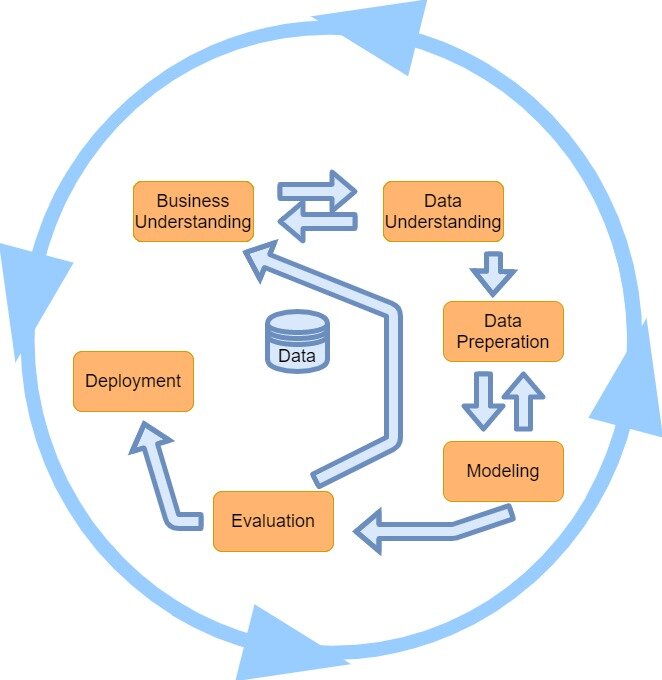
Refining the Goal
Let's return to our retail company that wants to "increase sales." This is a business problem, not an analytical question. An analytical question is a specific inquiry that can be answered with data. The analyst's job is to break down the big problem into smaller, testable questions.
For example, to tackle the goal of increasing sales, you might formulate questions like:
- Which marketing channels are driving our most valuable customers?
- What products are most frequently purchased together?
- At what point in the customer journey do we see the most drop-off?
Answering these specific questions provides the insights needed to solve the larger business problem.
| Business Problem | Analytical Question |
|---|---|
| "We need to increase sales." | "What are the characteristics of our top 10% of customers by lifetime value?" |
| "Customer churn is too high." | "Is there a correlation between customer support interactions and churn rate within the first 90 days?" |
| "Our new marketing campaign isn't working." | "How does the conversion rate for users acquired via the new campaign compare to users from other channels, segmented by demographic?" |
Once you have your analytical questions, you need to define how you'll measure success. This is done using Key Performance Indicators (KPIs). KPIs are quantifiable metrics that track progress toward a business objective. For our retail scenario, instead of just tracking 'total sales', we could define more specific KPIs like:
- Customer Lifetime Value (CLV): The total revenue a business can expect from a single customer account.
- Customer Acquisition Cost (CAC): The cost of winning a customer to purchase products/services.
- Conversion Rate: The percentage of users who take a desired action (e.g., make a purchase).
People and Practicality
Analysis doesn't happen in a vacuum. It involves people, resources, and deadlines. That's why the next steps are all about understanding the project's context: identifying stakeholders and assessing feasibility.
A is anyone who is affected by the project's outcome. They can be executives who need high-level summaries, marketing managers who will use your insights to build campaigns, or IT teams who manage the data infrastructure. Mapping out your stakeholders helps you understand who to talk to, what they need, and how to communicate your findings.
Gathering requirements from these stakeholders is crucial. You need to ask questions like:
- What decisions will you make with this analysis?
- What does success look like for you?
- What format do you need the final results in?
Finally, you must assess the project's scope and feasibility. This means avoiding "scope creep"—the tendency for a project's requirements to expand over time. Define what's in and out of scope from the beginning. Be realistic about what you can achieve with the available data, time, and tools. A well-scoped project is one that's set up for success from day one.
Time to test your understanding of these initial, crucial steps.
What is the primary goal of the 'Business Understanding' phase in the CRISP-DM framework?
A retail company has a broad goal to "improve customer satisfaction." Which of the following is the best example of a specific, analytical question that an analyst could derive from this goal?
Defining your objectives clearly is the foundation upon which all successful analysis is built. It ensures your work has direction, purpose, and a clear path to making a real impact.