Practical Conversational English
Complex Sentence Flow
Beyond Basic Sentences
You already know how to build a basic sentence: subject, verb, object. It's clear and gets the point across. But to express complex ideas and sound more natural, you need to connect those simple thoughts into longer, more fluid sentences. This isn't about making sentences complicated; it's about making them reflect the way we actually think—with related ideas flowing one after another.
The first step is linking two complete ideas, or independent clauses. The simplest way to do this is with a coordinating conjunction. You might remember them by the acronym FANBOYS.
| Conjunction | Meaning | Example |
|---|---|---|
| For | Because / Reason | I went to bed, for I was tired. |
| And | Addition | She likes coffee, and he likes tea. |
| Nor | Joins two negatives | He doesn't drive, nor does he take the train. |
| But | Contrast | The book is long, but it's very interesting. |
| Or | Choice / Option | We can eat now, or we can wait until later. |
| Yet | Contrast (like 'but') | It was raining, yet we went for a walk. |
| So | Result / Consequence | The shop was closed, so I went home. |
Coordinating conjunctions are powerful, but they only create a relationship of balance between two equal ideas. To show more complex logical links like cause and effect, contrast, or condition, you'll use subordinating conjunctions. These words turn one clause into a dependent clause, meaning it can't stand on its own as a full sentence. It relies on the main clause to make sense.
For example, instead of saying "The project was difficult. We finished it on time," you can connect them: "Although the project was difficult, we finished it on time." The word 'although' immediately tells the listener to expect a contrast. Other common subordinating conjunctions include because, since, while, if, and unless.
Adding Detail Mid-Sentence
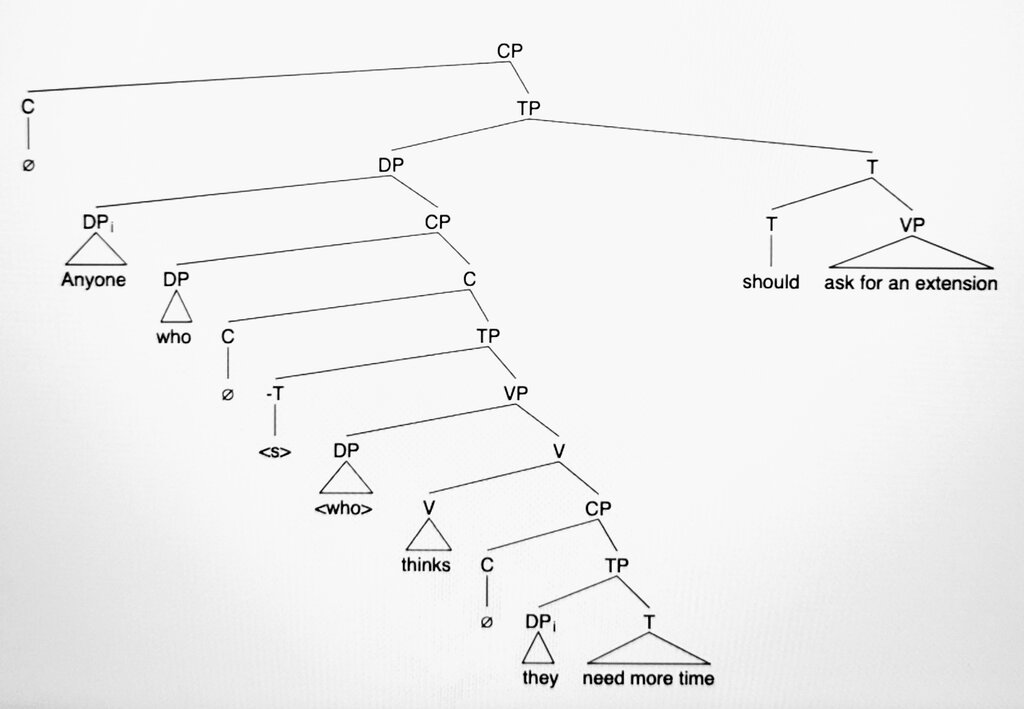
Sometimes you don't need to connect two separate ideas. Instead, you want to add a bit of extra information about a noun in your sentence. This is where come in. They act like mini-adjectives, describing the person, place, or thing you're talking about without forcing you to start a new sentence.
These clauses begin with relative pronouns like who (for people), which (for things), and that (for both). For example, instead of saying "I spoke to the manager. She was very helpful," you can combine them: "The manager, who was very helpful, solved my problem immediately." This small change makes the sentence smoother and more efficient.
Finding Your Rhythm
Constructing a complex sentence is only half the battle. To avoid sounding robotic, you need to deliver it with natural rhythm. Native speakers don't read a sentence as a long string of words. Instead, they unconsciously break it down into smaller chunks, known as or speech units.
A thought group is a cluster of words that belong together grammatically and are said in a single breath without awkward pauses. Pausing briefly between these groups gives you time to breathe and helps your listener process the information. It’s the difference between a breathless monologue and a confident, clear statement.
Although the market is competitive / we believe our new product / which we developed over the last year / will be very successful.
Notice how the pauses (marked with /) happen at logical points: after the introductory clause, before the main subject, and around the relative clause. Practicing this will help you manage your breath and deliver long sentences with the rhythm and flow of a native speaker.
Now, let's test your understanding of these building blocks for fluent, complex sentences.
What is the primary function of a coordinating conjunction like 'and', 'but', or 'so'?
Which word correctly completes the sentence to show contrast? "___ he studied diligently, he did not pass the exam."
By combining these techniques—using conjunctions to link ideas, relative clauses to add detail, and thought groups to create rhythm—you can move beyond simple statements and express yourself with greater nuance and confidence.