Practical Artificial Intelligence Systems
Architectural Paradigms and Trade-offs
The Right Tool for the Job
No single machine learning model is the best at everything. This is often called the "no free lunch" theorem. The success of any model depends on its built-in assumptions about the data it will encounter. These assumptions are known as the model's inductive bias
Think of it like this: a hammer is fantastic for driving nails, but terrible for turning screws. The hammer's design gives it a strong bias for tasks involving blunt force. A screwdriver has a different bias. Choosing the right model architecture means matching its inductive bias to the structure of your problem. A model designed to understand language has a different set of assumptions than one designed to recognize images.
A model's architecture isn't just a container for math; it's a statement about the nature of the problem it's trying to solve.
Models for Sequences
For a long time, Recurrent Neural Networks (RNNs) were the standard for sequential data like text or time series. An RNN processes data one step at a time, maintaining a 'memory' or state that carries information from previous steps. This sequential nature seems intuitive for language, but it creates a significant bottleneck. Information from the beginning of a long sentence can get diluted or lost by the time the model reaches the end.
Then came the architecture. Instead of processing word by word, Transformers can look at the entire sequence at once. They use a mechanism called self-attention, which allows the model to weigh the importance of different words in the sequence relative to each other, no matter how far apart they are. This parallel processing not only captures long-range dependencies more effectively but is also much faster to train on modern hardware.
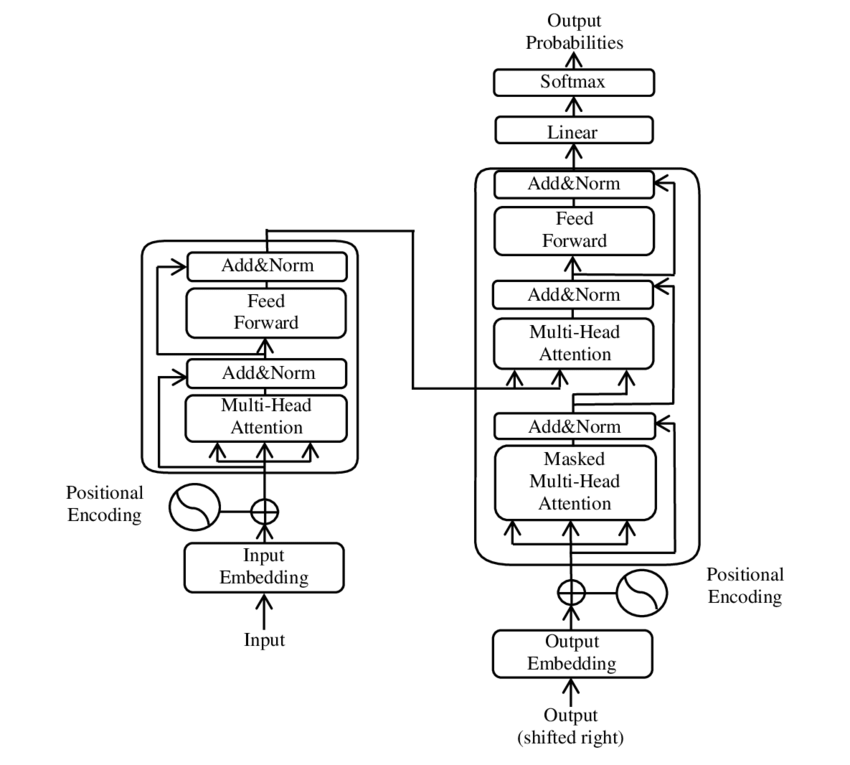
Unlike traditional Recurrent Neural Networks (RNNs) and Long Short-Term Memory (LSTM) networks, which rely on sequential data processing, the Transformer processes input data in parallel, making it more efficient and scalable for large datasets.
Models for Images
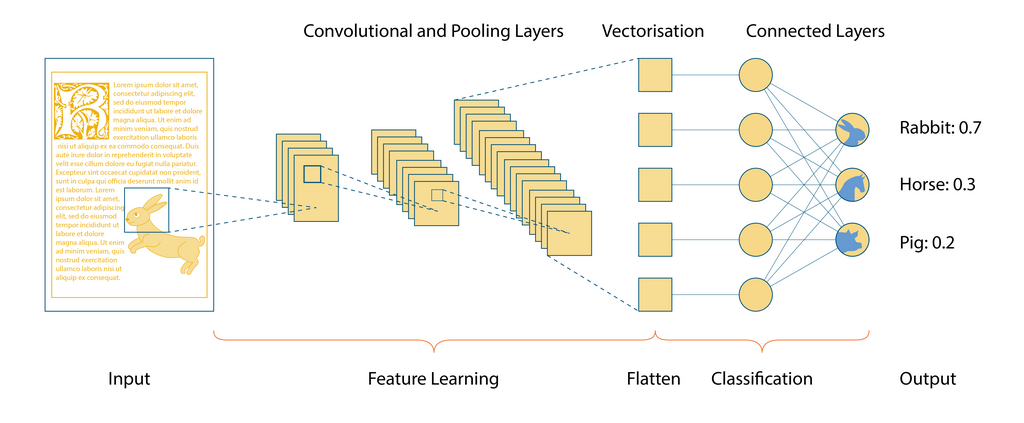
When it comes to images, the key assumption is that nearby pixels are related. A Convolutional Neural Network (CNN) is built on this idea. Its inductive bias is for spatial hierarchies. Early layers in a CNN act as simple feature detectors, using small filters to find edges, corners, and color gradients.
The outputs of these layers are then fed into deeper layers, which combine the simple features into more complex ones. Edges and corners might form a nose or an eye. In the deepest layers, these complex features are assembled to recognize entire objects, like a face or a car. This hierarchical structure mimics how biological vision systems are thought to work.
Learning Paradigms
Beyond architecture, the learning strategy itself involves trade-offs. Supervised learning, which uses labeled data, is powerful but depends on having high-quality, often expensive, labels. Unsupervised learning finds patterns in unlabeled data, which is abundant. The two can work in synergy. For example, an unsupervised model can learn general representations of language from a vast amount of unlabeled text. This pre-trained model can then be fine-tuned on a much smaller, labeled dataset for a specific supervised task, like sentiment analysis. This drastically reduces the need for labeled data.
(RL) operates on a different principle entirely. An RL agent learns by interacting with an environment and receiving rewards or penalties for its actions. It's not told what to do, but learns the best strategy through trial and error. This feedback loop is what allows RL models to master complex games or control robotic systems. The trade-off is that designing a good reward system can be incredibly difficult, and the model might find unexpected ways to 'game' the system to maximize rewards without achieving the intended goal.
| Paradigm | Data Requirement | Core Idea | Common Use Case |
|---|---|---|---|
| Supervised | Labeled data | Learn a mapping from inputs to outputs | Image classification |
| Unsupervised | Unlabeled data | Find hidden structure in data | Customer segmentation |
| Reinforcement | Environment interaction | Learn optimal actions via rewards | Game playing AI |
Ready to test your understanding of these architectural trade-offs?
What is the core idea behind the "no free lunch" theorem in machine learning?
A Convolutional Neural Network (CNN) is highly effective for image recognition tasks because its inductive bias assumes that...
Choosing the right architecture and learning paradigm requires understanding the inherent assumptions and trade-offs of each approach. It's about matching the structure of your model to the structure of your problem.