Practical Artificial Intelligence Systems
Model Selection Logic
Choosing Your Weapon: A Guide to Model Selection
The most sophisticated algorithm is useless if it's solving the wrong problem. In machine learning, selecting the right model is the first critical decision. It’s less about picking the fanciest tool and more about matching the tool to the task and the data you have. The journey starts with a simple question: are you trying to predict a specific outcome, or are you trying to discover hidden patterns in your data?
Answering this question leads you to the first major fork in the road: supervised versus unsupervised learning. If you want to predict a known target, like whether an email is spam or not, you need supervised learning. You'll need a dataset where these labels (spam/not spam) already exist. But if you want to group customers into different market segments based on their purchasing behavior, you don't have a pre-defined label. You're looking for the structure itself. That's a job for unsupervised learning.
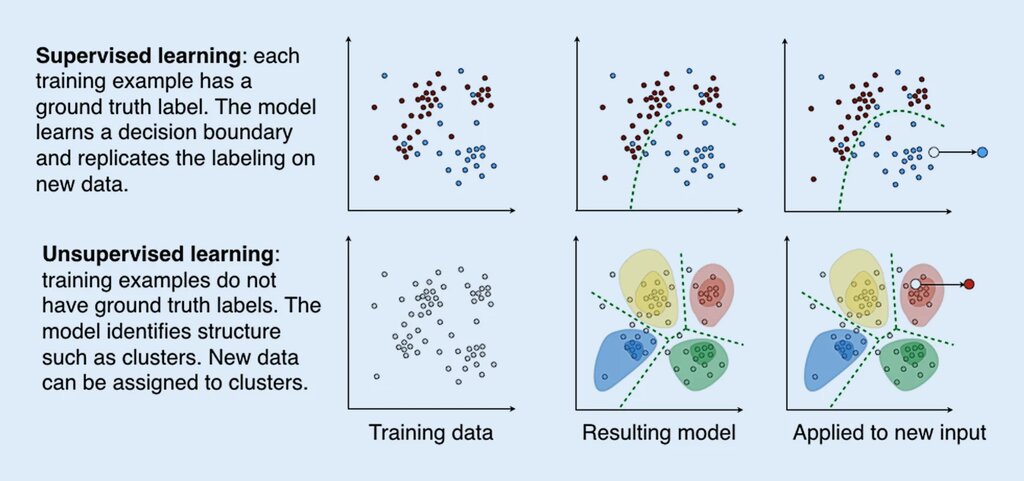
Prediction Problems: Supervised Learning
When your goal is prediction and you have labeled data, you're in the realm of supervised learning. The 'supervision' comes from the labeled dataset, which teaches the model what to look for. But even here, there's another choice to make. The type of prediction determines your next step.
Is your model predicting a category or a quantity?
If you're predicting a distinct category—like 'fraud' or 'not fraud,' 'cat' or 'dog,' 'customer will churn' or 'customer will not churn'—you need a classification model. The output is a class label.
If you're predicting a continuous numerical value—like the price of a house, the temperature tomorrow, or the amount of rainfall—you need a regression model. The output is a number on a scale.
The core difference is simple: classification predicts what kind of thing it is, while regression predicts how much of something there is.
The Labeled Data Bottleneck
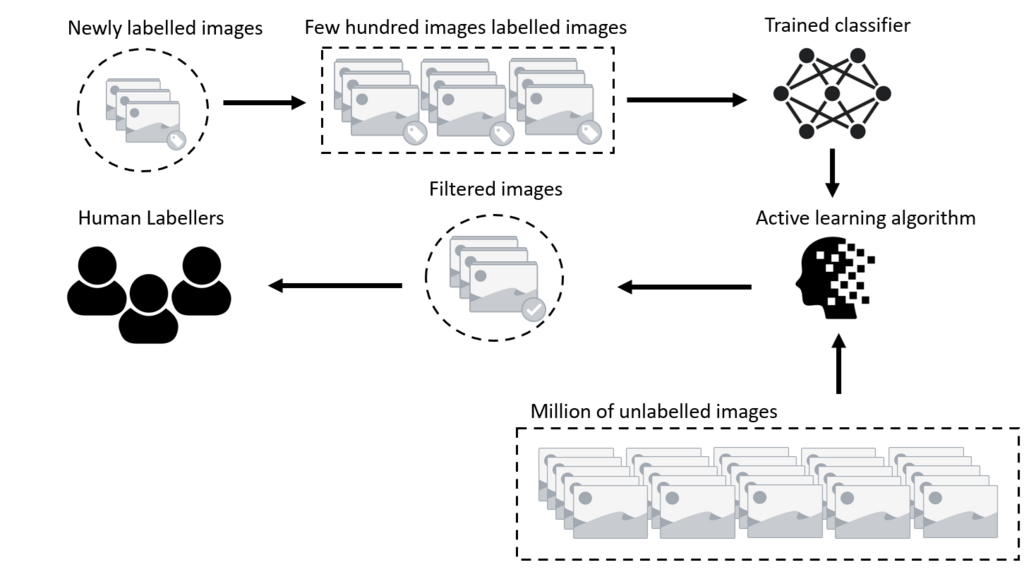
Supervised learning is powerful, but it has a demanding prerequisite: high-quality labeled data. Creating this data is often the most expensive and time-consuming part of an ML project. It might require manual work by domain experts, like doctors identifying tumors in medical scans or linguists tagging parts of speech. This labeling bottleneck can stall projects before they even begin. The cost and feasibility of acquiring labeled data are primary factors in model selection. What if you have a massive dataset, but only a tiny fraction of it is labeled?
This is where semi-supervised learning comes in. It's a hybrid approach that uses a small amount of labeled data to help guide the learning process on a much larger pool of unlabeled data. The model learns the underlying structure from all the data, then uses the few labels it has to anchor its understanding. This can dramatically reduce labeling costs while still achieving high accuracy. For example, a model could learn general features of cat and dog images from thousands of unlabeled pictures, then use just a few dozen labeled examples to learn which features correspond to 'cat' and which to 'dog'.
Another clever workaround is a subset of unsupervised learning where the data provides its own supervision. For example, a model can be trained to predict a missing word in a sentence. The sentence itself contains the 'label' (the missing word). By doing this over billions of sentences, models like GPT-3 learn a deep understanding of language without any human-labeled data.
Discovery Problems: Unsupervised Learning
When you don't have labels, or your goal is to understand the inherent structure of your data, you turn to unsupervised learning. The two most common tasks are clustering and association rule mining.
Clustering algorithms group similar data points together. The goal is to create groups where the items within a group are very similar, but the groups themselves are distinct from one another. This is perfect for tasks like:
- Customer Segmentation: Grouping customers with similar purchasing habits for targeted marketing.
- Anomaly Detection: Identifying unusual data points (like fraudulent transactions) that don't fit into any cluster.
Association rule mining, on the other hand, discovers relationships between variables in large datasets. The classic example is the 'diapers and beer' story, where a supermarket supposedly found that men who bought diapers on Friday nights also tended to buy beer. This is an It's written as antecedent -> consequent, like {Diapers} -> {Beer}. These rules can be used for:
- Recommendation Engines: 'Customers who bought this item also bought...'
- Store Layout Planning: Placing related items near each other to increase sales.
So, how do you decide which model is right for you? A good starting point is a decision tree for your own decision-making process.