Practical Artificial Intelligence and System Integration
Neural Architectural Trade-offs
Matching Architecture to Data
Choosing the right neural network architecture is like picking the right tool for a job. A hammer is great for nails, but not for screws. Similarly, different network designs excel at processing different kinds of data. This specialization is a departure from older machine learning practices, which relied heavily on manual feature engineering—the tedious process where data scientists would hand-craft input features they believed were relevant to the task.
Modern deep learning models automate this with representation learning. The architecture itself learns the important features directly from raw data. This is more powerful but means the structure of the network is critical. A network designed for images won't naturally understand text, and vice-versa. Let's look at the three workhorses of neural networks to see how their structure dictates their function.
Feedforward Networks (MLPs) are the most straightforward architecture. Information flows in one direction, from input to output, through a series of fully connected layers. They are general-purpose but work best with structured data, like you'd find in a spreadsheet, where the order of columns doesn't have a special meaning.
Convolutional Neural Networks (CNNs) are masters of spatial data. They were inspired by the human visual cortex and are the reason for most modern advances in computer vision. Instead of connecting every neuron to every other one in the next layer, CNNs use small filters that slide across the input data (like an image). This allows them to detect patterns like edges, textures, and shapes, regardless of where they appear in the image. This technique, called weight sharing, makes them incredibly efficient for grid-like data because the same filter can find the same feature anywhere.
Recurrent Neural Networks (RNNs) process sequences. They have a 'memory' that allows them to retain information from previous steps in a sequence. An RNN processes one element at a time (like a word in a sentence) while maintaining an internal state, or context, that captures what it has seen so far. This makes them ideal for tasks like language translation and time-series forecasting. A popular variant, the Long Short-Term Memory (LSTM) network, uses a more complex mechanism with 'gates' to better control what information is remembered or forgotten, helping it handle longer sequences.
Efficiency and Explainability
Choosing an architecture isn't just about matching it to the data type. It's also a balancing act between performance and practicality.
A highly accurate model that takes too long to run or requires a supercomputer might be useless in the real world.
This leads to a critical trade-off: accuracy versus efficiency. A deep CNN with hundreds of layers might achieve state-of-the-art results on an image recognition benchmark, but it will be slow and power-hungry. A smaller, more streamlined network might be slightly less accurate but fast enough to run on a smartphone.
This is the core challenge of deploying models to edge vs. cloud. An edge device (like your phone, a smart camera, or a sensor in a factory) has limited memory and processing power. Models for these devices must be lightweight and efficient. A cloud deployment, running on powerful servers, can accommodate massive, high-parameter models. A useful metric for this is the M-factor, which weighs a model's accuracy against its size and computational cost. The goal is often to maximize accuracy while keeping the model's resource footprint within a strict budget.
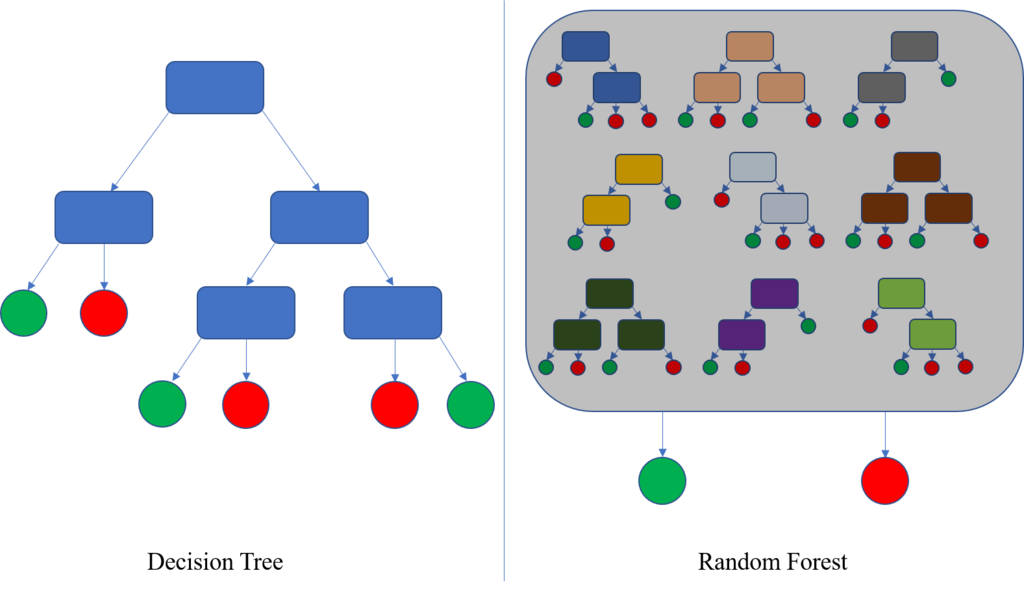
Finally, we face the 'Black Box' problem. The very complexity that makes deep neural networks so powerful also makes them difficult to interpret. A deep CNN might correctly identify a disease from a medical scan, but it can't easily explain why it made that decision. It learned a complex set of hierarchical features, but these features often don't correspond to human-understandable concepts.
This lack of transparency is a major hurdle in regulated fields like healthcare and finance, where decision-making must be justifiable. A bank can't deny someone a loan and say, "the neural network said so." This has led to a growing field called Explainable AI (XAI), which develops techniques to peer inside these black boxes. The trade-off is often between performance and explainability. Simpler models are easier to understand but may be less accurate, forcing developers to choose the right balance for their specific application.
Now, let's test your understanding of these architectural trade-offs.
What is the primary advantage of modern 'representation learning' in deep neural networks compared to the older practice of 'feature engineering'?
An AI developer is creating a system to analyze financial time-series data to forecast stock market trends. Which neural network architecture is most suitable for this task?
Understanding these core differences is key to building effective AI systems. It's about moving beyond just knowing the definitions and into the practical art of engineering a solution that fits the problem, the data, and the constraints of the real world.