Practical Artificial Intelligence and Machine Learning Implementation
Data Engineering Pipelines
The 'Garbage In, Garbage Out' Problem
You can have the most sophisticated algorithm in the world, but if you feed it messy, incomplete, or irrelevant data, its predictions will be useless. This is the core principle of 'garbage in, garbage out' (GIGO). The overwhelming majority of a machine learning project's success—often cited as 80% of the work—comes from meticulous data preparation, not from tweaking the model itself.
A data pipeline is a series of automated steps that takes raw data from various sources and transforms it into a clean, structured format ready for a machine learning model.
Think of it like an assembly line. Raw materials (data) enter at one end. They pass through various stations where they are cleaned, sorted, shaped, and refined. What comes out the other end is a high-quality product (training data) ready for use. Without this pipeline, you'd be hand-crafting every piece of data, which is inefficient and prone to error.
Cleaning and Filling the Gaps
Real-world data is rarely perfect. It often has missing values, which can crash algorithms or skew results. The process of intelligently filling in these gaps is called imputation. For numerical data, the simplest methods are replacing missing values with the column's mean (average), median (middle value), or mode (most frequent value). Median is often preferred because it's less sensitive to outliers—a few extremely high or low values won't affect it as much as the mean.
A more advanced technique is K-Nearest Neighbors (KNN) imputation. This method finds the 'k' most similar data points (the neighbors) to the one with a missing value and uses their values to estimate the missing one. For example, to fill in a missing house price, KNN might look at the prices of 5 similar houses in the same neighborhood.
| Method | Best For | Downside |
|---|---|---|
| Mean | Normally distributed data | Sensitive to outliers |
| Median | Skewed data or data with outliers | Ignores data distribution |
| KNN | Complex relationships between features | Computationally expensive |
Translating Data for Models
Machine learning models are mathematical, which means they need numbers to work with. But data often comes with categorical features, like 'color' (red, green, blue) or 'city' (New York, London, Tokyo). We need to encode these text labels into numerical format.
One common method is This technique creates a new binary (0 or 1) column for each unique category. For a 'color' feature with 'red', 'green', and 'blue', it would create three new columns: is_red, is_green, and is_blue. A red item would have a 1 in the is_red column and 0s in the others.
After encoding, we often need to scale our numerical features. Algorithms that rely on distance calculations, like KNN or Support Vector Machines, can be biased by features with large ranges. For example, if 'age' ranges from 20-70 and 'salary' ranges from $50,000-$200,000, the salary feature will dominate any distance calculation. Feature scaling puts all features on a similar scale.
Normalization (Min-Max Scaling) rescales features to a fixed range, usually 0 to 1. It's useful when your data has a known range and doesn't follow a normal distribution.
Standardization (Z-score Scaling) rescales features to have a mean of 0 and a standard deviation of 1. This is less affected by outliers and is the default choice for many algorithms.
Splitting Data for Honest Evaluation
The final critical step in a data pipeline is splitting the dataset. You can't train your model and test it on the same data. That's like giving a student an exam with the exact questions they studied—they might get a perfect score, but it doesn't prove they actually learned the material. They might have just memorized the answers.
To get an honest assessment of a model's performance, we split our data into three sets:
- Training Set: The largest portion, used to teach the model. The model learns patterns and relationships from this data.
- Validation Set: Used to tune the model's hyperparameters. We use this set to see how different settings affect performance on data it hasn't been trained on.
- Test Set: Held back until the very end. This data is used only once to provide a final, unbiased evaluation of the fully-trained model's ability to generalize to new, unseen data.
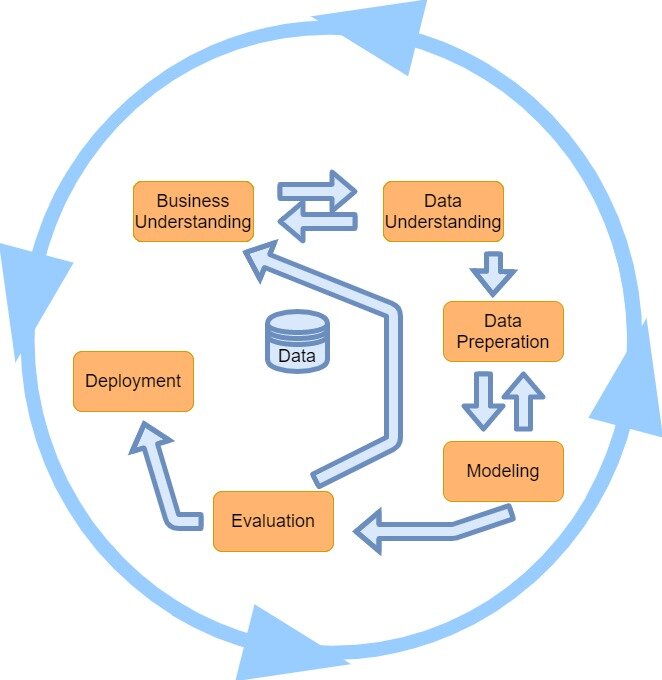
A common split is 70% for training, 15% for validation, and 15% for testing. This ensures the model has enough data to learn from while leaving sufficient data for robust evaluation.
What does the principle of 'Garbage In, Garbage Out' (GIGO) signify in machine learning?
When imputing missing numerical data, why is the median often preferred over the mean?
Building a solid data pipeline is a foundational skill in machine learning. It's the disciplined, systematic process that turns raw potential into reliable performance.