Practical Applied Ethics Frameworks
Categorical Imperative Practice
Putting Duty into Practice
Deontology isn't just a theory, it's a tool for decision-making. At its heart is Immanuel Kant's Categorical Imperative, a framework for testing the morality of our actions. We can break this down into two key tests, or 'formulations', that help us apply duty-based ethics to complex professional situations.
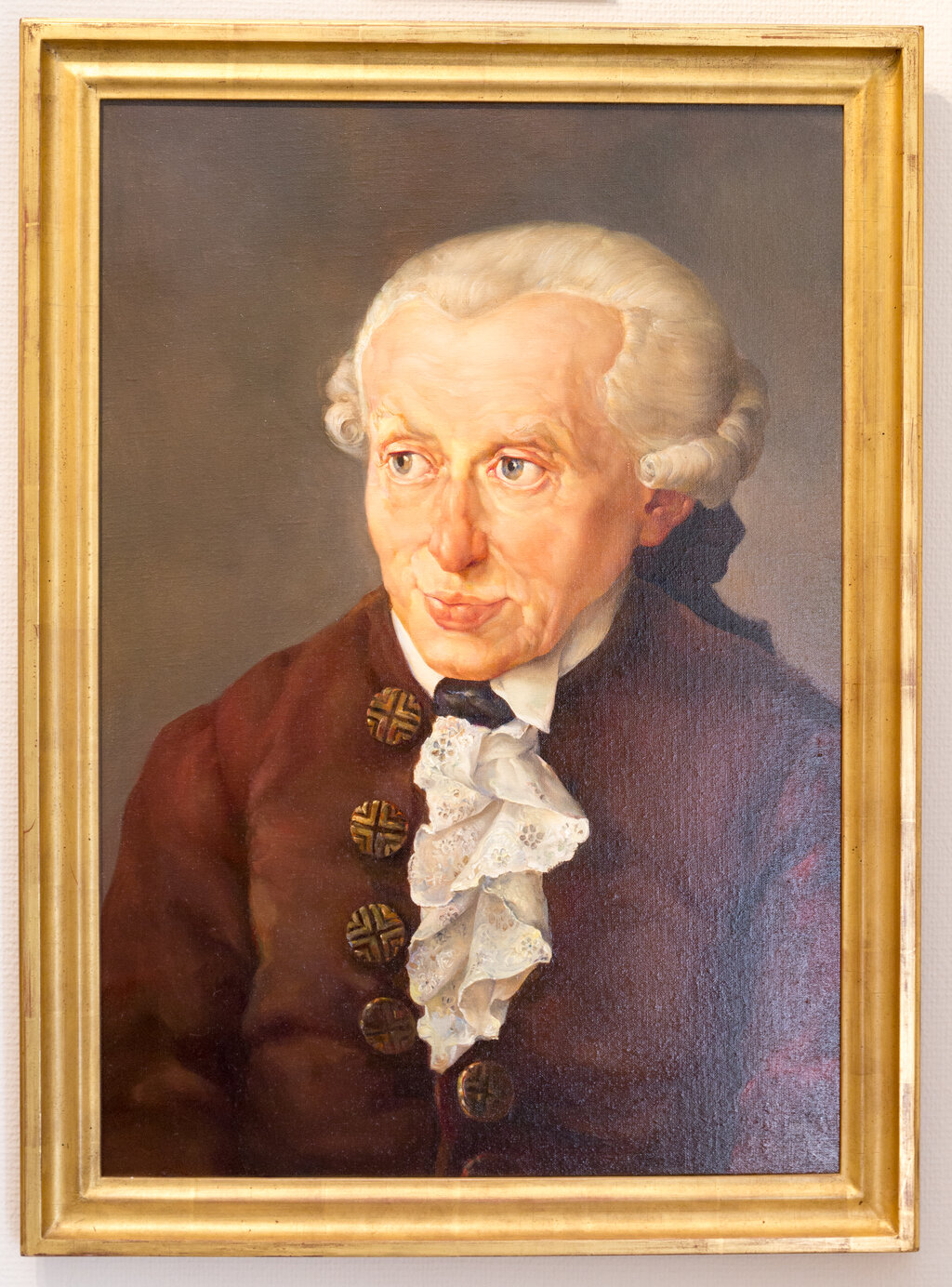
Kant’s ethics are organized around the notion of a “categorical imperative,” which is a universal ethical principle stating that one should always respect the humanity in others, and that one should only act in accordance with rules that could hold for everyone.
Let's start with the first test: the Formula of Universal Law. Before you act, identify the principle, or 'maxim', behind your intended action. Then, ask yourself: could I logically will for this maxim to become a universal law that everyone, everywhere, must follow? The goal isn't to see if the outcome would be bad, but whether the rule itself could function universally without creating a logical contradiction.
For example, consider a project manager tempted to understate the required budget to get a project approved, planning to ask for more money later. The maxim is: 'It's acceptable to misrepresent initial costs to secure project approval.'
Now, universalise it: 'Every project manager must always misrepresent initial costs to secure project approval.' If this were the rule, the concept of a 'budget' would become meaningless. No one would trust any initial cost estimate, and the entire system of project approval would collapse. The maxim fails the test because it's not logically sustainable as a universal law.
People as Ends, Not Means
The second test is the Formula of Humanity. This states that we must treat all people, including ourselves, as ends in themselves, and never merely as a means to an end. It's about respecting the inherent worth and autonomy of every individual. People are rational agents with their own goals; they are not tools to be used for our own purposes.
Let's revisit our project manager. By lying about the budget, they are using senior management and the finance department as a means to get their project approved. They are not respecting their colleagues' autonomy to make an informed decision based on accurate data. They are treating them as obstacles to be manipulated, not as rational stakeholders in a shared enterprise.
This principle directly informs modern professional codes of conduct. A doctor must provide full information for informed consent, treating the patient as an autonomous decision-maker, not just a body to be fixed. A lawyer must act in the client's best interest, respecting their legal goals rather than using their case simply to generate fees.
When Duties Collide
A common challenge in deontology is navigating a conflict between two absolute duties. Imagine a software engineer who discovers a significant security flaw in her company's product, which is about to launch. She has a duty of confidentiality to her employer, but also a duty to prevent harm to potential users. Which duty takes precedence?
Kant distinguishes between two types of duties that can help here: perfect and imperfect duties.
Perfect duties are absolute and allow for no exceptions. They are mostly negative prohibitions, like 'do not lie' or 'do not steal'. Universalising the opposite of these maxims leads to a logical contradiction.
Imperfect duties are more flexible. They are things we should do, but we have some choice in how and when we do them. Examples include the duty to be charitable or to develop one's talents. You don't have to give all your money away, but you have a general duty to help others when you can.
| Duty Type | Description | Corporate Policy Example |
|---|---|---|
| Perfect Duty | Absolute, must always be followed. No exceptions. | A strict, zero-tolerance policy against falsifying financial records. |
| Imperfect Duty | General obligation, allows for flexibility in execution. | A corporate social responsibility program that encourages, but does not mandate, employee volunteering. |
In a conflict, perfect duties generally override imperfect duties. In our engineer's case, the duty to prevent harm (a perfect duty) would likely supersede the duty of confidentiality (which, while important, can be seen as a conditional promise that doesn't hold when it enables great harm). The most ethical path would be to report the flaw, even if it breaches her employment agreement, because the maxim 'one must never enable direct harm to others through silence' is a stronger universal principle than 'one must always maintain confidentiality'.
What is the primary test of an action according to Kant's Formula of Universal Law?
A manager exaggerates a project's potential benefits to secure funding, believing it will ultimately help the company. According to the Formula of Humanity, why is this action unethical?
This framework of universalising maxims and respecting humanity provides a robust, if challenging, method for navigating the grey areas of professional life. It forces us to look beyond immediate outcomes and focus on the internal consistency and moral foundation of our actions.