Practical AI and Machine Learning Frameworks
Machine Learning Paradigms
How Machines Learn
Machine learning isn't a single tool but a collection of approaches, each suited for a different kind of problem. The core difference lies in how a model handles data and feedback. We can categorize these methods into three main paradigms: supervised, unsupervised, and reinforcement learning. Think of them not as competing philosophies, but as different tools in a workshop, each designed for a specific job.
Supervised learning is like learning with a teacher who provides an answer key. The model is given a dataset where each data point is labeled with the correct output. For example, a dataset of emails might be labeled as either "spam" or "not spam." The model's task is to learn the relationship between the input (the email content) and the output (the label). Its success is measured by how accurately it can predict the labels for new, unseen data.
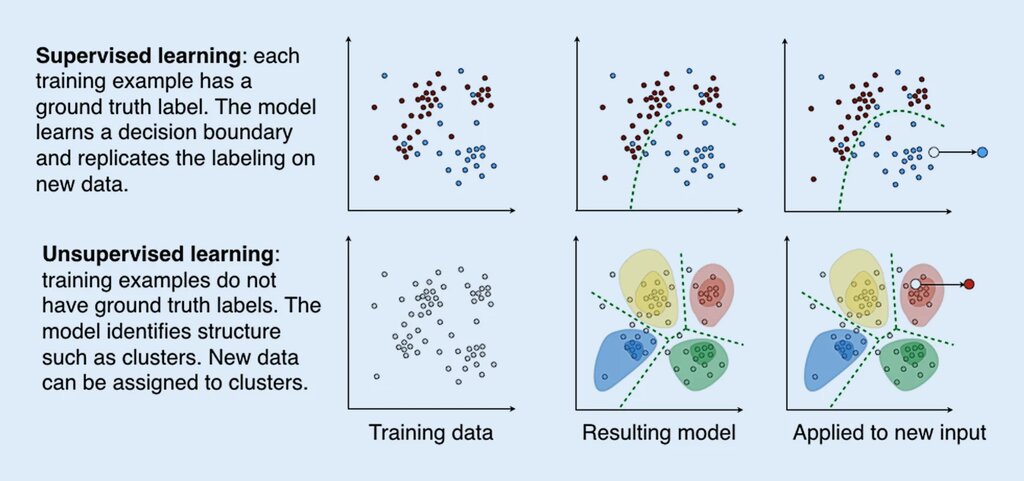
This direct feedback makes supervised learning powerful for classification (like the spam filter) and regression tasks, such as predicting house prices based on features like square footage and location. The entire process hinges on a well-defined pipeline: raw data is collected, cleaned, and then meticulously labeled by human experts. This labeled data becomes the ground truth the model strives to replicate.
Learning Without Answers
Unsupervised learning, in contrast, works without an answer key. It's given a dataset with no predefined labels and tasked with finding hidden patterns or structures on its own. It’s like being handed a box of mixed Lego bricks and asked to sort them into logical groups. You might group them by color, size, or shape, discovering the categories organically.
This paradigm excels at tasks like clustering and dimensionality reduction. A common business use is customer segmentation, where an algorithm groups customers with similar purchasing behaviors into distinct clusters for targeted marketing. Another is discovering topics in a large collection of documents. The data pipeline for unsupervised learning bypasses the expensive and time-consuming labeling phase, focusing instead on feature engineering to help the model identify meaningful patterns in high-dimensional data.
What if you have a massive dataset, but only a small portion is labeled? This is where semi-supervised learning comes in. It uses the small labeled set to guide the interpretation of the much larger unlabeled set, offering a practical compromise between the high cost of supervised learning and the ambiguity of unsupervised methods.
Learning Through Trial and Error
Reinforcement learning (RL) operates on a completely different principle: learning from the consequences of actions. An RL agent interacts with an environment and receives rewards or penalties based on the actions it takes. The goal is to develop a policy, or a strategy, that maximizes the cumulative reward over time.
This paradigm is ideal for sequential decision-making problems. Think of a self-driving car learning to navigate traffic or an AI learning to play a complex game like chess. The feedback loop is central to its operation. The agent takes an action, the environment changes state and provides a reward, and the agent uses this feedback to update its policy. This constant cycle of action and feedback allows the agent to learn complex behaviors through exploration and exploitation, without any labeled data.
Hybrid Systems in the Real World
In practice, complex problems rarely fit neatly into one paradigm. Many advanced systems are hybrids. A recommendation engine, for instance, might use unsupervised learning to cluster users with similar tastes. Then, it might use supervised learning to predict which specific items a user in a particular cluster is likely to rate highly. This blend allows the system to discover broad patterns and then make fine-tuned predictions.
Fraud detection is another area where hybrid models shine. Unsupervised learning can be used to identify anomalies—transactions that deviate significantly from a user's normal behavior. Once a transaction is flagged as suspicious, a supervised model, trained on a historical dataset of fraudulent and legitimate transactions, can make the final call on whether to block it. This two-step process combines the discovery power of unsupervised methods with the predictive accuracy of supervised ones.
Mapping the right architecture to a business problem starts with understanding the nature of the data and the desired outcome. Do you have reliable, labeled data? You'll likely start with supervised learning. Is your goal to understand the inherent structure of your data? Unsupervised learning is your tool. Are you trying to optimize a sequence of decisions in a dynamic environment? Look to to forge a path forward.
Let's check your understanding of these core concepts.
What is the defining characteristic of a supervised learning model?
A marketing team wants to group its customers into distinct segments based on their purchasing behavior, but they don't have any predefined categories for these groups. Which machine learning paradigm is best suited for this task?
Understanding these paradigms and how they combine is key to building effective, real-world AI systems.