PPAR Isoforms in Liver and Metabolic Disease
PPAR Isoforms Overview
Meet the PPARs
Deep inside our cells, a family of proteins called Peroxisome Proliferator-Activated Receptors, or PPARs, work as metabolic sensors. They are a type of nuclear receptor, which means they reside in the cell's nucleus and, when activated, can switch genes on or off. Think of them as managers who read incoming messages and then direct different teams in the cellular factory to start or stop specific tasks.
Structurally, each PPAR protein has two key parts: a ligand-binding domain, which acts like a docking station for activating molecules (ligands) such as fatty acids, and a DNA-binding domain, which allows it to latch onto specific parts of our DNA to control gene expression.
There are three main types, or isoforms, in this family: PPAR alpha (α), PPAR beta/delta (β/δ), and PPAR gamma (γ). While they are related, each has its own distinct job and is found in different parts of the body. We'll focus on the first two: α and β/δ.
Location, Location, Location
The function of a PPAR is closely tied to where it is expressed in the body. Each isoform has its preferred tissues, which gives us clues about its primary roles.
PPARα is most abundant in tissues that are powerhouses of fat metabolism. You'll find high concentrations in the liver, heart, kidneys, and skeletal muscle. These are organs that need to break down fats efficiently to generate energy.
On the other hand, PPARβ/δ is found almost everywhere in the body, which is why it's described as being ubiquitously expressed. However, it's particularly concentrated in the digestive tract, kidneys, and skeletal muscle. Its widespread presence suggests it has a broad and fundamental role in maintaining our body's daily operations.
Metabolic and Inflammatory Roles
PPARs are crucial for managing lipids, balancing energy, and controlling inflammation. By activating different genetic programs, PPARα and PPARβ/δ ensure our body can adapt to changing energy demands, such as the switch between feasting and fasting.
Metabolism
noun
The chemical processes that occur within a living organism in order to maintain life. These processes allow organisms to grow, reproduce, maintain their structures, and respond to their environments.
PPARα is often called the 'fat-burning' receptor. When activated, especially during periods of fasting, it ramps up the genes responsible for fatty acid oxidation, the process of breaking down fats for fuel. In the liver, it plays a starring role, helping the organ process fatty acids and produce ketone bodies, an alternative energy source for the brain when glucose is scarce.
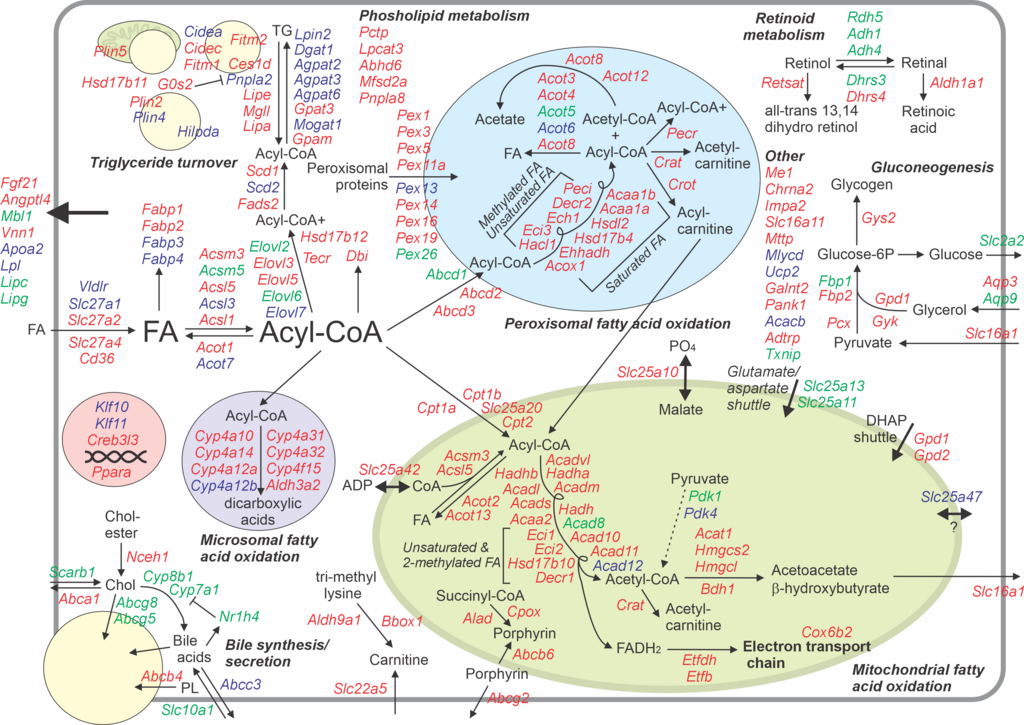
PPARβ/δ is the 'endurance' receptor. In skeletal muscle, its activation shifts the muscle's fuel preference from glucose to fats. This is particularly useful during prolonged exercise. It promotes the formation of muscle fibres that are resistant to fatigue, essentially improving muscular endurance and overall energy efficiency.
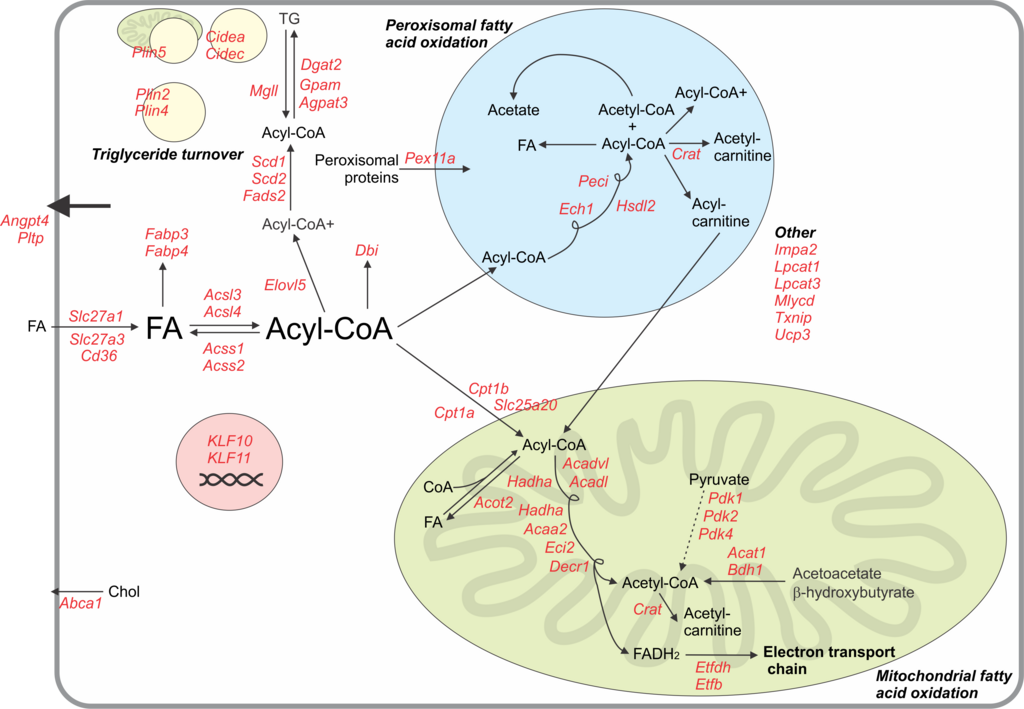
Beyond metabolism, both PPARα and PPARβ/δ have important anti-inflammatory effects. They can suppress the activity of genes that produce inflammatory proteins. By putting a brake on inflammation, they help maintain tissue health and prevent the chronic, low-grade inflammation that is linked to many metabolic diseases. This dual role in managing both energy and inflammation makes them central players in our overall health.
What is the primary role of Peroxisome Proliferator-Activated Receptors (PPARs) inside a cell?
Which PPAR isoform is known as the 'fat-burning' receptor, playing a key role in the liver during periods of fasting?
Understanding these receptors is a key first step in seeing how our bodies manage energy and respond to diet and exercise.