Power Transformer Fundamentals
Transformer Basics
The Voltage Changers
Electrical power travels a long way from the power plant to your home. To make this journey efficient, electricity needs to be sent at very high voltages. But the outlets in your wall provide a much lower, safer voltage. How is this change made? The answer is a device called a transformer.
A transformer is a static device that transfers electrical energy from one circuit to another by changing the voltage and current, without changing the frequency.
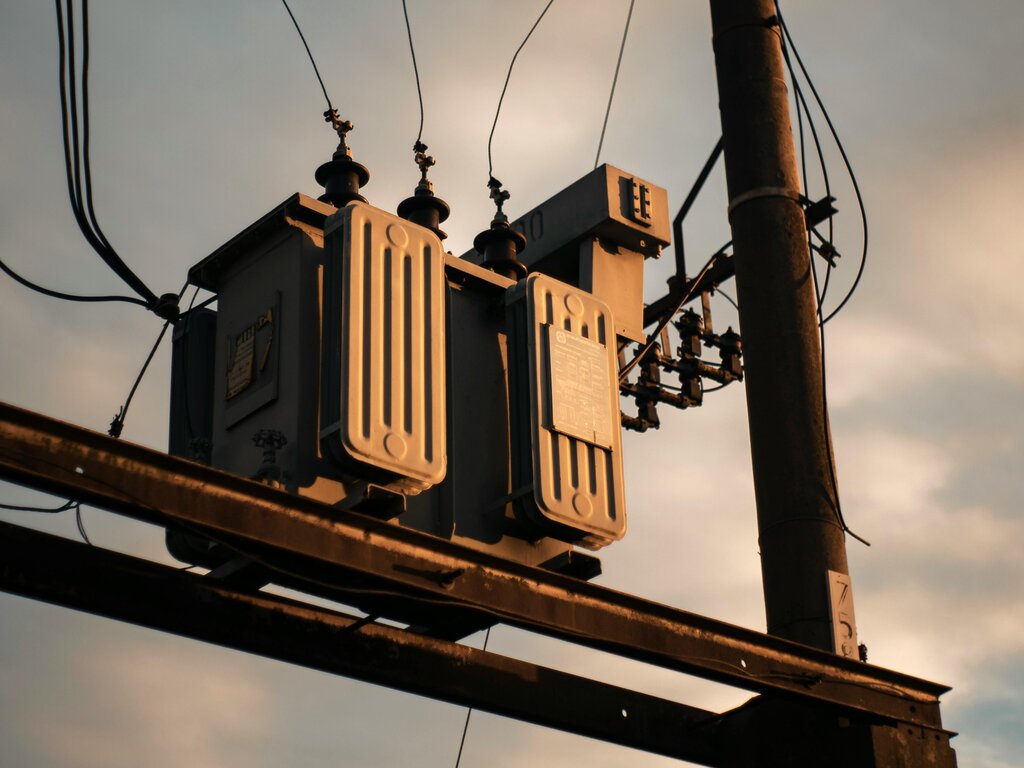
You've likely seen transformers without realizing it. They are the gray, cylindrical cans on utility poles or the green metal boxes in suburban yards. They are also inside many of your electronics, like phone chargers and laptops, stepping down voltage to a level your device can handle.
The Magic of Induction
Transformers work because of a fascinating principle called electromagnetic induction, discovered by Michael Faraday in 1831. The core idea is that a changing magnetic field can create an electric current in a nearby wire. It's a two-way street: an electric current also creates a magnetic field around it.
Transformers only work with alternating current (AC), where the flow of electricity constantly reverses direction. This constant change is key. As AC flows through a coil of wire, it generates a magnetic field that is also constantly changing—growing, shrinking, and flipping polarity.
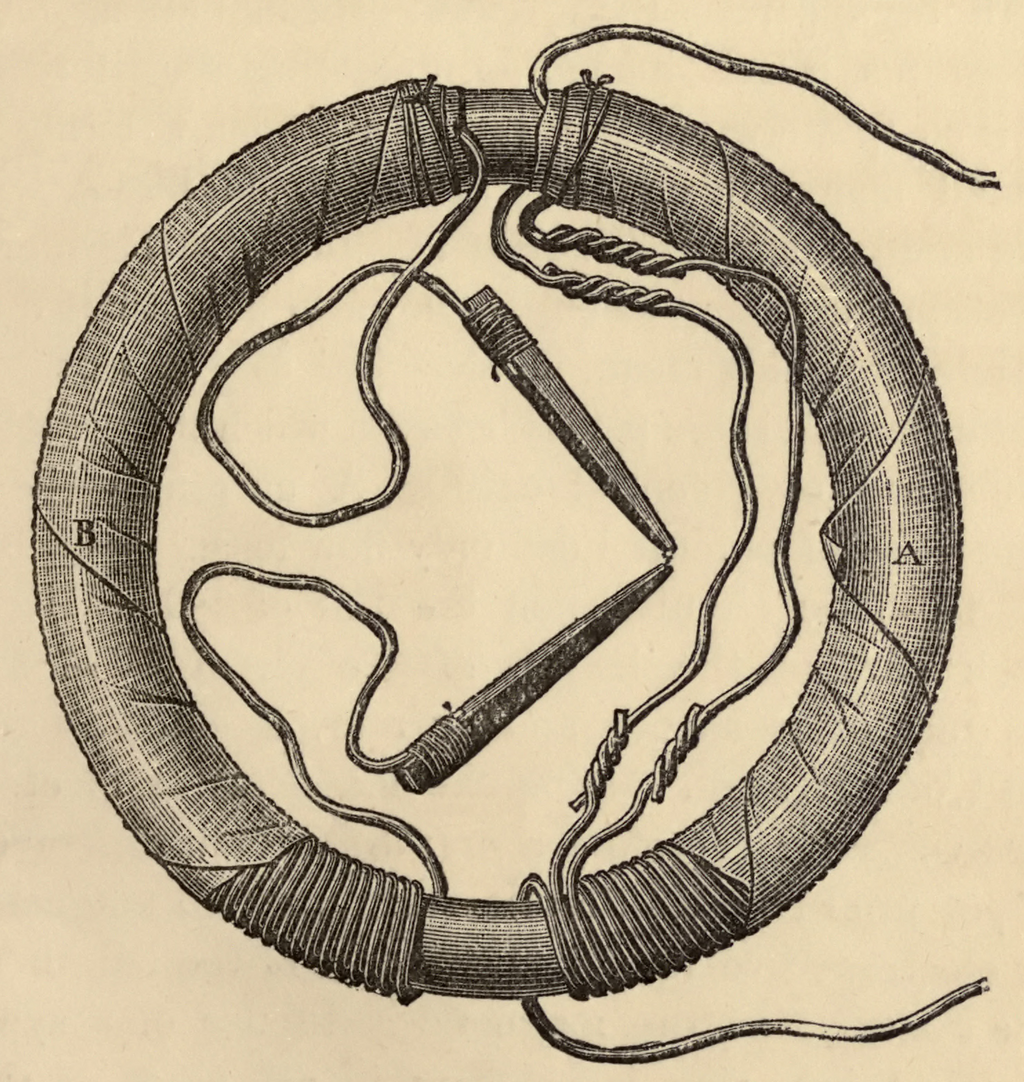
Now, if you place a second coil of wire inside this changing magnetic field, the field will "induce" a voltage in that second coil, causing an electric current to flow. The two coils don't touch, but energy is transferred between them through the magnetic field. This process is called mutual induction.
Inside the Box
A simple transformer has three main parts that work together to achieve this energy transfer.
- Primary Winding: This is the coil that's connected to the input AC power source. The current flowing through it creates the initial changing magnetic field.
- Secondary Winding: This coil is placed near the primary. The changing magnetic field from the primary induces a voltage across this coil, which powers the output circuit or device.
- Magnetic Core: Usually made of iron, the core acts like a highway for the magnetic field. It guides the magnetic flux from the primary winding over to the secondary winding, ensuring a strong and efficient transfer of energy.
Stepping Up and Down
The magic of a transformer is its ability to change voltage. This is determined by a simple ratio: the number of turns of wire in each coil.
- To step-down voltage (like in a phone charger), the secondary winding has fewer turns than the primary winding.
- To step-up voltage (used at power plants for long-distance transmission), the secondary winding has more turns than the primary winding.
If the secondary coil has half as many turns as the primary, the output voltage will be half the input voltage. If it has ten times as many turns, the output voltage will be ten times higher.
This relationship is described by the transformer equation, where is voltage and is the number of turns in the primary () and secondary () coils.
While transformers can change voltage, they can't create energy. According to the law of conservation of energy, the power out can't be more than the power in. So, if voltage is stepped up, the current must be stepped down by a proportional amount, and vice versa. This is why high-voltage power lines carry relatively low current, which minimizes energy lost as heat during transmission.
What is the fundamental principle that allows transformers to transfer energy between two coils without them touching?
Why must transformers operate on alternating current (AC) instead of direct current (DC)?
Transformers are simple but powerful devices that form the backbone of our electrical grid, making it possible to efficiently transmit power over vast distances and use it safely in our daily lives.