Power Grid Equipment Essentials
Transmission Lines
The Grid's Highways
Power plants are often located far from the cities and towns that need electricity. Transmission lines act as the electrical grid's highway system, moving large amounts of power over long distances. To do this efficiently, they operate at very high voltages.
Power loss in a wire is primarily due to its resistance, described by the formula , where is power, is current, and is resistance. Since the power lost is proportional to the square of the current, minimizing the current is crucial. By stepping up the voltage using transformers, the current can be significantly reduced for the same amount of power transmitted (). This is why transmission lines carry electricity at hundreds of thousands of volts.
Above and Below Ground
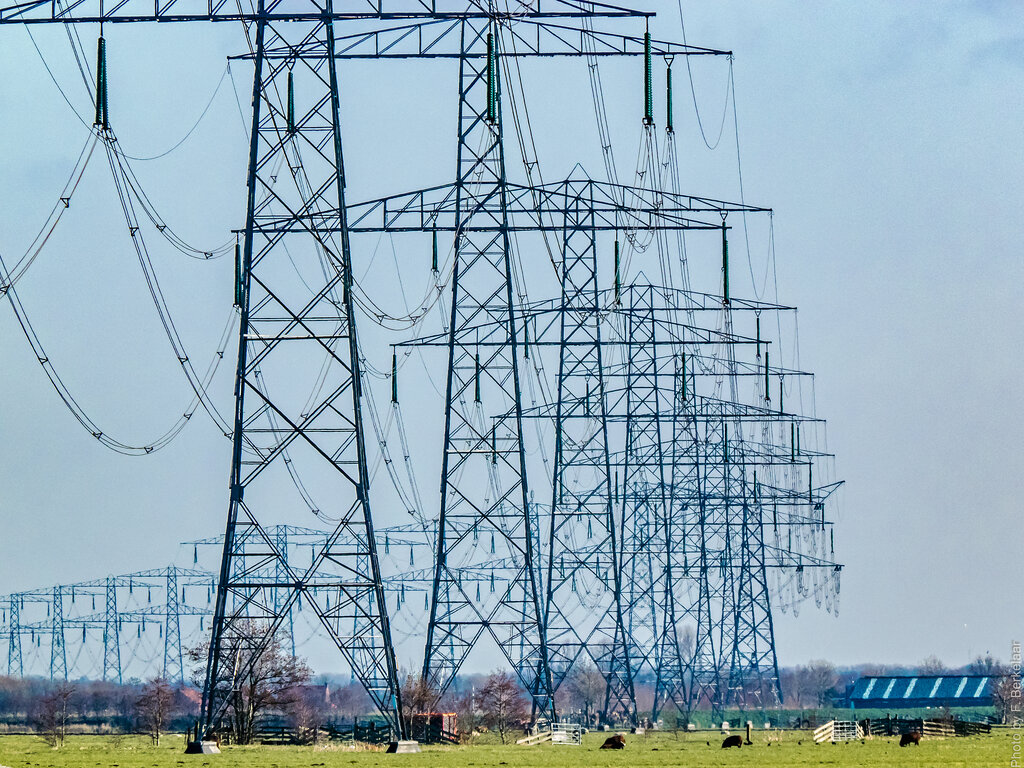
The most common type of transmission line is the overhead line, suspended by large towers or pylons. The design of these lines is a careful balance of material science and engineering.
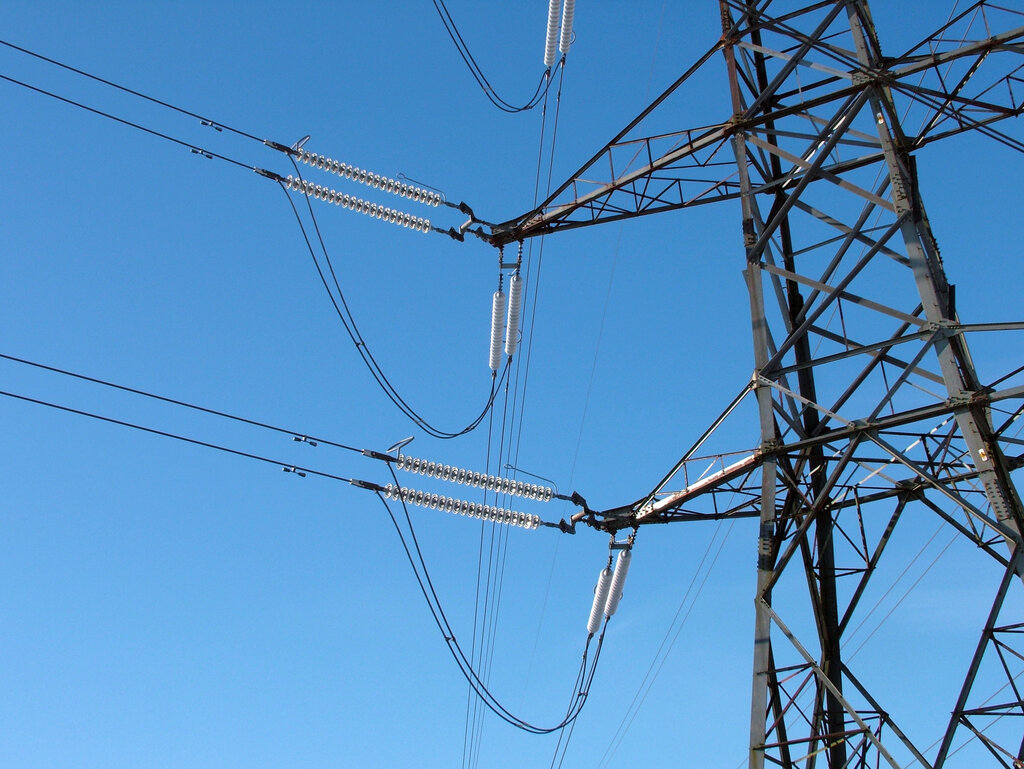
- Conductors: These are the wires that carry the current. They are typically made of an aluminum alloy, often reinforced with steel for strength (known as ACSR, or Aluminum Conductor Steel-Reinforced). Aluminum is used because it offers a good compromise between conductivity, weight, and cost.
- Insulators: To prevent the high-voltage electricity from shorting to the support tower, the conductors are separated by insulators. These are usually strings of ceramic or glass discs, which are excellent at resisting the flow of electricity.
- Support Structures: The familiar steel lattice towers or wooden poles must be strong enough to support the weight of the conductors, withstand wind and ice, and keep the lines at a safe height above the ground.
In densely populated urban areas or places with significant aesthetic or environmental concerns, underground lines are used. These consist of one or more insulated conductors bundled in a protective sheath. The cables are then placed in trenches or ducts.
While they remove the visual impact of towers, underground lines are significantly more expensive to install—often 10 times the cost of overhead lines. They are also harder to locate faults in and repair. Furthermore, their close proximity underground creates high capacitance, which can complicate the operation of long AC lines.
Efficiency and Reliability
Several factors influence how well a transmission line performs its job. Efficiency is mainly about minimizing power losses. Besides the resistive losses (), two other phenomena are important for high-voltage AC lines:
- Skin Effect: At high frequencies, AC current tends to flow more on the outer surface, or "skin," of a conductor. This reduces the effective cross-sectional area and increases the line's resistance. Using stranded conductors, like in ACSR, helps mitigate this effect.
- Corona Discharge: In very high voltage lines, the air surrounding the conductors can ionize, creating a faint violet glow and a hissing sound. This is a direct loss of electrical energy into the atmosphere.
Designing a transmission line is a constant trade-off between electrical efficiency, material cost, and structural strength.
Reliability is about ensuring an uninterrupted power supply. Transmission lines are constantly exposed to the elements, posing significant challenges.
Environmental factors are a primary concern. High winds can cause conductors to swing, potentially touching and causing a short circuit. Ice accumulation can add immense weight, threatening to break conductors or topple towers. Lightning strikes can cause massive voltage surges that trip protective circuits. Even high summer temperatures can be a problem, causing the metal conductors to expand and sag, reducing their clearance from the ground.
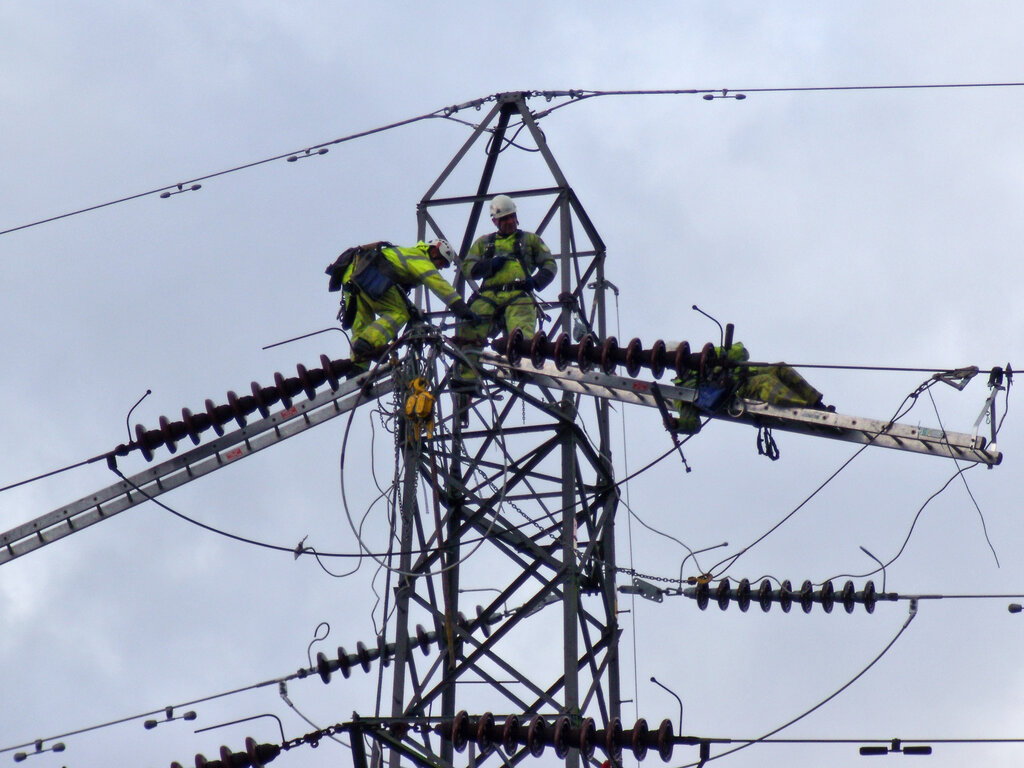
Constant maintenance is required to ensure reliability. This includes regular inspections of towers and insulators, often performed by drones or helicopters. Vegetation management is also critical, as trees growing too close to the lines can cause outages.
Ready to test your knowledge?
Why are electrical transmission lines operated at very high voltages?
According to the power loss formula , if the current (I) in a transmission line is halved, what happens to the resistive power loss?
These vital highways of the grid ensure that power generated miles away can reliably reach our homes and businesses.