Post-Keynesian Economics Explained
Introduction to Post-Keynesian Economics
Beyond the Textbook
Most economics courses start with supply and demand curves that meet neatly at an equilibrium point. This is the world of neoclassical economics, where markets are self-correcting and rational actors make optimal choices. But what if the real world is messier? What if economies aren't always moving toward a stable balance?
Enter Post-Keynesian economics. This school of thought isn't just a footnote to the work of John Maynard Keynes; it's a continuation of his most radical ideas. Post-Keynesians believe that to understand booms and busts, we need to look beyond simple market models and embrace the complexities of the real world.
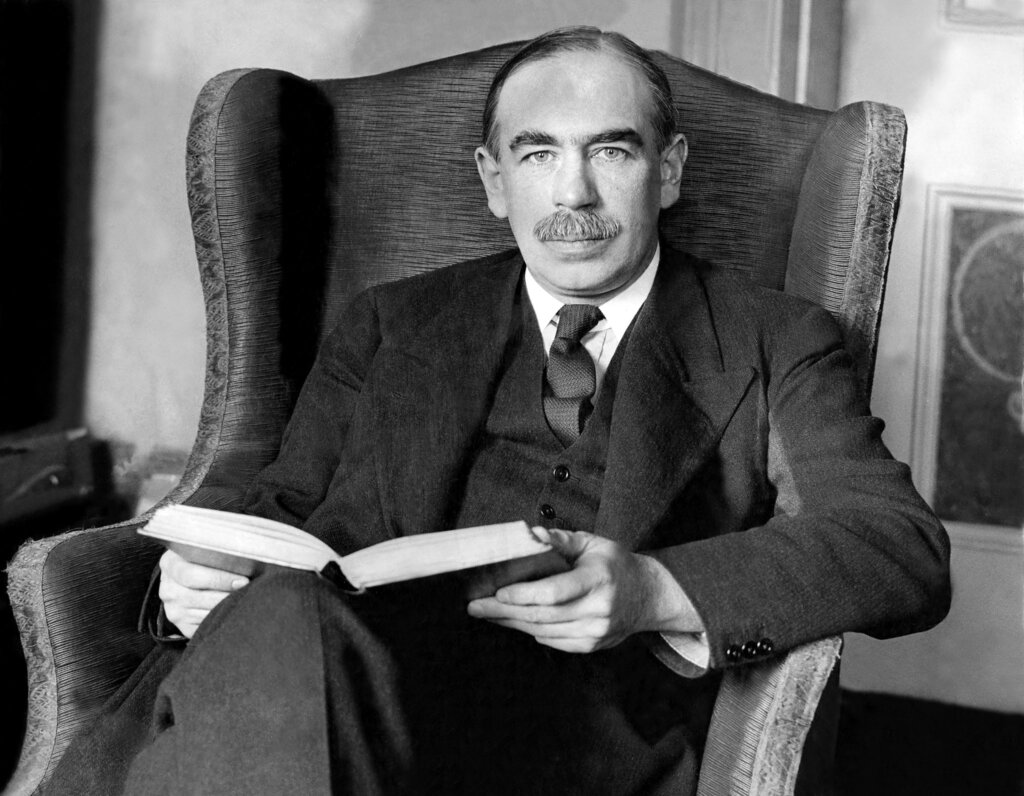
It's considered a "heterodox" school, meaning it challenges the mainstream consensus. Post-Keynesians argue that standard models often miss the key drivers of economic activity: real-world demand, fundamental uncertainty about the future, and the powerful role of institutions like banks and governments.
Demand Is King
A central idea in Post-Keynesian thought is effective demand. This isn't just about what people might want to buy; it's about what they are actually willing and able to spend. This might sound obvious, but it's a major departure from the classical view known as Say's Law, which states that "supply creates its own demand."
The classical idea is that the act of producing goods generates enough income (in wages, profits, and rent) for people to buy those goods. Post-Keynesians say this misses a crucial step. People can choose to save their money instead of spending it, especially if they're worried about the future. If everyone starts saving, demand drops, and goods go unsold.
Imagine a car company builds 10,000 new cars. Say's Law suggests the income paid to workers and suppliers is enough to buy all 10,000 cars. But if people fear layoffs, they might postpone big purchases. The cars sit on the lot, the company cuts production, and workers lose their jobs. The initial fear becomes a self-fulfilling prophecy.
For Post-Keynesians, this is why economies can get stuck in recessions. It's not a temporary hiccup on the way back to equilibrium; it's a state driven by a lack of demand. The level of investment and employment is determined by what people, businesses, and governments actually spend, not by what an economy is capable of producing.
The Fog of Uncertainty
Another key distinction is how Post-Keynesians view the future. Mainstream economics often treats the future as a matter of calculable risk. Risk is like a coin flip; you don't know the outcome, but you know the odds are 50/50. You can assign probabilities to different outcomes and make a rational calculation.
Post-Keynesians argue that the economic future is defined by fundamental uncertainty. This isn't like a coin flip; it's like trying to predict the dominant art form in the year 2075. There is simply no way to know. The information doesn't exist.
When a business decides whether to build a new factory, it's making a bet on a future that is unknowable. Will there be a new competitor? A disruptive technology? A global pandemic? These aren't risks with calculable odds. They are deep uncertainties.
This uncertainty has huge implications. It means that investment decisions are not purely rational calculations. They are driven by confidence, gut feelings, and what Keynes called "animal spirits." When confidence is high, businesses invest and the economy grows. When confidence collapses, investment dries up, regardless of interest rates. Because of this, Post-Keynesians see economies as inherently prone to instability.
Institutions Call the Shots
Finally, Post-Keynesian economics emphasizes that economies don't operate in a vacuum. They are shaped by institutions: banks, corporations, labor unions, and government agencies. These institutions set the rules of the game and have their own motivations.
For example, banks aren't just neutral intermediaries passing savings to borrowers. They actively create money when they make loans. This power to create credit can fuel economic booms or, if pulled back suddenly, trigger crises. Likewise, wage-setting isn't just a matter of supply and demand for labor; it's influenced by minimum wage laws, union bargaining power, and social conventions about what constitutes a fair wage.
By focusing on these real-world structures, Post-Keynesianism tries to explain how the economy actually works, not just how it would work in a perfect, theoretical model. It sees the economy as a dynamic, evolving system where history and power matter.
Ready to check your understanding of these core ideas?
What is the core idea behind the Post-Keynesian concept of 'effective demand'?
How does the Post-Keynesian view of the future differ from the mainstream economic concept of risk?
By moving beyond simple equilibrium models, Post-Keynesian economics offers a framework for understanding economic crises, persistent unemployment, and financial instability.