Positive Dog Training Essentials
Understanding Positive Reinforcement
What is Positive Reinforcement?
Positive reinforcement is a simple but powerful idea. When your dog does something you like, you immediately give them something they like. This reward makes them more likely to repeat that behavior in the future. It’s not about bribery; it’s about communication. You're clearly telling your dog, “Yes, that’s exactly what I want you to do!”
The basic formula is: Desired Behavior + Reward = More of That Behavior.
This approach turns training into a fun game instead of a chore. Your dog learns to think and make good choices, because good choices lead to good things. It strengthens the bond between you by building trust and understanding. Instead of fearing mistakes, your dog becomes an enthusiastic partner in the learning process.
The Perfect Reward
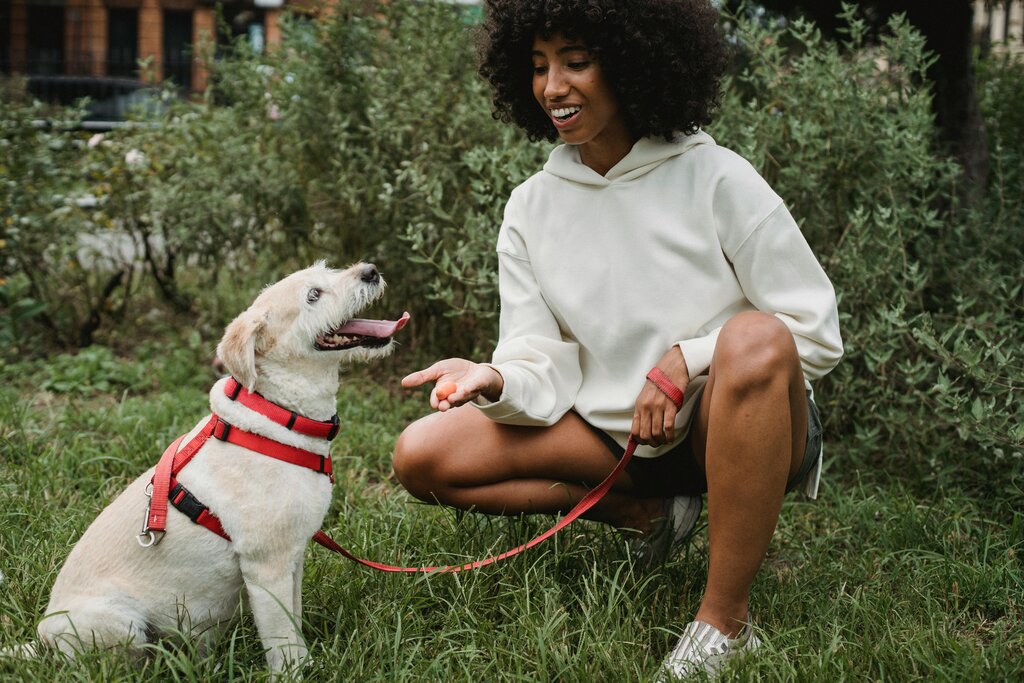
What does your dog find rewarding? The answer isn't always food. A reward is anything your dog genuinely enjoys and will work for. The key is to figure out what motivates your specific dog and match the reward to the situation.
A small piece of kibble might be fine for practicing an easy command at home, but you’ll need something more exciting—like tiny bits of chicken or cheese—when working in a distracting park. This is the difference between a low-value and a high-value treat.
Food is not the only way to positively reinforce — or reward — your dog.
Beyond treats, many dogs are motivated by praise, play, or affection. A happy, high-pitched "Good dog!" can be a powerful reward. So can a quick game of tug-of-war with a favorite toy, or even just a good scratch behind the ears. Pay attention to what makes your dog's tail wag.
| Reward Type | Best For... | Example |
|---|---|---|
| Treats | Teaching new or difficult skills. | Small, high-value treats for recall training at the park. |
| Praise | Reinforcing known commands. | An enthusiastic "Yes!" when your dog sits on cue. |
| Toys | High-energy dogs or as a special jackpot reward. | A quick game of fetch after a successful training session. |
| Affection | Calmly rewarding good behavior. | A gentle pet when your dog lies down quietly on their bed. |
Timing and Consistency are Key
Imagine you're trying to take a picture of a hummingbird. If you press the button a second too late, you'll just have a picture of empty air. Positive reinforcement works the same way. The reward must happen immediately—within a second or two—after the dog performs the behavior.
Timing is extremely important for positive reinforcement training.
If you ask your dog to sit, and you give the treat after they've already stood back up, you've rewarded the standing, not the sitting. This delay can confuse your dog about what you're actually asking for. Sharp timing creates a clear connection between the action and the reward in your dog's mind.
Consistency is just as important. If one person rewards the dog for sitting while another doesn't, the dog receives mixed messages. Everyone who interacts with the dog should be on the same page, using the same verbal cues and rewarding the same good behaviors. This creates a predictable and low-stress learning environment where your dog can succeed.
Ready to check your understanding of these core principles?
What is the primary goal of positive reinforcement in dog training?
You ask your dog to sit. They sit immediately, but you give them the treat after they have already stood back up. What have you actually rewarded?
By focusing on rewards, timing, and consistency, you're not just training a dog. You're building a joyful and cooperative relationship that will last a lifetime.