Portuguese Language Fundamentals
Portuguese Pronunciation
The Sound of Portuguese
Getting the sounds right is the first big step in speaking any new language. Portuguese has a beautiful, rhythmic flow, but some of its sounds can be tricky for English speakers. Don't worry about perfection at first. Just focus on listening and trying to copy the sounds you hear. Mastering pronunciation builds a strong foundation for everything else you'll learn.
If your goal is to communicate with Portuguese speakers... focus on pronunciation first & everything else second.
The Five Vowels
Portuguese uses the same five vowel letters as English—a, e, i, o, u—but they have very consistent pronunciations. Vowels are the heart of the language's sound. Unlike English, where a vowel's sound can change dramatically from word to word, Portuguese vowels are more predictable.
Two of them, 'e' and 'o', have both an "open" and a "closed" sound. Think of the difference between the 'e' in bed and they. An open vowel is pronounced with your jaw dropped a bit lower, creating a more open space in your mouth. A closed vowel is the opposite. Whether a vowel is open or closed often depends on where it is in a word and whether it's stressed.
| Vowel | Open Sound (like in...) | Closed Sound (like in...) |
|---|---|---|
| A | father | (usually unstressed) |
| E | bed (é) | they (ê) |
| I | machine | N/A |
| O | lot (ó) | got (ô) |
| U | flute | N/A |
The letters i and u are simple: they almost always have one sound. For a, e, and o, the sound depends on accent marks and stress, which we'll get to later.
Challenging Consonants
Many Portuguese consonants sound just like their English counterparts. However, a few key letters and combinations will need your attention.
R and RR: A single 'r' between vowels is a quick flap of the tongue, like the 'tt' in the American pronunciation of butter. When 'r' starts a word or is doubled ('rr'), it's a stronger sound from the back of the throat, similar to the French 'r'.
S and Z: An 's' between two vowels sounds like a 'z', as in casa (house). At the end of a word or before a consonant, it often makes a 'sh' sound, like in português.
LH and NH: These combinations create unique sounds. 'NH' is like the 'ny' in canyon. 'LH' is similar to the 'lli' sound in million. These are sounds made with the middle of your tongue pressed against the roof of your mouth.
C and Ç: Before 'a', 'o', or 'u', the letter 'c' makes a hard 'k' sound (casa). Before 'e' or 'i', it makes a soft 's' sound (centro). The 'ç' (called a cedilla) always makes an 's' sound, no matter what vowel follows it, like in açúcar (sugar).
Nasal Sounds
One of the most characteristic features of Portuguese is its nasal vowels. These are sounds that resonate in your nasal cavity. It’s like some of the air escapes through your nose instead of just your mouth when you speak. In writing, you can spot them easily. They're usually indicated by a tilde (~) over a vowel, like ã or õ, or when a vowel is followed by an 'm' or 'n'.
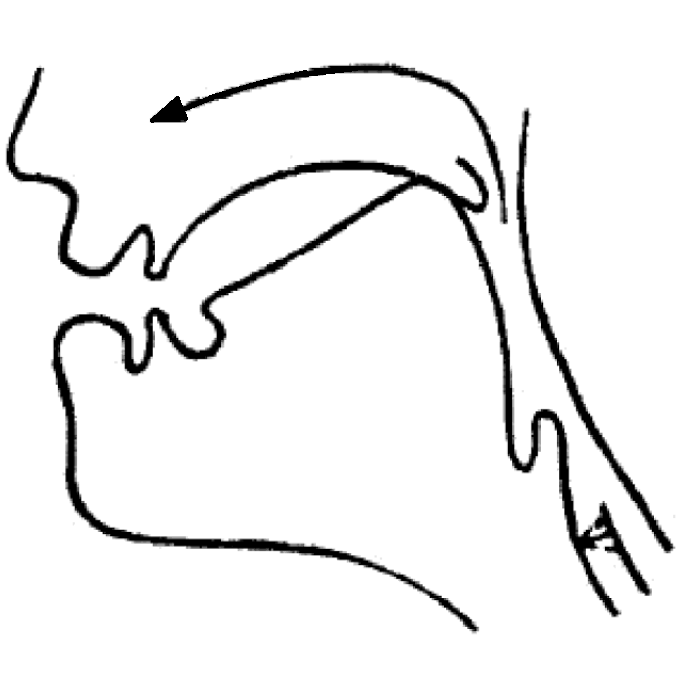
A common example is the ending -ão, found in many words like pão (bread) and não (no). To make this sound, try saying "now" but pinch your nose slightly. You should feel the vibration.
Key nasal combinations include: -ão: a nasal "ow" sound. -ãe: a nasal "eye" sound. -õe: a nasal "oy" sound.
These sounds might feel strange at first, but they are essential for sounding authentic.
Stress and Rhythm
Finally, let's talk about the music of the language. In Portuguese, word stress is very important. Placing emphasis on the wrong syllable can change the meaning of a word entirely. The good news is that the rules are fairly consistent.
Most words ending in -a, -e, -o, or -am have the stress on the second-to-last syllable.
- casa (house)
- livro (book)
Words that end in other letters, like -l, -r, or -z, are usually stressed on the final syllable.
- animal (animal)
- falar (to speak)
Accent marks are your cheat sheet. If you see an accent on a vowel (like á, ê, or õ), that syllable is always the one you stress. This overrides all the other rules.
Now let's test what you've learned about Portuguese sounds.
In Portuguese, what is a special characteristic of the vowels 'e' and 'o'?
How is the letter 's' most likely pronounced in the Portuguese word casa?