Portuguese Language Basics
Portuguese Alphabet
The Portuguese Alphabet
The Portuguese alphabet is nearly identical to the English one, which gives you a great head start. It uses the same 26 letters, from A to Z. While K, W, and Y were officially added recently to accommodate foreign words, you won't see them very often in native Portuguese vocabulary.
Let's start by learning the name of each letter.
| Letter | Portuguese Name | Pronunciation of Name |
|---|---|---|
| A a | á | ah |
| B b | bê | bay |
| C c | cê | say |
| D d | dê | day |
| E e | é | eh |
| F f | efe | EFF-ee |
| G g | gê | zhay |
| H h | agá | ah-GAH |
| I i | i | ee |
| J j | jota | ZHAW-tah |
| L l | ele | ELL-ee |
| M m | eme | EMM-ee |
| N n | ene | ENN-ee |
| O o | ó | oh |
| P p | pê | pay |
| Q q | quê | kay |
| R r | erre | ERR-ee |
| S s | esse | ESS-ee |
| T t | tê | tay |
| U u | u | oo |
| V v | vê | vay |
| X x | xis | shees |
| Z z | zê | zay |
Knowing the letter names is useful, but the sounds they make inside words are what really matter. Many consonants sound just like they do in English, but a few have unique pronunciations. The vowels are where things get most interesting.
Vowels and Nasal Sounds
Portuguese has five vowels, just like English: A, E, I, O, U. Their basic sounds are generally short and open.
- A sounds like the 'a' in "father."
- E sounds like the 'e' in "met."
- I sounds like the 'ee' in "see."
- O sounds like the 'o' in "go," but shorter.
- U sounds like the 'oo' in "moon."
However, the most distinctive feature of Portuguese pronunciation is its use of nasal vowels. This happens when a vowel is followed by an M or N, or when it has a tilde (~) over it. The sound is pushed through the nose, creating a sound that doesn't really exist in English.
Think of the sound at the end of the English word "sing." The '-ng' sound is nasal. Now imagine making a vowel sound with that same nasal quality.
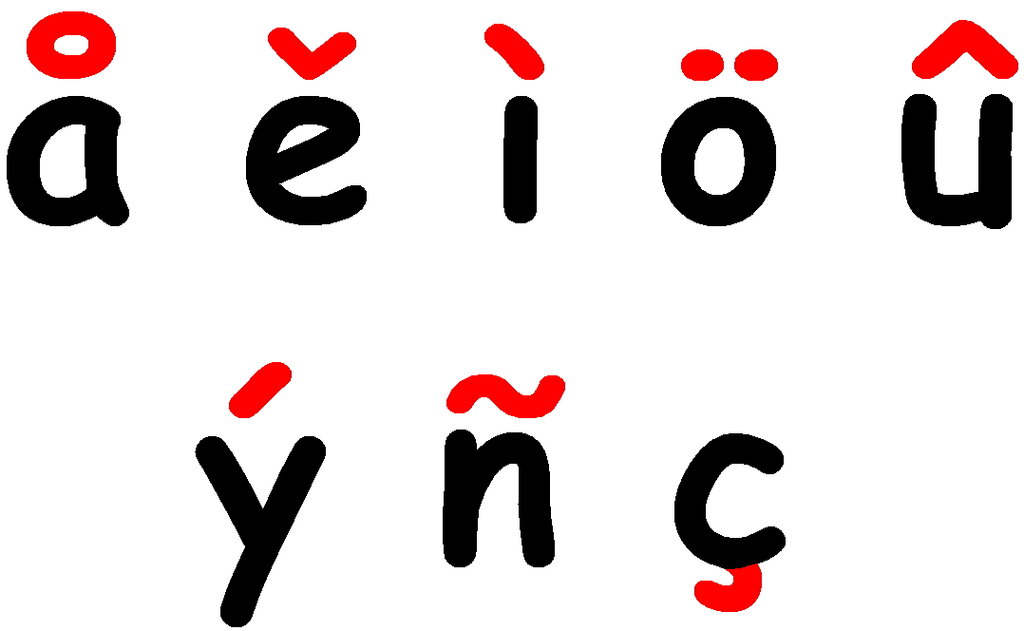
The most common nasal sound is ão. You'll see it everywhere. It's found in words like não (no), pão (bread), and coração (heart).
no
Tricky Consonants
Many consonants are straightforward. B, D, F, K, L, M, N, P, T, and V sound almost exactly as they do in English. But a few letters and combinations change their tune depending on their position in a word or the letters around them.
cedilla
noun
A mark (¸) written under the letter 'c', especially in French, Portuguese, and Spanish, to show that it is pronounced like an 's' rather than a 'k'.
Here are the most important ones to know:
| Letter(s) | Context | Sound | Example |
|---|---|---|---|
| C | Before A, O, U | Hard K sound | casa (house) |
| C | Before E, I | Soft S sound | cedo (early) |
| Ç | Always | Soft S sound | almoço (lunch) |
| G | Before A, O, U | Hard G sound | gato (cat) |
| G | Before E, I | Like the 's' in "treasure" | gente (people) |
| H | At the start of a word | Silent | hoje (today) |
| J | Always | Like the 's' in "treasure" | janela (window) |
| R | At the start of a word | Hard H sound, like in "hat" | rato (rat) |
| R | Between two vowels | A quick flap, like the 'tt' in "butter" | caro (expensive) |
| S | Between two vowels | Z sound | casa (house) |
| X | Varies | Can be 'sh', 's', or 'z' | abacaxi (pineapple) |
Common Combinations
Just like in English, some letters in Portuguese team up to create new sounds. These are called digraphs. Getting these down will make your reading and pronunciation much smoother.
When it comes to consonants in Portuguese pronunciation, the ways in which they are combined represent the areas where you should focus your attention.
Here are the essential combinations to learn:
| Combination | Sound | Example |
|---|---|---|
| CH | 'sh' as in "shoe" | chave (key) |
| LH | 'ly' as in "million" | filho (son) |
| NH | 'ny' as in "canyon" | dinheiro (money) |
| RR | Strong H sound (like a single R at the start of a word) | carro (car) |
| SS | 's' as in "snake" (never a 'z' sound) | passado (past) |
That's a quick tour of the Portuguese alphabet and its sounds. It might seem like a lot of rules, but with a little practice, they'll become second nature.
The letters K, W, and Y were officially added to the Portuguese alphabet primarily for what reason?
In Portuguese, the vowel 'A' typically sounds like the 'a' in which English word?