Porphyry’s Anti-Christian Polemic: Advanced Deconstruction
Danielic Pseudepigraphy Analysis
Porphyry's Philological Assault
Porphyry of Tyre’s critique of the Book of Daniel in his work Against the Christians was not mere polemical skepticism. It was a sophisticated application of Hellenic historical and philological methods aimed directly at a cornerstone of Christian apologetics: the argument from prophecy. Instead of debating theology, Porphyry treated Daniel as a historical document, subjecting it to the same critical scrutiny reserved for any other text. His conclusion was incendiary: Daniel was not a prophecy from the 6th century BCE but a work of historical fiction written during the Maccabean revolt in the 2nd century BCE.
Prophecy After the Fact
The core of Porphyry's argument rested on identifying the text as a classic case of vaticinium ex eventu—prophecy written after the event. He observed that Daniel's visions offered a startlingly accurate history of the Hellenistic kingdoms, from the successors of Alexander the Great through the endless conflicts between the Ptolemies of Egypt and the Seleucids of Syria. The descriptions are precise, detailing political marriages, military campaigns, and royal successions with the clarity of a historian, not a prophet.
The detailed prophecies abruptly cease their accuracy with events in the life of [{
}] (c. 167–164 BCE). After this point, the predictions become vague, general, and ultimately, incorrect.
Porphyry noted, for instance, that Daniel 11:40–45 predicts Antiochus will die in Palestine after a final, failed campaign against Egypt. This is historically false. Antiochus actually died in Persia (modern-day Iran) in 164 BCE during a campaign in the eastern part of his empire. For Porphyry, this was the smoking gun. The author knew the history of Antiochus's reign up to the midpoint of the Maccabean crisis but could only guess at how it would end. The guess was wrong, proving the text was composed during, not centuries before, Antiochus's time.
Weaponizing the Texts
Porphyry's philological attack was further sharpened by exploiting the textual instability of Daniel itself. By the 3rd century CE, Christians had largely abandoned the Old Greek Septuagint (LXX) version of Daniel in favor of Theodotion's revision. The LXX Daniel was notoriously divergent from the Hebrew/Aramaic Masoretic Text and was seen as textually inferior. Jerome later noted that the Church had
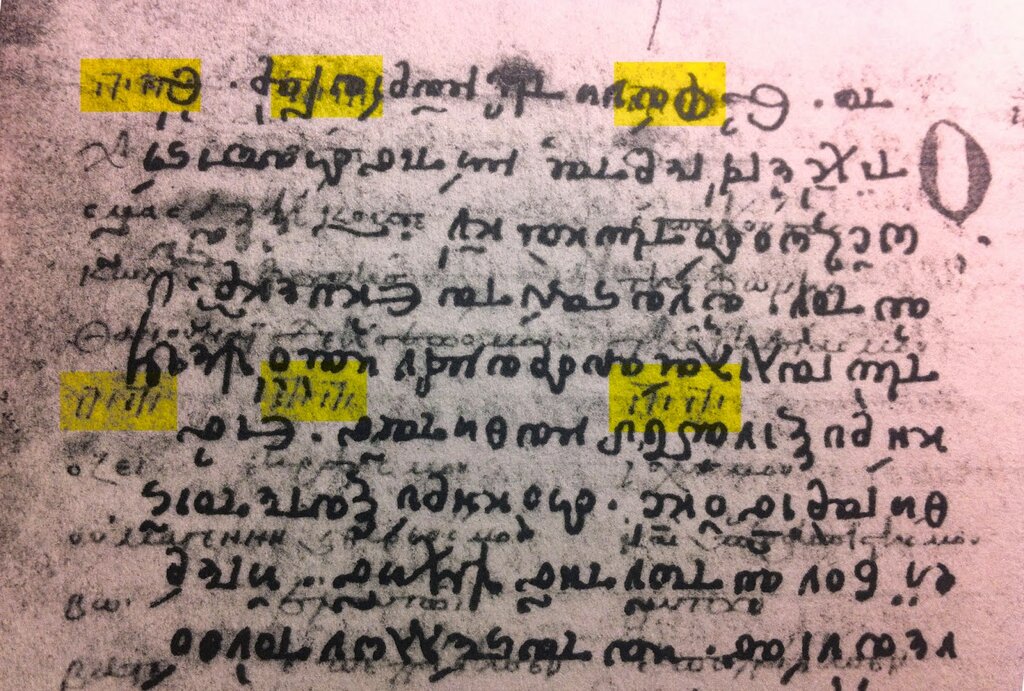
Porphyry seized on these discrepancies. He was fluent in Hebrew and Greek, allowing him to compare the Semitic original with both the LXX and Theodotion's version, which was much closer to the Hebrew. He highlighted linguistic anachronisms, such as the presence of Greek words for musical instruments in the Aramaic sections of Daniel (e.g., kitharis, symphonia). While a few Greek loanwords might be plausible for the 6th century BCE, the specific terms used pointed decisively to the Hellenistic period, hundreds of years later.
By demonstrating that Christians had to pick and choose which version of their 'inspired' text to use, Porphyry undermined its claim to singular, divine authority. Philology became his tool for deconstructing the very foundation of 'demonstration through prophecy'.
Porphyry’s method was a direct challenge to the Christian reliance on apodeixis (demonstration) through fulfilled prophecy. Where a Christian apologist saw divine foresight, Porphyry saw historical narrative disguised as prediction. His work represents a critical friction point between two intellectual worlds: the Hellenic tradition of paideia, which valued empirical history and textual criticism, and the nascent Christian worldview, which rested on faith in a divinely authored scripture. Porphyry’s analysis was so damaging that his Against the Christians was systematically suppressed and eventually burned by order of the emperor, leaving his arguments to survive only in the refutations written by his Christian opponents like Jerome and Eusebius.