Popular AI Agent Creation Tools
Introduction to AI Agents
What Is an AI Agent?
At its core, an AI agent is a program that can sense its environment, make decisions, and take actions to achieve a specific goal. Think of it as an autonomous entity that operates on your behalf. It's not just a passive tool; it's an active participant.
An AI agent is a software program designed to understand its environment, process information, and take actions to achieve specific goals.
This basic loop—sense, think, act—is the foundation of every AI agent, from a simple thermostat that adjusts the temperature to a complex self-driving car navigating city streets. The key characteristics that define an agent are:
- Autonomy: It operates on its own without direct human control.
- Perception: It uses sensors (real or virtual) to gather information about its surroundings.
- Action: It can affect its environment through actions.
- Goal-Driven: Its actions are purposeful, aimed at achieving a defined objective.
A Quick History
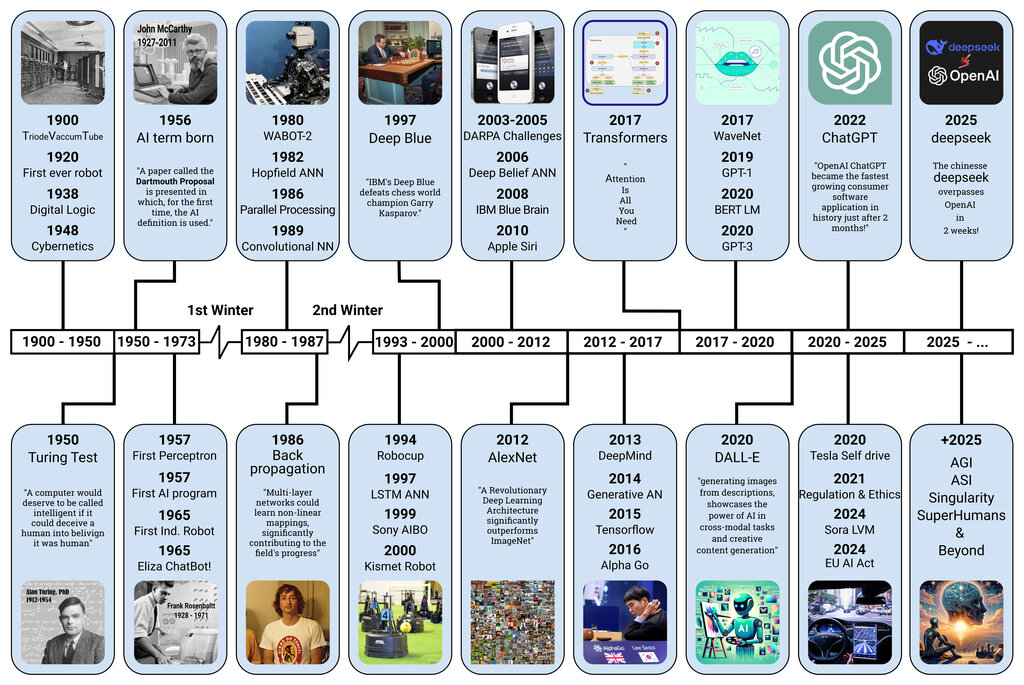
The idea of autonomous agents isn't new. It has roots in early cybernetics and artificial intelligence research from the mid-20th century. Early agents were simple, rule-based systems. They could only operate in very specific, predictable environments. If they encountered a situation not covered by their rules, they were stuck.
Over the decades, advancements in machine learning changed everything. Agents evolved from following rigid instructions to learning from experience. This shift allowed them to adapt to new, unseen situations, making them far more powerful and useful in the real world. The journey from simple automatons to today's learning-based agents has been a long one, marked by key breakthroughs in computing power and algorithms.
Agents in the Wild
AI agents are already integrated into many aspects of our daily lives and industries, often working behind the scenes. They perform tasks that range from simple automation to complex problem-solving. Their ability to operate independently makes them incredibly versatile.
| Industry | Example Application |
|---|---|
| Customer Service | Chatbots that answer questions and resolve issues |
| Finance | Automated systems that trade stocks based on market data |
| Healthcare | AI assistants that help doctors diagnose diseases |
| Gaming | Non-player characters (NPCs) that react to player actions |
| Smart Homes | Virtual assistants that control lights and appliances |
In each case, the agent perceives a specific environment—a customer query, stock prices, medical images, or a player's movement—and takes action to achieve its goal, whether that's resolving a support ticket or winning a game.
How They Operate
The core principle of an AI agent is the perception-action cycle. The agent observes its environment, processes that information to decide on the best action, and then performs that action. The complexity lies in the 'thinking' part of this cycle.
Some agents are incredibly simple. A simple reflex agent works like a knee-jerk reaction. It maps a perception directly to an action without considering the consequences. For example, if a self-driving car's sensor detects an object directly in front, its rule is to immediately brake.
If condition X is true, then do action Y.
More advanced agents, like goal-based agents, are more strategic. They don't just react. They consider how their actions will help them achieve a long-term goal. To reach a destination, a self-driving car needs to do more than just brake for obstacles. It has to plan a sequence of actions—turning, accelerating, changing lanes—that will move it closer to its final goal. This requires a different, more sophisticated kind of thinking.
Ready to test your knowledge?
What is the fundamental cycle that defines the operation of every AI agent?
Which of the following is NOT considered a key characteristic of an AI agent?
Understanding these foundational concepts is the first step toward exploring the powerful and diverse world of AI agents.