Poor Charlie's Almanack Wisdom
Introduction to Charlie Munger and 'Poor Charlie's Almanack'
The Man Behind the Curtain
For decades, Warren Buffett was the famous face of Berkshire Hathaway, one of the most successful companies in the world. But behind the scenes, he had a partner: Charlie Munger. Munger served as the company's vice-chairman, acting as a crucial sounding board and intellectual sparring partner for Buffett. Their partnership was legendary, built on decades of shared wisdom and a brutally honest exchange of ideas.

While Buffett is known for his folksy wisdom, Munger was known for his sharp, direct, and often humorous insights. He wasn't a traditional executive. Trained as a lawyer, he had a boundless curiosity that led him to study everything from psychology and physics to history and biology. He believed that big ideas from many different fields were essential for making smart decisions, especially in business and investing.
This multidisciplinary approach is the core of Munger's philosophy and the central theme of his major published work, 'Poor Charlie's Almanack'.
An Homage to a Founder
The title 'Poor Charlie's Almanack' is a direct nod to Benjamin Franklin's 'Poor Richard's Almanack,' a popular publication from the 18th century. Franklin, writing under the pseudonym Richard Saunders, filled his almanac with proverbs, poems, and practical advice on thrift and hard work. It was a guide to living a virtuous and successful life.
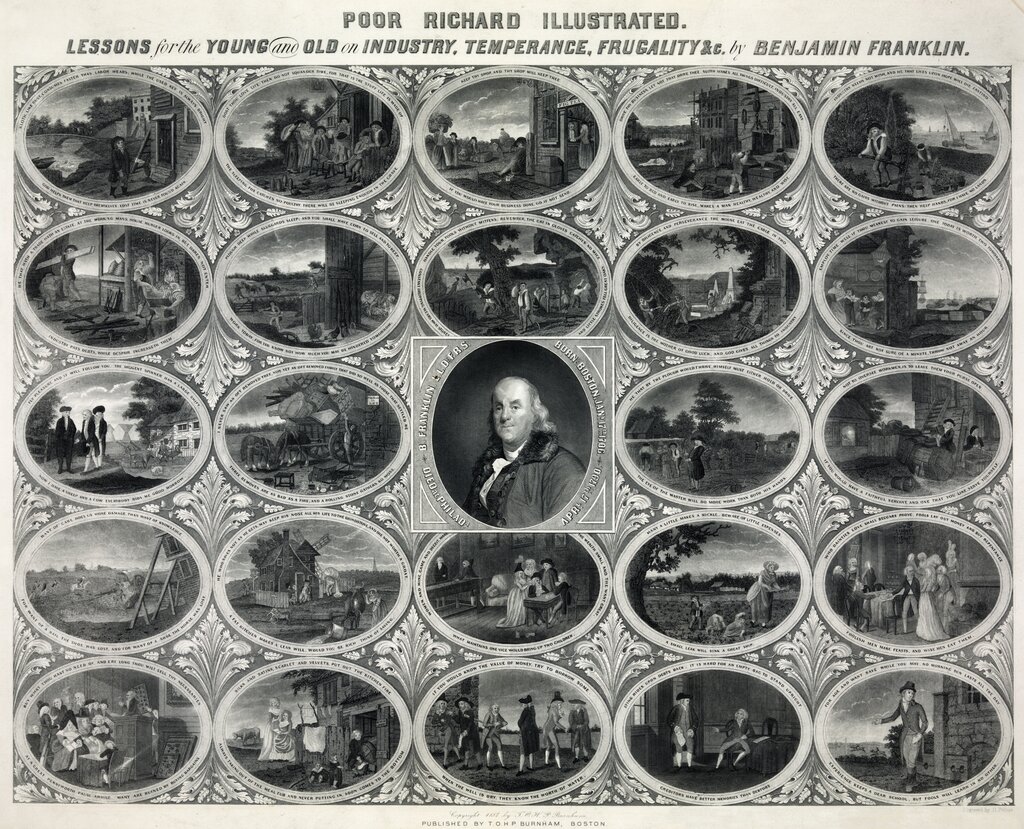
Munger's book channels Franklin's spirit. It's not about predicting the weather or planting crops, but about navigating the complexities of modern life and business. Just as Franklin offered wisdom for his time, Munger provides a framework for thinking clearly in ours. The connection is intentional, signaling that the book contains timeless, practical advice rather than fleeting financial tips.
Inside the Almanack
'Poor Charlie's Almanack' isn't a book you read from front to back like a novel. It's a curated collection of Charlie Munger's talks, speeches, and writings spanning several decades. The book was compiled and edited by Peter D. Kaufman, not written by Munger himself in a traditional sense.
The core of the book is eleven speeches Munger gave over the years. These talks are wide-ranging, covering topics from investment strategy to the common errors in human judgment. The book is designed to be browsed and revisited. It’s richly illustrated and filled with side notes, quotes, and biographical details that add color to Munger's ideas. This unconventional format reflects the nature of Munger's thinking: a web of interconnected ideas, not a simple, linear path.