Poodle Pointer Puppy Training Essentials
Puppy Basics
First Things First: House Training
Your new Pudelpointer puppy's first big lesson is learning where to go to the bathroom. Success comes down to one word: schedule. Puppies have small bladders and need frequent opportunities to go outside.
Plan on taking your puppy out first thing in the morning, last thing at night, and immediately after waking up from a nap. You should also take them out after every meal and following a play session. When you're first starting, a trip outside every hour is a good rule of thumb.
Watch for signs that your puppy needs to go, like sniffing the ground intently, circling, or whining. When you see these cues, take them to their designated potty spot immediately. When they finish, offer praise and a small, high-value treat. This creates a positive connection with going potty in the right place.
Accidents will happen. When they do, don't scold your puppy. Simply clean the area thoroughly with an enzymatic cleaner to eliminate odors that might attract them back to the same spot. Then, focus on being more vigilant with your schedule.
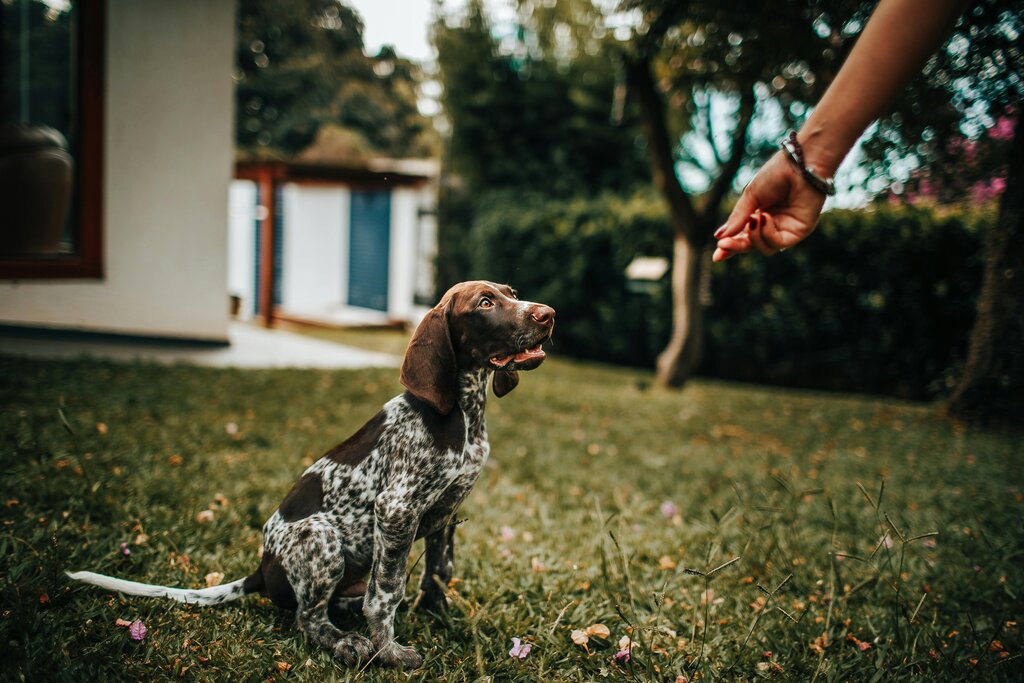
A Safe Space: Crate Training
A crate isn't a cage; it's your puppy's personal den. It’s a safe, quiet space where they can rest and feel secure. The goal is to make the crate a place your puppy loves to be.
Start by making the crate comfortable with a soft bed or blanket. Leave the door open and toss treats inside for your puppy to find. Once they are comfortable going in and out, start feeding them their meals inside the crate with the door open. Gradually, you can begin closing the door for very short periods while you are still in the room, slowly increasing the time as they become more relaxed.
Crate training is beneficial to a puppy’s life in that it provides a safe means to prevent inappropriate elimination in the house, a place where the puppy can go to escape excessive handling by small children, and a way to prevent destructive and potentially dangerous behaviors in the house when you are away.
Never use the crate as a form of punishment. It should always be associated with positive experiences, like treats, toys, and rest. This will help your puppy see it as their own special room.
Exploring the World: Socialization
Socialization is the process of gently introducing your puppy to the world in a positive way. It’s about creating good experiences with new sights, sounds, people, and other animals. This helps your puppy grow into a confident, well-adjusted adult who isn't fearful of new situations.
Socialization
noun
The process of exposing a puppy to a variety of new experiences, places, people, and other animals in a positive and controlled way to help them develop into a confident and well-behaved adult dog.
The most important window for socialization is between 3 and 16 weeks of age. During this time, let your puppy experience different surfaces like grass, pavement, and carpet. Introduce them to everyday household sounds like the vacuum cleaner from a distance. Arrange short, supervised playdates with calm, vaccinated adult dogs.
Let your puppy meet new people of all ages, but ensure the interactions are gentle and positive. The key is quality, not quantity. Each new experience should be a good one, building your puppy's confidence one step at a time.
The Golden Rule: Positive Reinforcement
Underpinning all of these training basics is the principle of positive reinforcement. This simply means rewarding your puppy for the behaviors you want to see. When your puppy does something right, like sitting calmly or going potty outside, you immediately follow it with something they love—a tasty treat, enthusiastic praise, or a favorite toy.
This method builds a strong, trusting bond between you and your dog. Instead of learning to avoid punishment, your puppy learns what to do to earn a reward. It makes training a fun game for both of you.
Keep training sessions short, especially for a young puppy. A few five-minute sessions throughout the day are much more effective than one long, frustrating one.
Consistency is crucial. Everyone in the household should use the same commands and reward the same behaviors. By focusing on these fundamentals, you are setting the stage for a lifetime of good habits and a wonderful partnership with your Pudelpointer.