Polysomnography for Sleep and Bedwetting
Introduction to Polysomnography
What Is a Sleep Study?
Sleep is a complex biological process, not just a simple period of rest. To understand what happens when we close our eyes, doctors use a powerful diagnostic tool called polysomnography. It's a comprehensive test that records your body's functions overnight, painting a detailed picture of your sleep.
Polysomnography
noun
A type of sleep study that records multiple physiological variables during sleep, such as brain activity, eye movements, muscle tone, heart rhythm, and breathing.
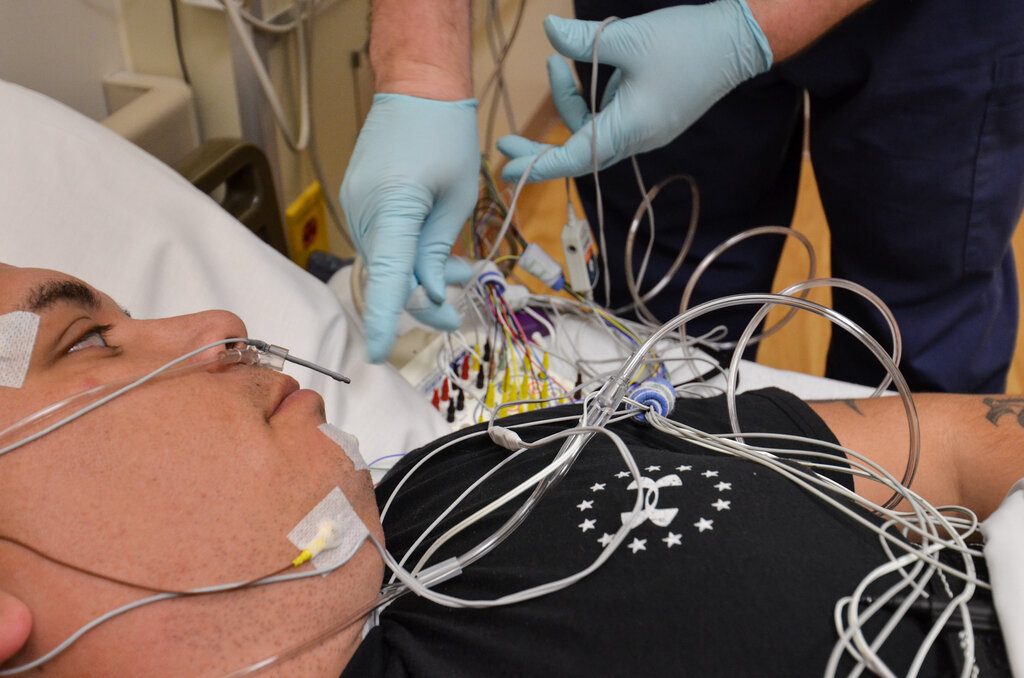
Think of it as an overnight surveillance mission for your body. While you sleep, a variety of sensors painlessly track everything from your brain waves to your breathing patterns. The goal is to catch any unusual activity that could point to a sleep disorder. The entire process is non-invasive, meaning nothing enters the body.
The Components of a PSG
A polysomnogram, often called a PSG, isn't just one test. It's a collection of several measurements taken at the same time. Each component provides a different piece of the puzzle.
| Acronym | Full Name | What It Measures |
|---|---|---|
| EEG | Electroencephalogram | Brain wave activity to determine sleep stages. |
| EOG | Electro-oculogram | Eye movements, which are key for identifying REM sleep. |
| EMG | Electromyogram | Muscle tone and activity, usually under the chin. |
| ECG | Electrocardiogram | Heart rate and rhythm. |
| - | Respiratory Effort | The movement of the chest and abdomen during breathing. |
| - | Airflow | The flow of air through the nose and mouth. |
| - | Oximetry | The level of oxygen in the blood. |
Together, these signals allow sleep specialists to see not only if you are asleep, but exactly which stage of sleep you are in. They can also detect disruptions like pauses in breathing, irregular heartbeats, or unusual muscle movements.
Why Is a Sleep Study Needed?
A doctor might recommend polysomnography if you have symptoms of a serious sleep disorder. It's the gold standard for diagnosing several conditions.
- Sleep-Related Breathing Disorders: This is the most common reason for a PSG. It helps diagnose conditions like sleep apnea, where breathing repeatedly stops and starts during sleep.
- Narcolepsy: People with narcolepsy experience overwhelming daytime sleepiness and sudden attacks of sleep. A PSG can identify abnormalities in their sleep cycles, such as entering REM sleep very quickly.
- Parasomnias: These are disruptive sleep-related events, such as sleepwalking, sleep talking, or acting out dreams (known as REM sleep behavior disorder). A PSG can help capture these events and rule out other causes.
- Periodic Limb Movement Disorder (PLMD): This condition involves repetitive cramping or jerking of the legs during sleep. Sensors on the legs can detect these movements.
Essentially, a sleep study is ordered when a doctor needs to see what's happening physiologically when a patient is asleep to make an accurate diagnosis.
The procedure itself is straightforward. You'll typically arrive at a sleep center or hospital in the evening. A technician will attach the sensors to your head, face, chest, and legs using a mild adhesive. The wires are bundled together so you can still move around in bed. Then, you simply go to sleep in a private room while technicians monitor the data from a nearby control room.
In the morning, the sensors are removed, and you can go home. The recorded data is then scored by a specialist who analyzes it hour by hour, looking for patterns and events. The results provide a clear roadmap for diagnosis and treatment.
What is the primary purpose of polysomnography (PSG)?
Polysomnography is considered the 'gold standard' for diagnosing which of the following conditions?
Polysomnography provides an essential, detailed window into the world of sleep, allowing for precise diagnosis of many disruptive and potentially serious conditions.