Political Factions of the French Revolution
Feuillant Collapse
The Conservative Revolutionaries
By 1791, the French Revolution had achieved its initial goal: an absolute monarchy was replaced by a constitutional one. For a powerful group of politicians, this was the perfect end point. They had wanted reform, not a total societal reinvention. This group, which splintered from the increasingly radical Jacobin Club in July 1791, became known as the Feuillants. Their official name was the Society of the Friends of the Constitution, Sitting at the Feuillants.
Their goal was simple: make the Constitution of 1791 work. This document established a limited monarchy where the king retained executive power, including a veto, but legislative authority rested with an elected assembly. The Feuillants were led by a powerful trio: , Adrien Duport, and Alexandre de Lameth. They believed they had found the ideal balance between royal authority and popular liberty. But in a revolution, the middle ground is often the most dangerous place to stand.
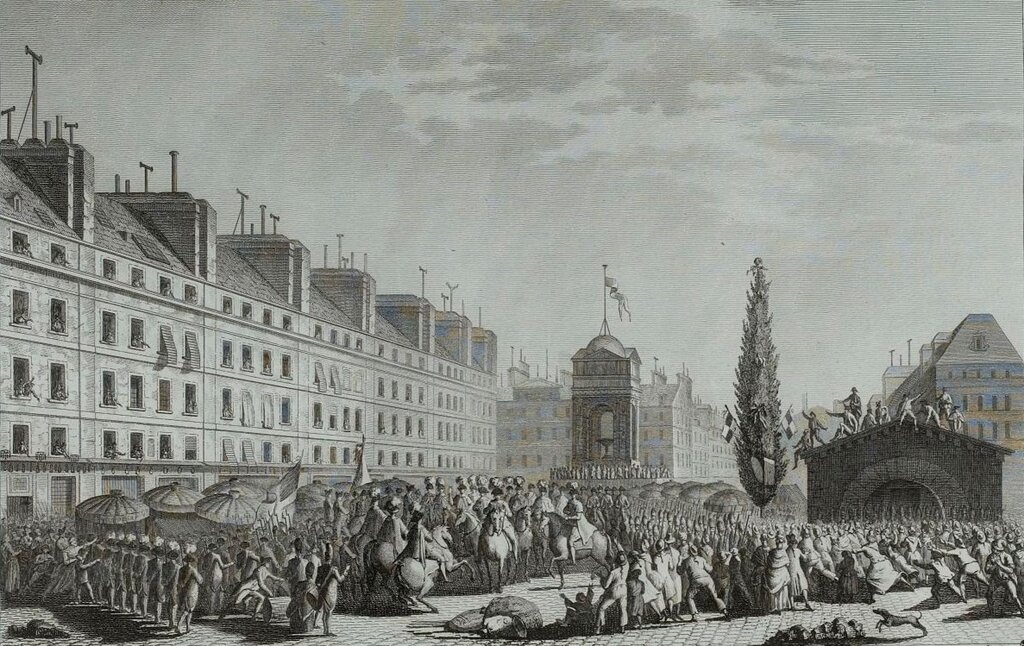
The Feuillants' political philosophy was rooted in preserving the gains of 1789 while preventing further radicalization. They feared that dismantling the monarchy entirely would lead to anarchy or a military dictatorship. Their support base was the wealthy bourgeoisie and liberal aristocrats, men who had benefited from the end of feudal privilege but were terrified by the growing power of the Parisian working class, the sans-culottes.
An Unworkable Constitution
The Feuillants’ entire political project depended on two fragile pillars: the King's cooperation and the public's trust. Both crumbled in short order. King Louis XVI's failed attempt to flee France in June 1791, the Flight to Varennes, shattered the illusion that he would willingly serve as a constitutional monarch. To the public, it looked like treason.
This event directly led to the Champ de Mars Massacre in July 1791. When republicans gathered to petition for the king's removal, the National Guard, under the authority of the Feuillant-dominated government, opened fire on the crowd. This act cemented their reputation as enemies of the popular movement. They were seen as protectors of a treacherous king, not defenders of the people.
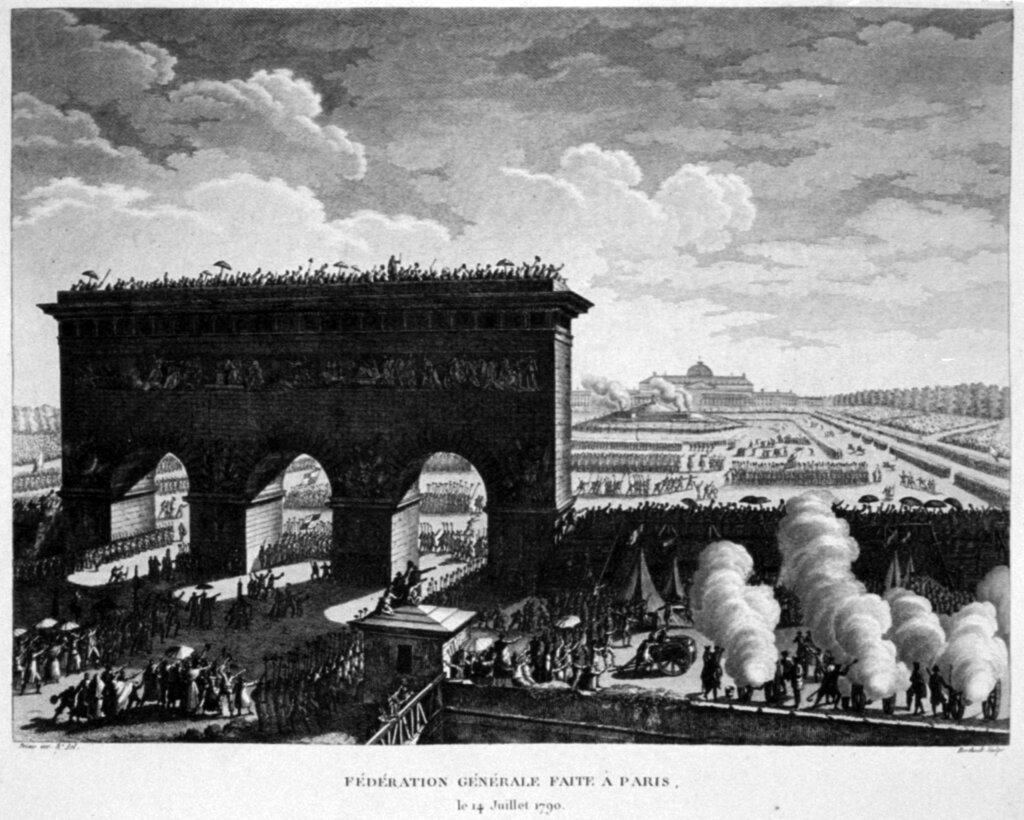
By trying to stop the Revolution, the Feuillants lost control of it. Their crackdown on republicanism only made it stronger.
The fatal blow to their vision came from abroad. In August 1791, the rulers of Austria and Prussia issued the Declaration of Pillnitz, which stated they would intervene militarily to restore the French monarchy if other European powers joined them. While largely a bluff, it was perceived in France as a grave threat.
This declaration played directly into the hands of a rival faction in the new Legislative Assembly: the Brissotins (later known as the Girondins). Led by Jacques-Pierre Brissot, they argued that war was necessary to expose the King's treachery and export the Revolution's ideals across Europe. The Feuillants, arguing for peace, were painted as weak and unpatriotic, possibly even complicit with France's foreign enemies.
The Final Collapse
Within the Legislative Assembly, the Feuillants found themselves outmaneuvered. They were the largest faction on paper, but they were not a disciplined party. They were split between supporters of Lafayette and the triumvirate of Barnave, Duport, and Lameth. The Brissotins, though smaller, were more organized and better at using popular sentiment to their advantage.
When France declared war on Austria in April 1792, the Feuillants' fate was sealed. The initial French defeats were blamed on royalist conspiracies, further eroding the King's position and, by extension, that of his Feuillant defenders. They tried to negotiate with the court to form a more moderate government, but they were caught between a king who distrusted them and a popular movement that despised them.
Their end came swiftly. The insurrection of August 10, 1792, saw the storming of the Tuileries Palace, the suspension of the monarchy, and the effective end of the Constitution of 1791. With their central political principle in ruins, the Feuillant club was closed. Many of its leaders were arrested and later executed, while others fled into exile. Their attempt to halt the Revolution at a point of compromise had failed, paving the way for the rise of the Republic and the Reign of Terror.
Now, let's test your understanding of the Feuillants' rapid decline.
What was the primary political objective of the Feuillants?
Which event directly led to the Champ de Mars Massacre and shattered the public's belief that King Louis XVI would willingly serve as a constitutional monarch?
The story of the Feuillants is a classic case of moderates being consumed by the very revolution they helped to start. Their failure demonstrated that in times of radical change, the political center is often the most difficult ground to hold.