Political Economy of Energy
Introduction to Energy Systems
What Powers Our World?
Energy is the invisible force that runs our lives. It lights our homes, powers our cars, and cooks our food. But where does it all come from? Understanding the sources of our energy is the first step in understanding the complex systems that deliver it to us.
Energy
noun
The capacity to do work. In this context, it refers to the resources we harness to generate heat, produce electricity, and fuel transportation.
Energy sources are broadly split into two camps: non-renewable and renewable. Non-renewable resources are finite; once we use them, they're gone for good, at least on a human timescale. Renewable resources, on the other hand, replenish themselves naturally.
The main non-renewable sources are fossil fuels—coal, oil, and natural gas—and nuclear fuels like uranium. Renewables include sunlight, wind, water (hydropower), heat from the earth (geothermal), and organic matter (biomass).
Each source has a unique profile of benefits and drawbacks.
| Energy Source | Key Advantage | Key Disadvantage |
|---|---|---|
| Fossil Fuels | High energy density, historically cheap | Major source of greenhouse gases |
| Nuclear | Massive power output, no CO2 emissions | Radioactive waste, safety concerns |
| Solar & Wind | Clean, becoming cheaper | Intermittent (not always sunny/windy) |
| Hydropower | Reliable, low-cost operation | Large environmental footprint (dams) |
| Geothermal | Consistent power, small land footprint | Geographically limited |
| Biomass | Uses waste materials | Can cause air pollution, land-use issues |
A Global Appetite for Energy
Our global energy consumption is immense. To get a sense of the scale and complexity, economists and engineers often use flow diagrams called Sankey diagrams. These charts show where energy comes from, how it's converted, and where it ultimately ends up.
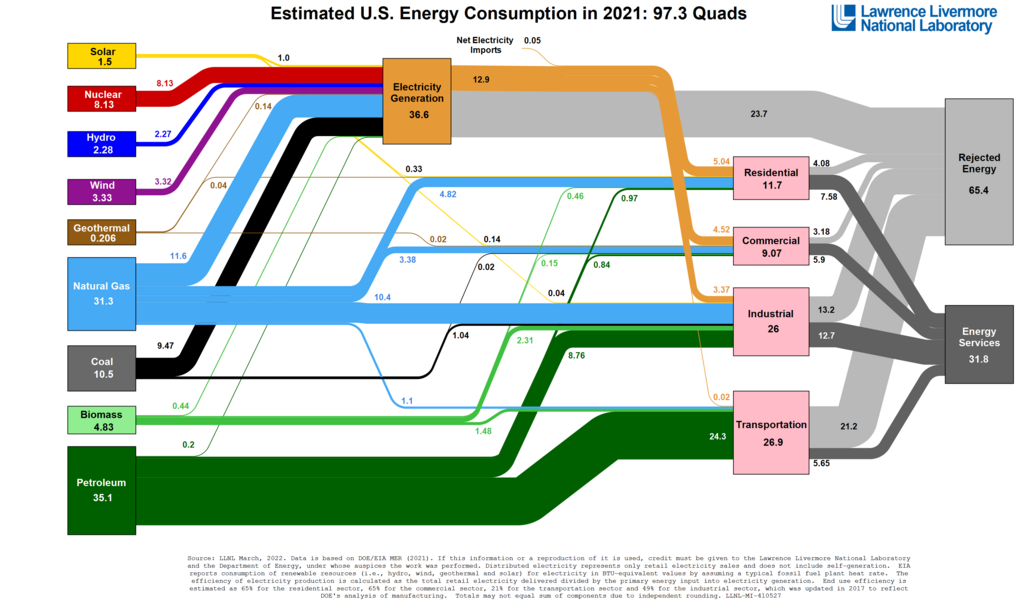
This diagram reveals a few key things. First, fossil fuels still dominate the energy mix. Second, a surprisingly large amount of energy is lost during conversion, mostly as waste heat from power plants and engines. This is what the chart labels "Rejected Energy." Finally, we can see how energy is split between major sectors: transportation, industry, residential, and commercial use.
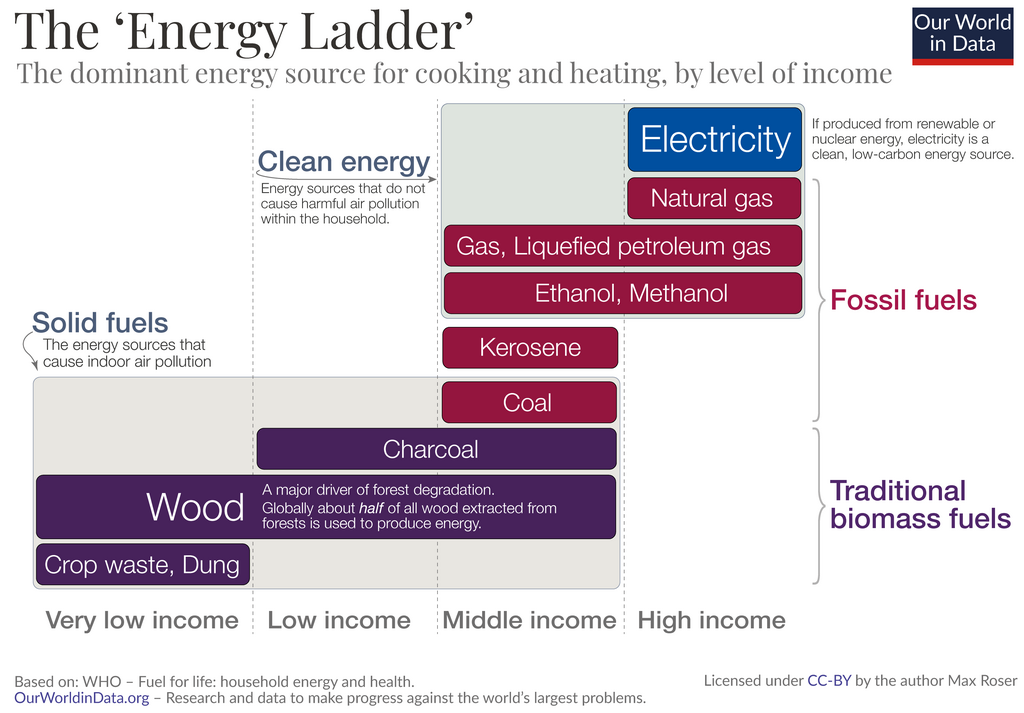
Energy consumption isn't uniform across the globe. As a country's economy develops, its citizens tend to move up the "energy ladder," shifting from simple, less efficient fuels to more advanced, cleaner energy sources.
From Source to Socket
Getting energy from its source to your light switch is a multi-step process. It involves production, conversion, and distribution.
- Production: This is the extraction of raw, or primary, energy sources. Think of drilling for oil, mining for coal, or harnessing wind with a turbine.
- Conversion: Primary energy is rarely used in its raw form. It's usually converted into a more convenient secondary form, like electricity or gasoline. A power plant, for example, converts the chemical energy in natural gas into electrical energy.
- Distribution: Once converted, energy needs to be delivered to consumers. For electricity, this happens through a vast, interconnected network called the power grid.
This traditional model of large, central power stations is now being supplemented by distributed power systems, where smaller-scale generation, like rooftop solar panels, is located closer to where the energy is used.
The Market for Energy
Like other commodities, energy is bought and sold in markets. The price of energy is fundamentally driven by supply and demand. When supply is high and demand is low, prices tend to fall. When demand outstrips supply, prices rise.
This dynamic is constantly at play. A heatwave increases demand for electricity to power air conditioners, pushing prices up. The discovery of a new natural gas field increases supply, potentially lowering prices.
Of course, many other factors influence energy markets, including government regulations, technological advancements, and geopolitical events. When comparing the costs of different energy sources, a common metric is the Levelized Cost of Energy (LCOE). It represents the average revenue per unit of electricity generated that would be required to recover the costs of building and operating a generating plant during an assumed financial life.
In simple terms, LCOE helps answer the question: if you're going to build a new power plant today, which technology will give you the cheapest electricity over the plant's lifetime?
LCOE accounts for everything: the initial construction cost, fuel costs, maintenance, and how much energy the plant is expected to produce.
The Environmental Cost
Finally, no discussion of energy systems is complete without mentioning their environmental impacts. The burning of fossil fuels releases greenhouse gases like carbon dioxide () into the atmosphere, which is the primary driver of climate change.
Other impacts include:
- Air Pollution: Burning coal and other fuels can release pollutants that cause smog and acid rain.
- Water Use & Pollution: Power plants require large amounts of water for cooling. Mining and drilling can contaminate groundwater.
- Land Use: Hydropower dams flood vast areas, wind farms require significant space, and mining operations can scar landscapes.
Each energy source carries its own environmental baggage. Even renewable energy sources are not entirely impact-free. For example, the manufacturing of solar panels and batteries is an energy-intensive process that requires the mining of specific minerals.
Understanding these trade-offs is crucial for making informed decisions about our energy future.
Let's check your understanding of these core concepts.
What is the primary difference between renewable and non-renewable energy sources?
In the context of an energy flow diagram (Sankey diagram), what does the large category of "Rejected Energy" typically represent?
These concepts form the foundation of how our world is powered. By grasping the different sources, pathways, and impacts of energy, we can better understand one of the most critical systems shaping modern life.