Police Science and Institutional Frameworks
Central Security Oversight
The MHA's Command Centre
At the heart of India's internal security apparatus sits the Ministry of Home Affairs (MHA). It acts as the central command for maintaining domestic peace and order, a responsibility distinct from the external threats handled by the Ministry of Defence. The top bureaucrat, the Home Secretary, orchestrates this vast operation, translating government policy into action on the ground. This administrative lynchpin oversees a complex network of agencies and police forces.
The MHA's most visible and active instruments are the (CAPFs). These are uniformed forces that, while often referred to as paramilitary, have a distinct legal standing and function directly under the central government. They are deployed to handle situations that are beyond the scope of state police forces, from guarding international borders to quelling large-scale internal disturbances.
Guardians of the Borders and Beyond
India's diverse and challenging borders require specialised forces. The MHA assigns these duties to specific CAPFs, each with a clear mandate. This principle of 'one border, one force' ensures specialisation and accountability.
The Border Security Force (BSF) is the world's largest border guarding force. It is tasked with securing India's long and complex borders with Pakistan and Bangladesh. The BSF's role extends from preventing trans-border crime and smuggling to gathering intelligence in its area of operation.
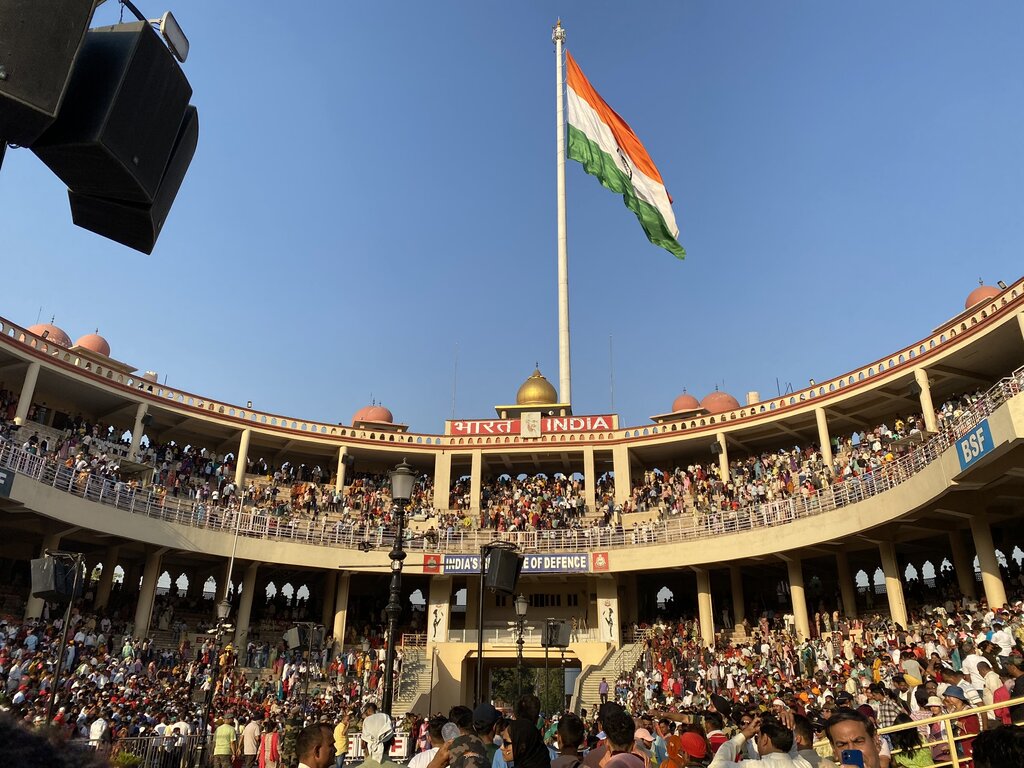
Guarding the high-altitude, mountainous border with China is the responsibility of the Indo-Tibetan Border Police (ITBP). Trained in mountain warfare and survival, the ITBP operates in some of the most inhospitable terrains on Earth, monitoring the Line of Actual Control (LAC). Meanwhile, the unique open borders with Nepal and Bhutan are managed by the (SSB). Its role is as much about diplomacy and building goodwill with the local populations as it is about security, aiming to prevent illegal activities while facilitating friendly passage.
Beyond the borders, two other major forces handle internal security. The Central Reserve Police Force (CRPF) is the MHA's primary tool for maintaining law and order across the country. It assists state police during major disturbances, conducts counter-insurgency operations, and provides security during elections. The Central Industrial Security Force (CISF) has a different mandate: it protects the country's vital economic assets. You'll find CISF personnel guarding airports, seaports, nuclear installations, and public sector undertakings.
| Force | Primary Mandate | Area of Deployment |
|---|---|---|
| BSF | Guard India-Pakistan & India-Bangladesh borders | International Border (IB) |
| ITBP | Guard India-China border | Line of Actual Control (LAC) |
| SSB | Guard India-Nepal & India-Bhutan borders | Open international borders |
| CRPF | Internal Security, Counter-insurgency | All over India as required |
| CISF | Protect critical infrastructure | Airports, PSUs, etc. |
A Question of Jurisdiction
The division of power between the central government and state governments is a cornerstone of India's federal structure. 'Police' and 'Public Order' are subjects on the State List, meaning state governments have exclusive power to legislate on them. So how can central forces like the CRPF operate within a state?
The answer lies in the , which contains subjects of national importance where only the central government can make laws. This includes 'Defence of India' and 'Naval, military and air forces; any other armed forces of the Union.' The CAPFs fall under this constitutional provision, giving the MHA the authority to deploy them anywhere in the country to protect national security or to assist a state when its own police forces are overwhelmed. This creates a layered security system, with state police as the first responders and central forces as a national reserve.
This structure ensures a clear chain of command. Each CAPF is headed by a Director General, typically an officer from the Indian Police Service, who reports to the Home Secretary. Below the DG, the force is organised into various commands, zones, and battalions, each with a designated commander. This hierarchy allows for efficient management and rapid deployment of thousands of personnel across the country.
Time for a quick check on these concepts.
What is the primary responsibility of the Ministry of Home Affairs (MHA) in India?
Which Central Armed Police Force (CAPF) is specifically tasked with guarding India's open borders with Nepal and Bhutan?
Understanding this framework is key to grasping how India manages its complex internal security challenges. It's a system of specialised forces operating under a unified central command, with clear constitutional authority to act where needed.