Poland's Exchange Rate Shield
Exchange Rate Mechanisms
How Currencies Get Their Value
An exchange rate system is the way a country manages its currency in relation to foreign currencies. Think of it as the set of rules that determines how much one currency is worth in terms of another. These systems are crucial for international trade, investment, and the overall health of an economy.
There are two main approaches countries can take: letting the market decide the value, or setting a specific value themselves. These are known as floating and fixed exchange rate systems.
Floating Exchange Rates
In a floating exchange rate system, a currency's value is determined by supply and demand in the foreign exchange market. It works just like the price of anything else. If a country's exports are in high demand, or if it's seen as a great place to invest, more people will want to buy its currency. This increased demand causes the currency's value to rise, or appreciate.
Conversely, if a country imports more than it exports, or if investors become nervous about its economic future, people will sell its currency. This increased supply causes the currency's value to fall, or depreciate. Central banks rarely intervene in a pure floating system.
Under a floating system, the exchange rate constantly adjusts to balance the supply and demand for the currency.
The main advantage of this system is that it automatically corrects trade imbalances. If a country has a large trade deficit (imports > exports), its currency will depreciate, making its exports cheaper and imports more expensive. This naturally pushes the trade balance back toward equilibrium.
However, this flexibility comes at a cost. Floating rates can be volatile, creating uncertainty for businesses involved in international trade and investment. A sudden shift in currency value can turn a profitable venture into a loss.
Fixed Exchange Rates
In a fixed exchange rate system, the government or central bank sets an official exchange rate for its currency. This rate is often pegged to another major currency, like the U.S. dollar, or to a basket of currencies. To maintain this fixed rate, or peg, the central bank must be ready to intervene in the foreign exchange market.
If the currency's market value threatens to fall below the pegged rate, the central bank will buy its own currency using its foreign currency reserves. This increases demand and pushes the price back up. If the currency's value rises above the peg, the central bank will sell its own currency to increase supply and bring the price back down.
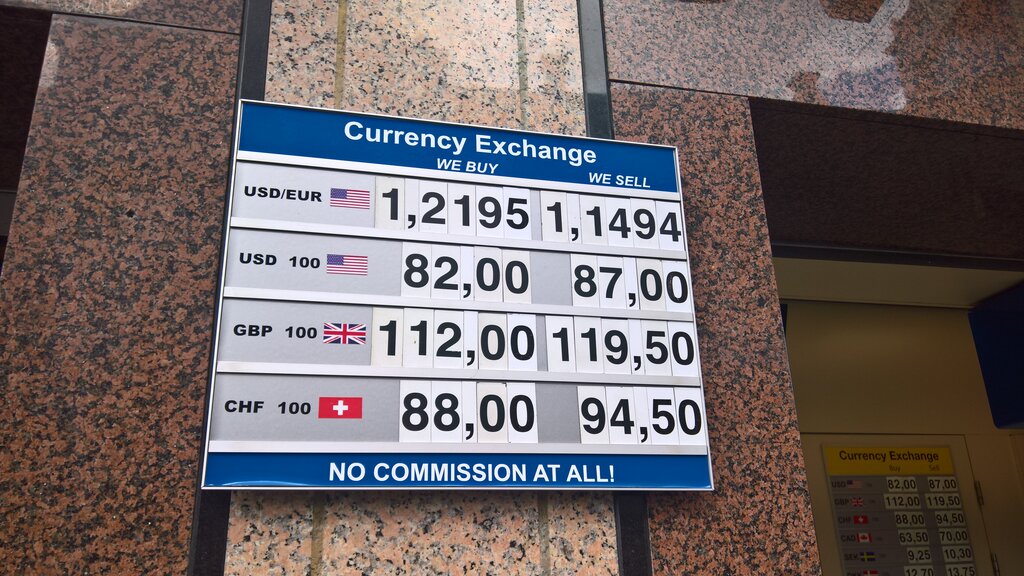
Fixed rates offer stability and predictability, which can encourage international trade and investment. Businesses know exactly how much a foreign contract will be worth in their home currency.
But this stability has drawbacks. A country must hold large reserves of foreign currency to defend its peg. Furthermore, it gives up control over its own monetary policy. For example, if it needs to lower interest rates to boost its domestic economy, doing so might cause its currency to weaken, forcing the central bank to intervene against its own domestic goals to maintain the peg.
The proponents of a fixed system argue that there is a better control when countries arrange their exchange rates and maintain them by monetary policies that influence the purchasing and selling of currencies reserves, but among the disadvantage are distortions of trade, favoritism, and black markets (McConnell & Brue, 2008).
Europe's Cooperative Approach
Before the creation of the euro, European countries sought a middle ground between purely fixed and freely floating systems. The goal was to create monetary stability to foster deeper economic integration.
This led to the creation of the European Monetary System (EMS) in 1979. The centerpiece of the EMS was the European Exchange Rate Mechanism (ERM). Under the ERM, member currencies were pegged to each other but were allowed to fluctuate within a narrow band. If a currency's value moved to the edge of its band, the respective central banks were obligated to intervene.
The ERM was a type of adjustable peg system, designed to provide stability without the rigid constraints of a purely fixed system. It was a crucial stepping stone toward the single currency, the euro.
This system aimed to provide the best of both worlds: the stability of a fixed system to encourage trade among member nations, with a small degree of flexibility to absorb economic shocks. The experience with the ERM helped lay the groundwork for the economic coordination necessary to launch the euro in 1999.
In a pure floating exchange rate system, what is the primary determinant of a currency's value?
A country with a fixed exchange rate system sees its currency's market value threatening to fall below the pegged rate. What action must its central bank take to defend the peg?
Understanding these mechanisms is key to seeing how countries interact on the global economic stage.