Poker Mastery
Fundamentals of Poker Strategy
The Power of Position
In poker, where you sit in relation to the dealer button is everything. This is called your position. The later you have to act in a betting round, the better your position is. Why? Because you get to see what everyone else does before you have to make a decision.
Imagine you're in a negotiation. Would you rather make your offer first, or wait to hear what everyone else is offering before you speak? Most people would choose to wait. Acting last gives you the most information, and in poker, information is power. A player in a late position can watch their opponents check, bet, or raise, giving them valuable clues about the strength of their hands.
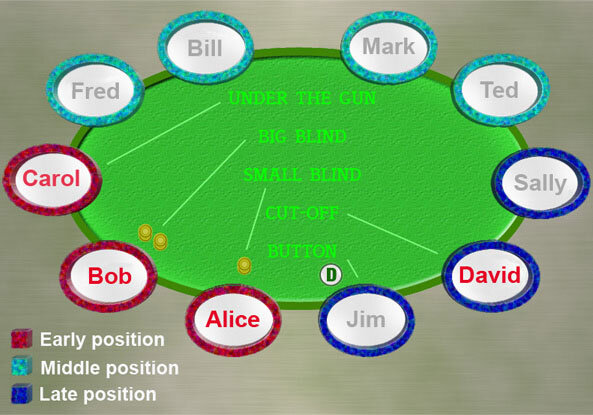
The seats to the immediate left of the blinds are called "early position." You have to act first, with little to no information about your opponents' hands. The seats in the middle are "middle position." The best seats are the dealer button and the spot to its right (the "cutoff"), which are known as "late position." From here, you have a panoramic view of the action.
Acting last is a built-in structural advantage. It allows you to play more hands profitably and puts your opponents in tough spots.
Choosing Your Cards Wisely
A common mistake for beginners is playing too many hands. Just because you're dealt two cards doesn't mean you have to see a flop. Being selective about which starting hands you play is a core pillar of a winning strategy.
Your position dictates how selective you need to be. When you're in early position, you should only play very strong hands. The risk of someone behind you having a monster hand is too high. As you move to later positions, you can start to play a wider variety of hands. You have the informational advantage, so you can afford to be a bit more speculative.
| Position | Play Style | Example Hands |
|---|---|---|
| Early | Very Tight | A-A, K-K, Q-Q, J-J, A-K |
| Middle | Tight | Hands above, plus 10-10, 9-9, A-Q, A-J |
| Late | Loose | Hands above, plus suited connectors (8-7s) |
This table is just a rough guide. The strongest starting hands are big pairs (like two Aces or Kings) and two high-ranking cards (like Ace-King or Ace-Queen). But from a late position, hands like a 7 and 8 of the same suit, known as "suited connectors," become playable because they have the potential to make a straight or a flush. You can take a cheap look at the first three community cards (the flop) and fold if you don't hit something good.
Why Aggression Wins
In poker, you can be passive or aggressive. Passive actions are checking and calling. Aggressive actions are betting and raising. While there's a time and place for passive play, a consistently aggressive strategy is almost always better.
There are two ways to win a pot: have the best hand at the end (the showdown), or get everyone else to fold. Checking and calling can only win you the pot in the first scenario. Betting and raising can win it for you in both. By betting, you give yourself a second chance to win even if your hand isn't the best.
When you bet or raise, you seize control of the hand. This is called having the "initiative." You put your opponents to a decision: do they have a hand strong enough to call your bet, or should they fold? This pressure often causes them to fold better hands, meaning you win pots you otherwise would have lost.
A good player mixes aggression with smart starting hand selection and positional awareness. They don't just bet wildly. They bet when they have a strong hand, and they bet to represent a strong hand, forcing others to make difficult choices. This proactive approach is the foundation of a successful poker strategy.