Poker Fundamentals for Beginners
Poker Basics
The Best Hand Wins
The goal in poker is simple: win the pot. In Texas Hold'em, you do this by creating the best possible five-card hand. You'll use a combination of the two private cards dealt only to you (your hole cards) and five shared cards (the community cards) available to everyone.
Not all hands are created equal. A Royal Flush is the best possible hand and can't be beaten. A simple High Card is the weakest. Understanding this hierarchy is the first step to understanding the game.
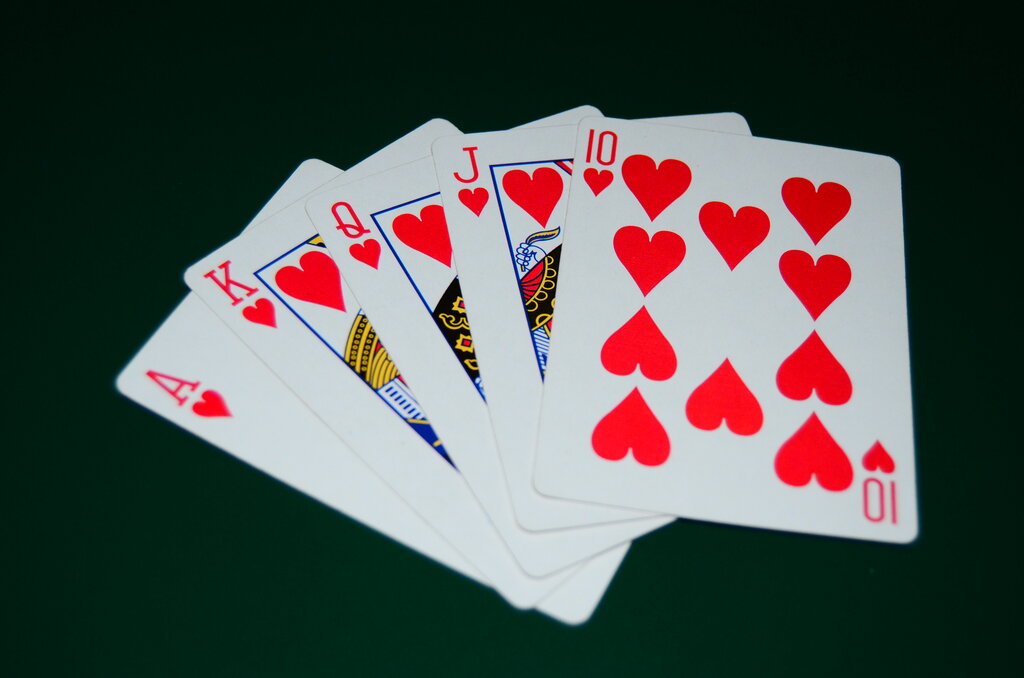
Here are the official hand rankings, from strongest to weakest.
| Hand | Description |
|---|---|
| Royal Flush | A, K, Q, J, 10, all of the same suit. |
| Straight Flush | Five cards in sequence, all of the same suit. |
| Four of a Kind | Four cards of the same rank. |
| Full House | Three cards of one rank and two cards of another. |
| Flush | Any five cards of the same suit, not in sequence. |
| Straight | Five cards in sequence, but not of the same suit. |
| Three of a Kind | Three cards of the same rank. |
| Two Pair | Two cards of one rank, two cards of another rank. |
| One Pair | Two cards of the same rank. |
| High Card | If no one has a pair or better, the highest card wins. |
How a Hand Plays Out
A single hand of Texas Hold'em unfolds in a structured sequence of dealing and betting. It begins with each player receiving their two private hole cards.
The action moves in stages, called streets, with a round of betting after each. Players can choose to check (pass the action if no bet has been made), bet (make the first wager), call (match a bet), raise (increase the current bet), or fold (give up their hand).
- Pre-Flop: After you see your two hole cards, the first round of betting occurs.
- The Flop: Three community cards are dealt face-up. A second round of betting follows.
- The Turn: A fourth community card is dealt. Time for the third betting round.
- The River: The fifth and final community card is dealt, followed by the last round of betting.
- The Showdown: If two or more players are still in the hand, they reveal their cards. The player with the best five-card hand wins the pot.
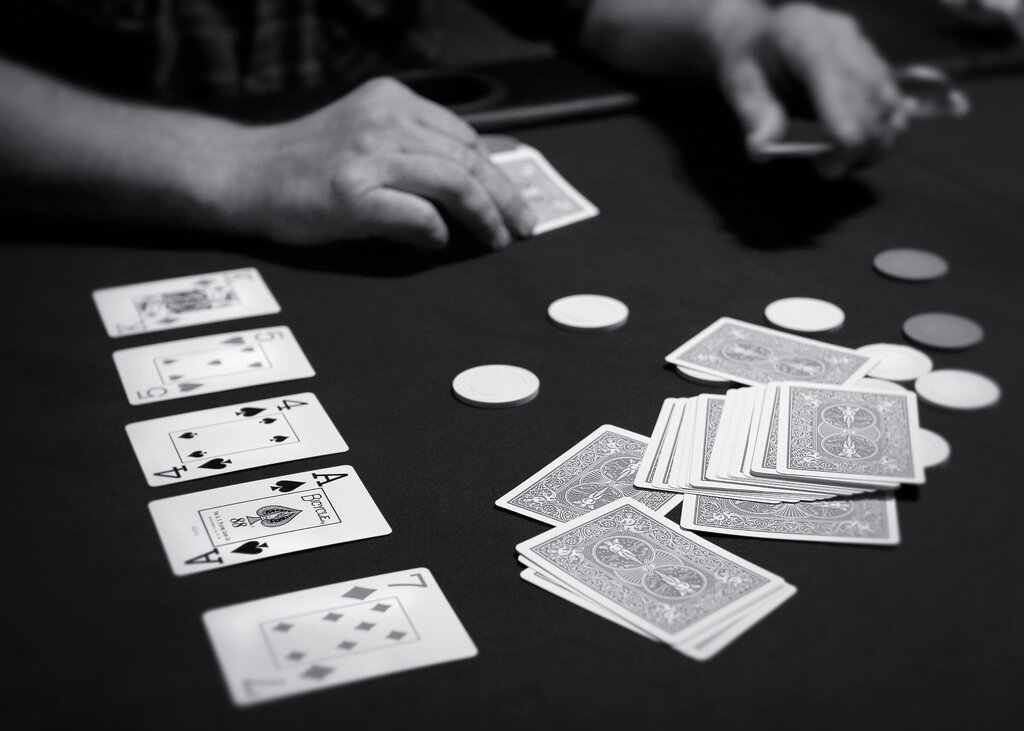
Remember, you can use any combination of your two hole cards and the five community cards to form your final five-card hand. You can use both of your hole cards, just one, or even none if the best hand is on the board.
The Dealer and The Blinds
In a casino, there's a professional dealer. In home games, players often take turns. To keep track, a marker called the dealer button is used. After each hand, the button moves one seat to the left, ensuring everyone shares the same advantages and disadvantages of position.
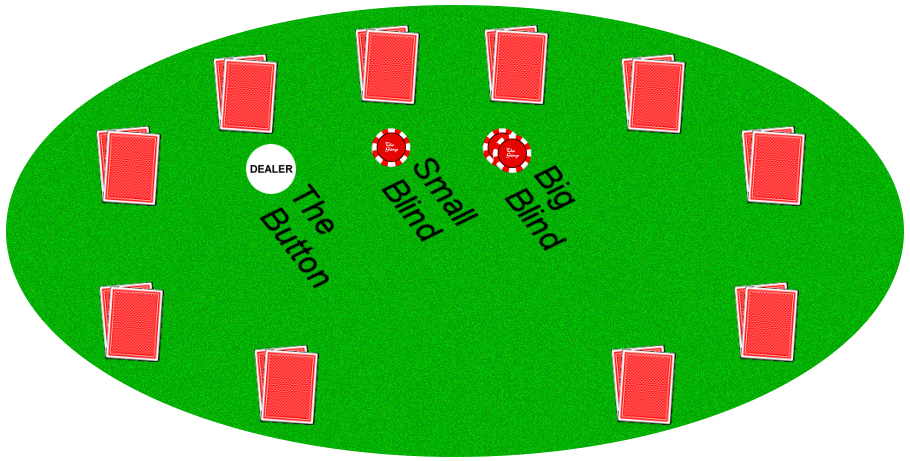
Before any cards are dealt, two players must post forced bets. These are called the blinds, because the players must bet before seeing their cards. The blinds ensure there's money in the pot from the very beginning.
Small Blind
noun
The player to the immediate left of the dealer button. They post a small, mandatory bet.
The player to the left of the small blind is the big blind. They post a larger forced bet, typically double the small blind. The action in the first betting round (pre-flop) starts with the player to the left of the big blind. In all later rounds, the action starts with the first active player to the left of the dealer button.
Now that you've got the basics down, let's test your knowledge.
How many cards are used to make a final Texas Hold'em hand?
What is the term for the forced bets made by two players before any cards are dealt?
With these fundamentals—hand rankings, the flow of play, and player roles—you're ready to understand the game. Every strategy and decision in poker builds on this foundation.