Podcast Interviewing Sensitive Topics
Introduction to Podcast Interviewing
The Art of the Interview
A podcast interview isn't just a Q&A session. It's a guided conversation. Your job as the host is to create a space where your guest feels comfortable enough to share their stories and insights. The magic happens when the microphone disappears, and it just feels like two people talking.
Think of yourself as a facilitator. You’re there to draw out the interesting parts of your guest's experience for the listener. This requires a specific set of skills, but the most important one has nothing to do with talking.
Listening Is Your Superpower
The best interviewers are the best listeners. They practice what's called active listening. This isn't just waiting for your turn to talk; it's a conscious effort to hear and understand the complete message being communicated.
Here’s how to do it:
-
Pay Full Attention: Put your phone away. Close unnecessary tabs on your computer. Your focus should be entirely on the guest. This helps you catch nuances in their tone and a B_body language that might signal a deeper story.
-
Show You're Engaged: Simple verbal cues like "uh-huh," "I see," or "right" let the speaker know you're with them. If you're on video, nodding along achieves the same goal.
-
Paraphrase and Clarify: Briefly summarizing what you heard shows you’re understanding them. Phrases like, "So, if I'm hearing you correctly..." or "It sounds like you felt..." can confirm your understanding and give your guest a chance to correct or expand on their point.
-
Don't Interrupt: Let your guest finish their thought completely, even if there’s a pause. Sometimes the most profound insights come after a moment of reflection. Resist the urge to jump in with your own story or next question.
Every good conversation is built on a strong foundation of active listening, presence, and genuine interest.
Asking Better Questions
Once you're truly listening, you can ask questions that open doors. The key is to favor open-ended questions over closed-ended ones.
| Question Type | Purpose | Example |
|---|---|---|
| Closed-Ended | Gathers facts. Gets a "yes" or "no" answer. | "Did you start your company in 2020?" |
| Open-Ended | Encourages stories, feelings, and opinions. | "What was it like in those early days of starting your company?" |
Closed-ended questions can stop a conversation in its tracks. Open-ended questions invite your guest to tell a story. They often start with words like What, How, or Why.
Instead of asking, "Was that a difficult decision?" try, "How did you arrive at that decision?"
Your best questions will often be follow-ups based on something the guest just said. This is where active listening pays off. If they mention a specific project, you can say, "You mentioned the Phoenix Project earlier. Could you walk me through what that was?" This shows you’re not just reading from a list; you’re co-creating the conversation.
Building Rapport
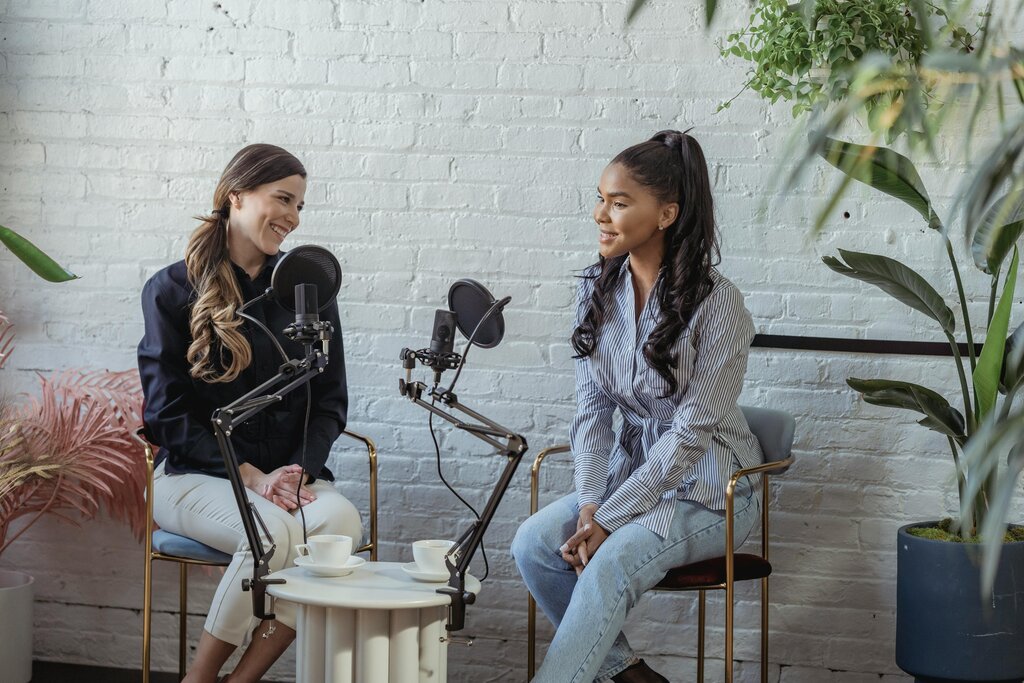
Rapport is the feeling of connection and trust between you and your guest. Without it, the conversation will feel stiff and rehearsed. Building rapport starts before you even hit record.
Do your homework. Research your guest's work, past interviews, and background. This allows you to ask more insightful questions and shows them you've invested time in their story. A little preparation goes a long way. Before the official interview, spend a few minutes in casual conversation. Ask them about their day or something unrelated to the interview topic. This helps break the ice and makes the transition into the formal interview feel much smoother.
During the interview, be curious and empathetic. If they share a struggle, acknowledge it. If they share a success, celebrate it with them. Authenticity is key. Your genuine interest will make them feel more comfortable opening up.
rapport
noun
A close and harmonious relationship in which the people or groups concerned understand each other's feelings or ideas and communicate well.
Your Ethical Duty
As an interviewer, you have a responsibility to your guest and your audience. Your primary duty is to be fair and accurate in your representation of the guest's story. This means not editing their words out of context to create a false narrative.
Sometimes, conversations can drift toward sensitive topics like personal loss, health issues, or professional failures. It’s your job to handle these moments with care. Never push a guest to share something they are clearly uncomfortable discussing. You can gently probe, but if they signal they don't want to go there, respect their boundary and move on.
Transparency is crucial. Be clear with your guest beforehand about the topics you plan to cover and how the interview will be used. This foundation of trust is essential for a respectful and productive conversation.
Now let's test what you've learned about the fundamentals of interviewing.
According to the text, what is the primary goal of 'active listening' in a podcast interview?
Which of the following is the best example of an open-ended question?
Mastering these skills takes practice. Every conversation is an opportunity to become a better listener, a more thoughtful questioner, and a more empathetic host.