Pleiotropy and Genetic Connectivity
Molecular Mechanisms
Beyond One Gene, One Trait
The idea that one gene codes for one trait is a useful starting point, but it's an oversimplification. In reality, a single gene can influence multiple, seemingly unrelated characteristics. This phenomenon is called pleiotropy.
There are two main ways this happens. In developmental pleiotropy, a gene's product acts early in development, creating a cascade of effects. For instance, a gene essential for cartilage formation will impact the development of the nose, ears, and joints. But a more direct mechanism, gene pleiotropy, happens when the protein product of a single gene is a multitasker, playing distinct roles in different cells or pathways. This is where the molecular story gets interesting.
One Gene, Many Proteins
One of the most powerful mechanisms behind pleiotropy is alternative splicing. When a gene is transcribed into pre-messenger RNA (pre-mRNA), it contains both coding regions (exons) and non-coding regions (introns). Before this message is translated into a protein, the introns are snipped out and the exons are stitched together. Alternative splicing is a process where the cellular machinery can select different combinations of exons to include in the final mature mRNA.
Think of it like a recipe with optional ingredients. By including or excluding certain exons, a single gene can produce a whole family of related but distinct proteins, known as isoforms. This single genetic blueprint gives rise to multiple functional outcomes.
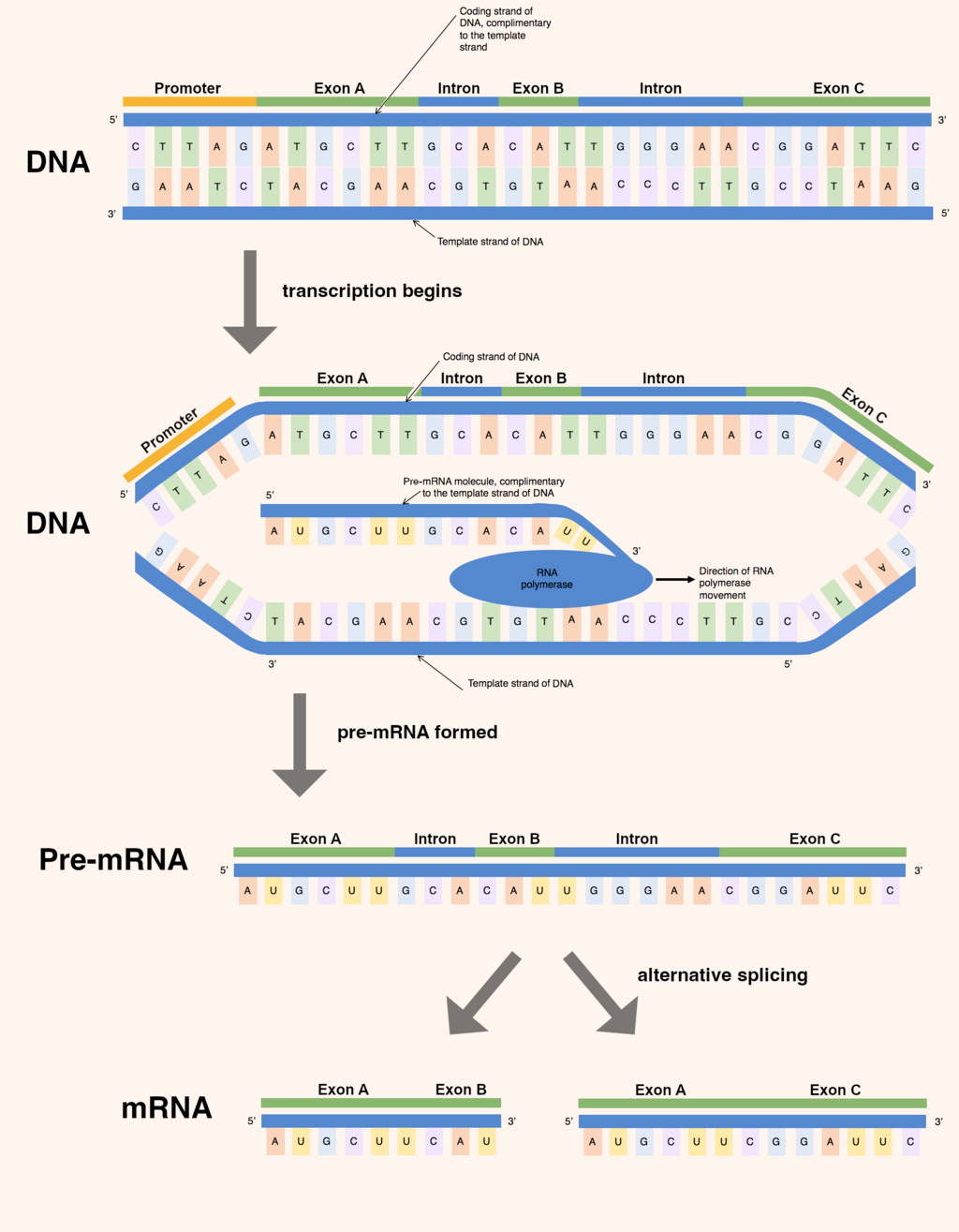
This process is a major source of biological complexity. The human genome contains about 20,000 protein-coding genes, but alternative splicing allows it to generate well over 100,000 different proteins. These different isoforms can have unique functions, be located in different parts of the cell, or be expressed only in specific tissues. This tissue-specific expression is a key reason why a gene can affect the heart and the brain in completely different ways.
Isoform
noun
Any of several different forms of the same protein, which may be produced from different genes or from the same gene by alternative splicing.
Consider the RBM10 gene. Through alternative splicing, it can produce a long isoform that promotes cell proliferation and a short isoform that triggers apoptosis, or programmed cell death. The cell's decision of which version to make can mean the difference between growth and self-destruction, all dictated by how a single gene's transcript is spliced.
External Signals Direct the Splice
The choice of which exons to include isn't random. It's often controlled by the cell's environment through signal transduction pathways. These pathways are communication networks that convert an external signal, like the binding of a hormone, into a specific cellular response. Many of these responses involve changing which proteins get made, and that often means regulating splicing.
A classic example involves the insulin signaling pathway. When insulin binds to its receptor on a cell, it triggers a cascade of events, including the activation of the PI3K-Akt pathway. One of the many targets of this pathway is a family of proteins called SR proteins, which are splicing factors. When phosphorylated by Akt, these SR proteins change their activity, influencing which exons are selected for a wide range of genes.
In this way, a single external signal—the presence of insulin—can ripple through the cell to alter the production of numerous protein isoforms, affecting metabolism, growth, and survival all at once. This shows how gene expression is not a static process but a dynamic one, constantly adapting to the body's needs.
Finally, transcription factors themselves are hubs of pleiotropy. These are proteins that bind to specific DNA sequences to control the rate of transcription of genetic information. A single transcription factor can regulate hundreds or even thousands of different genes. By activating or repressing a whole suite of target genes involved in, for example, stress response or cell growth, it orchestrates a complex, multi-faceted change in the cell's phenotype. This layered control, from transcription to splicing, allows a single gene to have a remarkably broad influence.
What is the term for the phenomenon where a single gene influences multiple, seemingly unrelated characteristics?
Which of the following is the PRIMARY mechanism that allows the ~20,000 human protein-coding genes to produce over 100,000 different proteins?
These molecular mechanisms show how the genome achieves its complexity, creating a vast array of outcomes from a limited set of genes.